Choosing a Mini Excavator for Landscaping and Drainage: Start With a Real Working Week
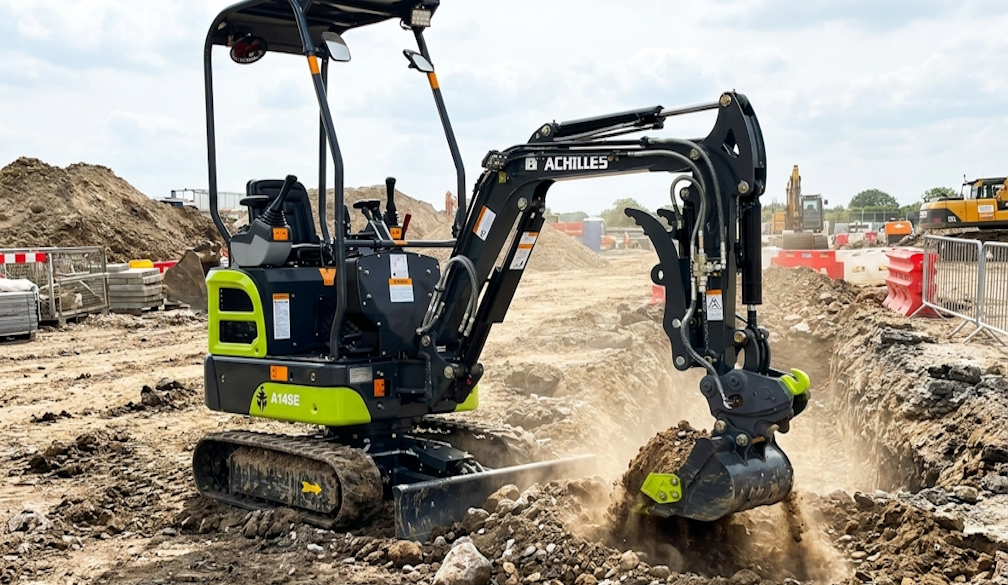
By Friday afternoon, a landscaping crew remembers the week differently from a machinery brochure. There is clay packed into the tracks, a bucket still waiting to be cleaned and one last pile of spoil to move before the site can be closed.
The week may have started with a narrow stormwater trench beside an established house, moved through post holes and garden shaping, and finished with a longer drainage run in firmer ground. None of those tasks is the dramatic “biggest project” buyers often imagine when comparing machines. Together, however, they are the work that must justify the purchase.
For anyone choosing a mini excavator for landscaping and drainage, the most useful starting point is not a single impressive specification. It is the pattern of work the machine will actually perform from Monday to Friday.
## Write down the week before choosing a size
Take a recent or representative week and list each machine task in order. A typical example might look like this:
- Monday: narrow-access stormwater trench beside a house
- Tuesday: remove roots, shape a garden bed and load spoil
- Wednesday: prepare a fence line and drill post holes
- Thursday: complete a longer drainage run in firm ground
- Friday: move sites, backfill and clean the machine
Next, identify what controlled the pace each day. Access may have dominated Monday. Attachment changes may have mattered on Wednesday. Breakout force and loading ability may have decided Thursday, while transport and cleaning consumed Friday.
The best machine is rarely the winner in every category. It should perform strongly in the tasks that occur most often and remain acceptable in the rest.
## Separate access work from production work
Landscaping contractors commonly encounter two different site types.
The first is access-led: courtyards, side paths, established gardens and work close to buildings. The excavator must enter and manoeuvre without turning every job into fence removal and property repair.
The second is production-led: open ground, longer trenches, repeated loading and firmer soil. Working pace matters more, and a machine that is too small may leave the rest of the crew waiting.
Count how many days belong to each group. If four days out of five involve narrow residential access, buying a larger excavator for an occasional open block may be difficult to justify. If most work occurs on open sites and tight access appears once a month, choosing around the rare narrow gate may sacrifice productivity during every other job.
After mapping the week, compare it with a [current Australian mini excavator range]. An Australian guide to choosing a mini excavator for landscaping can then help frame the size discussion, but every shortlisted machine should still be tested against measured access and recurring tasks.
## Buy around the bottleneck that repeats
Every working week has a bottleneck. It might be waiting for a hire machine, failing to reach a backyard, trenching too slowly in clay, changing buckets repeatedly or spending too much time moving equipment between sites.
The purchase should remove a bottleneck that genuinely repeats. An excavator does not need to solve every earthmoving task. It needs to own a valuable, predictable slice of work. Larger or unusual projects can still be hired or subcontracted when they fall outside the machine's sensible operating range.
## Plan the first quarter of attachments
The correct tonne class can still disappoint when paired with the wrong tools. List the attachment changes required during the representative week.
A trenching bucket may suit narrow drainage work, while a mud or grading bucket supports backfilling and levelling. An auger may earn its place where fence or planting work is regular. A ripper may be useful in recurring hard ground, and a quick hitch may save time when bucket changes happen several times a day.
Avoid buying every attachment that might be useful across an imagined year. Start with the tools needed during the first real quarter, then add specialised equipment when the work proves the demand.
## Digging depth is not the same as productivity
Maximum digging depth matters when a project requires it, but it does not reveal how quickly an operator can complete a normal trench, reposition the machine, manage spoil or work safely near structures.
Ask for a demonstration around the real task. Can the boom and bucket work comfortably in the available space? Is visibility suitable near walls and services? How often will the machine need to reposition? Can spoil be placed where the next stage of work needs it?
A machine operating comfortably within its useful range may outperform a smaller unit working at its limit, even when both can technically reach the required depth.
## Transport belongs in the productivity calculation
A machine bought for weekly work must be able to reach weekly work. Buyers need to verify the excavator's operating weight, carried attachments, trailer tare and payload, tow-vehicle limits and applicable road requirements for the complete combination.
Transport also consumes time. Consider where the trailer will be stored, how long loading and tie-down take, and whether cleaning between sites affects the working day. A poor transport plan can save time in the trench and lose even more time around it.
## Demonstrate the week, not the showroom
Bring the written work week to the inspection. Mark the usual access width, describe the hardest recurring ground and try the buckets or hitch expected on day one. If possible, include the person who will operate the excavator. The owner sees the invoice; the operator experiences every awkward control and blind spot.
The right mini excavator does not need to win an imaginary biggest job. It needs to enter the sites the business actually serves, maintain a sensible pace and move on without creating a new transport or scheduling problem. That is how a machine earns its place from Monday to Friday.
*Specifications, site conditions and transport requirements vary. Confirm current written details and obtain appropriate safety, operating and compliance advice before purchasing or transporting machinery.*