
The 'car park rorts' story is scandalous. But it will keep happening unless we close grant loopholes
- Written by: Yee-Fui Ng, Associate Professor, Faculty of Law, Monash University
On Monday, a senate hearing produced yet more[1] damning evidence about the “car park rorts” affair.
The Australian National Audit Office told a parliamentary committee a list of the top 20 marginal electorates guided the distribution of a $389 million car park construction fund during the 2019 election campaign.
Sitting Coalition MPs were invited to nominate projects for funding. In some cases, money was allocated to electorates when a project had not yet been identified. An adviser from the Prime Minister’s Office was involved in the funding allocation — the same adviser involved in the “sports rorts” incident.
Earlier this month, the Audit Office released a scathing report[2], finding 77% of the commuter car park sites selected were in Coalition electorates, rather than in areas of real need with congestion issues. None of the 47 project sites selected for funding commitment were proposed by the infrastructure department.
So, why do these rorts keep happening? What mechanisms are in place to try and stop them? And what further protections do we need?
Why do rorts keep happening?
Pork-barrelling involves the channelling of public funds to government electorates for political purposes, rather than proper allocation according to merit.
We have been inundated with pork-barrelling scandals in recent years. This includes the “sports rorts” scandal[3] that led to Bridget McKenzie’s resignation from cabinet last year, and NSW Premier Gladys Berejiklian’s biased distribution of the Stronger Communities fund[4].
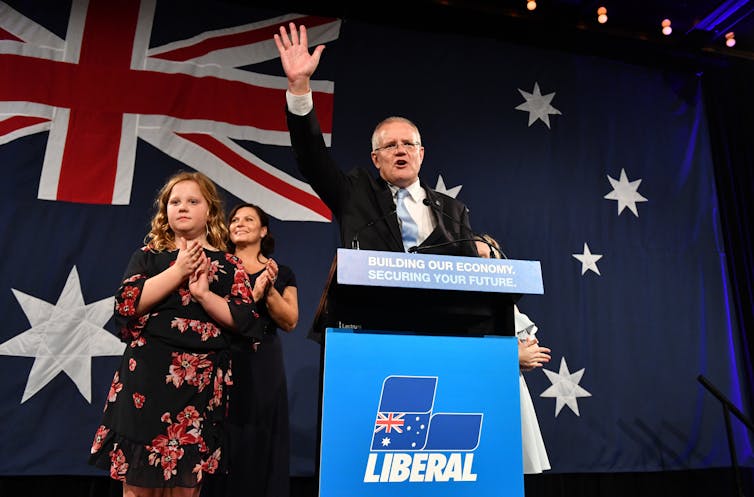 The Audit Office has delivered a damning assessment of the Coalition’s car park fund.
Mick Tsikas/AAP
The Audit Office has delivered a damning assessment of the Coalition’s car park fund.
Mick Tsikas/AAP
Australia has a single member electorate parliamentary system, which makes it more susceptible to pork-barrelling than multi-member electorates like Norway or Spain. The belief is that politicians who “bring home the bacon” for their constituents are electorally rewarded for doing so.
This means there are incentives for the central cabinet to strategically apportion benefits to marginal electorates to increase prospects of electoral success. There is also an incentive to bias the apportionment of funds towards the party in power.
In short, rorts scandals keep happening because governments believe that channelling money to marginal and government electorates will win them elections.
What are the accountability arrangements for grants?
At the federal level, we have sophisticated financial management legislation[5] that provides a framework for grant rules. The Commonwealth grant rules[6] provide a detailed set of guidelines that ministers and government officials must follow on grant application and selection processes.
Read more: Another day, another rorts scandal – this time with car parks. How can we fix the system?[7]
However, there are significant loopholes in the rules. For example, the “car park rorts[8]” scandal is not covered by these rules because it involves money being channelled through the states.
Also, there are no sanctions for breaching the rules. So ministers and government officials can break the rules without any repercussions.
Who keeps an eye on the grants?
The auditor-general is the main actor who investigates federal grants administration. The auditor-general has significant coercive powers, and is independent of government. Although the auditor-general lacks the power to change governmental practices, the publicity of their reports may encourage government agencies to respond in a positive and productive way.
In Australia, parliaments have a strong constitutional role as overseers of the activities of government.
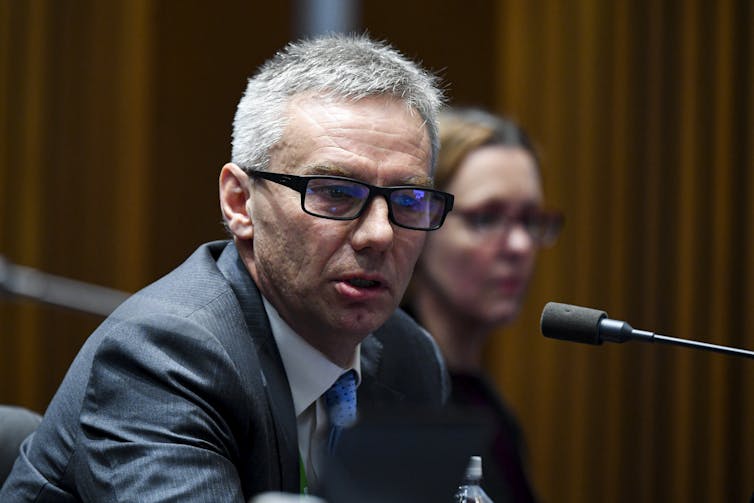 Australian National Audit Office executive director Brian Boyd appeared before a senate committee on Monday.
Lukas Coch/AAP
Australian National Audit Office executive director Brian Boyd appeared before a senate committee on Monday.
Lukas Coch/AAP
Parliamentary committees have become the main form of scrutiny of government in recent years. They are set up to investigate specific matters of policy or to evaluate the performance of government.
Parliamentary committees are normally tasked with making inquiries into matters by taking submissions, hearing evidence and reporting their findings to parliament. They have been highly effective identifying and investigating issues relating to government rorts.
Where to now?
To fix the system, we need to reform the rules about grants allocation and close the loopholes. We also need to impose punishment for breaching the rules.
Read more: The 'sports rorts' affair shows the need for a proper federal ICAC – with teeth[9]
It is imperative our grants administration system be reformed to ensure that taxpayer funds are protected from governmental abuse. If the ministerial discretion available in grants processes is improperly used, this can give rise to political favouritism and corruption.
Ministers, as our elected representatives, are the custodians of public trust. As part of a well-functioning democracy, it is important there is probity, transparency and accountability in the use of public funds.
References
- ^ yet more (www.theguardian.com)
- ^ report (www.anao.gov.au)
- ^ “sports rorts” scandal (theconversation.com)
- ^ Stronger Communities fund (www.smh.com.au)
- ^ financial management legislation (www.legislation.gov.au)
- ^ Commonwealth grant rules (www.finance.gov.au)
- ^ Another day, another rorts scandal – this time with car parks. How can we fix the system? (theconversation.com)
- ^ car park rorts (www.theguardian.com)
- ^ The 'sports rorts' affair shows the need for a proper federal ICAC – with teeth (theconversation.com)