The Mechanics of Seamless Folding: How the iPhone Duo Eliminates the Crease
- Written by: The Times
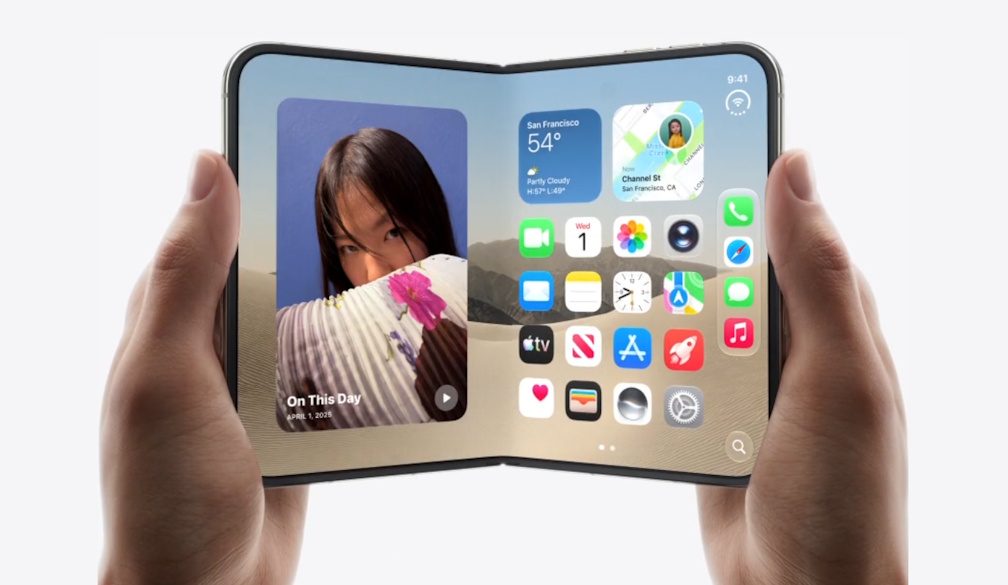
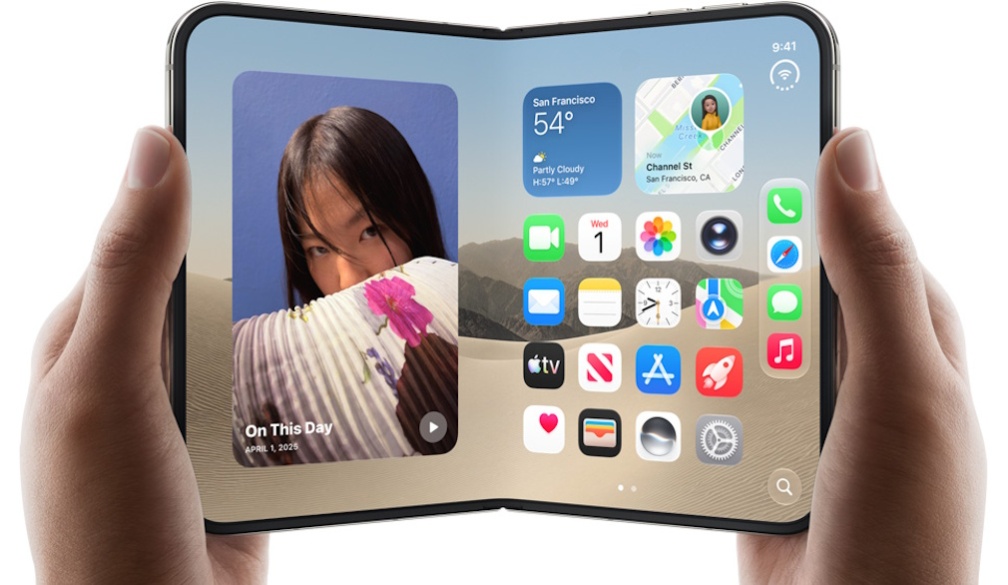
For years, the biggest hurdle for foldable smartphones has been the dreaded screen crease—a physical and visual indentation that disrupts the user experience. With the iPhone Duo, Apple addresses this engineering challenge through a combination of proprietary material science and precision mechanical engineering. Instead of fighting the physics of bending glass, the device adapts to it.
Here is a look at the core technologies that allow the iPhone Duo to fold seamlessly without creasing its screen.
The Multilayer Gliding Display Stack
At the heart of the display is a specialized multilayer stack that houses the flexible OLED panel. In traditional foldables, the screen layers are tightly bound, causing the inner materials to compress and the outer materials to stretch aggressively when closed.
The iPhone Duo solves this by using a "gliding" architecture. High-strength, ultra-thin flexible glass layers are placed above and below the OLED panel, bonded by a custom optically clear adhesive (OCA). This adhesive allows the individual layers to slide micro-fractions of a millimetre relative to each other as the device closes—mimicking how the pages of a thick book slide when you shut the cover. By allowing this relative movement, the display disperses the bending stress across a much wider surface area rather than pinching the screen at a single focal point.
A Carbon-Reinforced Precision Hinge
A flexible screen is only as good as the structure supporting it. The iPhone Duo features a complex mechanical hinge comprising over 100 precision-engineered components.
When the device is fully opened, custom carbon-fiber support plates rotate into place directly beneath the hinge line. These plates form a rigid, continuous floor that pushes upward against the display stack. This mechanical reinforcement ensures that the screen remains completely flat during touch interactions, preventing the sagging or dipping common in first-generation foldable hinges. Beneath this assembly, a rigid titanium base plate provides structural rigidity for the entire chassis.
Optical Diffusion via Nano-Texture
Even with advanced stress dispersion, micro-deformations in flexible materials are inevitable over thousands of fold cycles. To combat the visual impact of these microscopic shifts, Apple utilizes an optical solution on the outermost layer of the display.
The inner screen features a custom nano-texture finish etched directly into the glass. Rather than relying on a glossy, reflective surface that highlights bends by reflecting straight lines of light, the nano-texture surface scatters incoming ambient light. By diffusing these reflections, any subtle, underlying physical variations become perceptually invisible to the naked eye, maintaining the illusion of a perfectly flat, uninterrupted canvas during daily use.
Through this integration of moving glass layers, mechanical backplates, and light-diffusing optics, the iPhone Duo delivers a durable, crease-free folding experience.