Only a third of Australians support increasing defence spending: new research
- Written by: Richard Dunley, Senior Lecturer in History and Maritime Strategy, UNSW Sydney
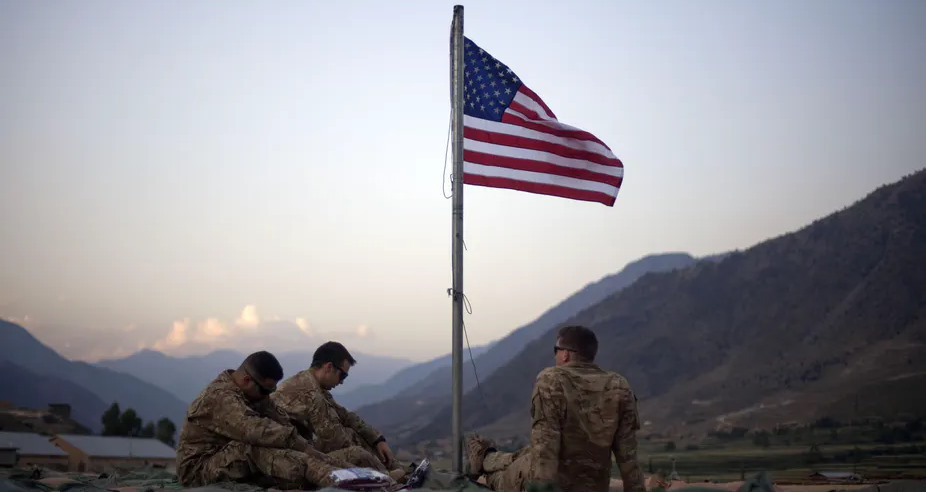
National security issues have been a constant feature of this federal election campaign.
Both major parties have spruiked their national security credentials by promising additional defence spending[1]. The Coalition has pledged to spend 3% of Australia’s GDP on defence within a decade, while Labor is accelerating its own spending increase of $50 billion[2] over the next decade.
Even the Greens[3] have got in on the act, pledging to “decouple” Australia from the US military.
Against this backdrop, of course, is the omnipresent figure of US President Donald Trump, with questions about the reliability of the US as an ally and the impact his policy decisions will have on Australian security. The possible deployment of Russian aircraft to Indonesia[4] and the Chinese warships[5] sailing around Australia have made these issues even more salient.
But what do Australians actually know about defence issues, and what are they comfortable spending on it?
According to our major new survey[6] of 1,500 Australian adults, only a third of respondents believe the defence budget should be increased.
The survey was conducted from late February to early March as part of our work at the War Studies Research Group[7] to measure public attitudes towards the Australian Defence Force (ADF).
Australians know little about the ADF’s role
More than two-thirds of our respondents said they had a positive opinion of the ADF, and only 8% held a negative opinion. There were significant differences by political affiliation, with 76% of those expecting to vote for the Liberal Party having positive views compared to 72% of Labor supporters. By contrast, only 53% of Greens supporters felt the same way.
However, when asked how much they actually knew about the ADF and its activities, only a quarter of respondents felt well-informed.
One reason for this is that only 22% of respondents served in the ADF themselves, or had an immediate family member who had. Similarly, only 35% of respondents knew a veteran.
But even public knowledge on issues that have received considerable media attention was limited.
Remarkably, only 56% of respondents were aware of the allegations that Australian Special Forces soldiers committed war crimes[8] in Afghanistan. Less than half had heard of the Royal Commission into Defence and Veteran Suicide[9].
Support for increasing defence spending is mixed
Successive governments have emphasised the rapidly deteriorating strategic environment in the Indo-Pacific region. This has led to much debate over whether Australia should increase its defence spending[10] – and by how much.
In this election, both sides have committed more resources to upgrade and expand Australia’s military capabilities.
However, despite efforts to turn defence spending into a major issue at this election (especially on the right of politics), it is far from clear this has cut through with the wider population.
Our survey reveals public support for a larger ADF is split. Just over half of respondents thought the ADF was appropriately sized, while 41% considered it too small and 7% thought it too large.
Notably, when asked whether they thought more money should be spent on defence, the support for growth shrinks further.
Liberal supporters were the most likely to favour increasing the defence budget. But only 44% of them did, suggesting a majority felt that current spending on the ADF was either appropriate or too large.
Only 28% of Labor voters supported an increase in the defence budget. And among Greens voters, those supporting cuts to the defence budget outnumbered those in favour of expansion.
Read more: Should Australia increase its defence spending? We asked 5 experts[11]
Most still support the US, despite Trump
Ever since the US presidential election in November, many Australians have also questioned the US alliance and the AUKUS agreement, specifically. Recent actions by Trump – most notably his public statements on the Ukraine war – have only reinforced these doubts[12].
Given the tone of the public debate, we expected to see lower levels of support in our survey for the US alliance as the bedrock of Australian security.
However, respondents strongly favoured (75%) the ADF continuing to prioritise working closely with allies and partners, especially the US. Only 2% opposed it. Notably, there was very little variation based on political allegiance.
However, the idea of deploying the ADF to support our allies and partners overseas, including in the event of a conflict, saw greater division among respondents.
Two-thirds favoured deploying troops to support our allies overall. Liberal voters largely supported this proposition (75%), while 64% of Labor supporters backed it. Only about half of Greens voters felt the same way.
Respondents were also asked whether Australia should focus primarily on the defence of our territory rather than supporting our allies and partners in maintaining wider regional security. Just under half (46%) of respondents agreed with this idea, while 38% expressed neutral opinions and only 17% opposed it.
Overall, the results of this survey suggest that while the Australian public generally holds the ADF in high regard, they don’t know very much about it, nor do they consider additional funding for defence and security to be a real priority.
Successive governments, intelligence agencies and military analysts have long warned of the growing threats to Australia’s national security. Our survey suggests, however, that this messaging is either not cutting through – or that other concerns, such as housing or cost-of-living pressures, are taking priority.
Either way, it does not look like this issue will be decisive in the coming election.
This piece is part of a series on the future of defence in Australia. Read the other stories here[13].
References
- ^ additional defence spending (www.afr.com)
- ^ accelerating its own spending increase of $50 billion (www.minister.defence.gov.au)
- ^ Greens (greens.org.au)
- ^ Russian aircraft to Indonesia (www.abc.net.au)
- ^ Chinese warships (theconversation.com)
- ^ major new survey (www.unsw.edu.au)
- ^ War Studies Research Group (www.unsw.edu.au)
- ^ committed war crimes (www.abc.net.au)
- ^ Royal Commission into Defence and Veteran Suicide (defenceveteransuicide.royalcommission.gov.au)
- ^ increase its defence spending (theconversation.com)
- ^ Should Australia increase its defence spending? We asked 5 experts (theconversation.com)
- ^ reinforced these doubts (www.canberratimes.com.au)
- ^ here (theconversation.com)