Australia is set to be a renewables nation. After Labor’s win, there’s no turning back
- Written by: Wesley Morgan, Research Associate, Institute for Climate Risk and Response, UNSW Sydney
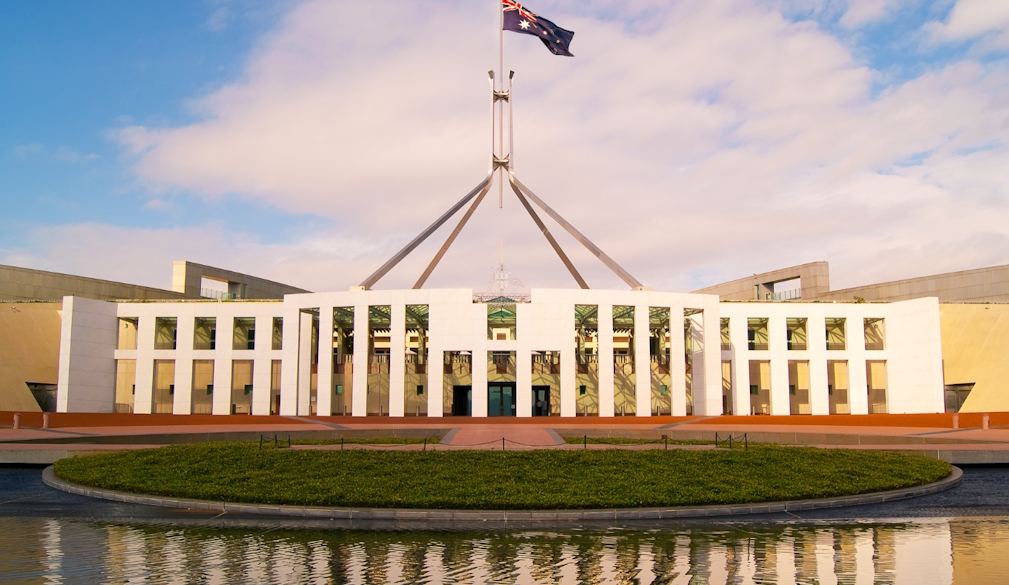
An emphatic election victory for the incumbent Labor government means Australia’s rapid shift to renewable energy will continue. As Climate Change and Energy Minister Chris Bowen said on Saturday[1]:
In 2022, the Australian people voted to finally act on climate change. After three years of progress […] in 2025 they said keep going.
The election result also means the debate about energy policy is now, in broad terms, over. Australia’s energy future is wind and solar, backed by storage.
Coal and gas will have a fast-declining role to play and nuclear energy will have none at all. Australia is set to be a renewables nation. There is no turning back now.
Cementing renewables investment
By continuing to build renewables capacity, the returned Labor government can position Australia on the world stage as a genuine leader on clean energy.
The Albanese government has set a national target[2] of more than 80% of the main national electricity grid running on renewables by 2030. With such a large majority in parliament, Labor may well be in government at that time.
Australia already has the world’s highest per-capita solar uptake[3], with about 300,000 solar systems installed each year. One in three Australian homes now has rooftop solar[4].
Labor is complementing this boom with a new home battery discount scheme, which aims to have more than one million batteries installed by 2030[5]. This will help stabilise the grid[6] by reducing demand at peak times.
But more investment in renewables is needed. The policy certainty of a returned Labor government should help to attract international capital. This is important, because more than 70% of investment in renewables in Australia comes from offshore[7].
Securing climate consensus
Labor’s win also means it can finally bed down a national consensus on climate policy.
A recent survey on Australian attitudes to climate action[8] suggested community views can shift if people see action is taken by governments and big business.
This does not mean community opposition to renewable energy will evaporate – especially in regional Australia. The federal government must work with industry players and other levels of government to ensure proper public consultation. The new Net Zero Economy Authority[9] will play an important role in ensuring the regions and their workers benefit from the energy transition[10].
For its part, the Coalition needs to do some soul-searching. Australian voters returned a number of climate-friendly independents in key seats[11]. The Coalition also failed to win support from younger Australians[12], who typically view renewables favourably[13].
All this suggests continued opposition to renewables is unlikely to help the Coalition form government anytime soon. What’s more, continuing to promote nuclear power – which some in the Coalition are pushing for[14] – makes little sense[15] in an increasingly renewables-dominated grid.
Doubling down on international climate cooperation
Labor’s plans to rapidly expand renewable energy strengthen Australia’s credentials to host the COP31 UN climate talks[16] with Pacific island countries next year.
Australia’s bid has strong support from other nations[17]. Turkey – the only other nation with its hand up to host – has so far resisted pressure from Australia to withdraw its bid[18]. In support of their own bid, Turkish representatives pointed to uncertainty in Australia ahead of the May election – however that uncertainty has now passed.
Adelaide will host the talks[19] if Australia’s bid succeeds. This will be a chance to share our world-beating renewables story – including in South Australia, which is set to achieve 100% clean electricity by 2027[20].
Australia could also use the talks in South Australia to promote new export industries that use renewable energy, especially plans to produce green iron and green steel at Whyalla[21].
Hosting rights could attract investment in Australia’s renewables rollout and help promote exports of critical minerals and green metals. And it would enable Australia to cement its place in the Pacific during a time of increased geo-strategic competition, by promoting a renewables partnership for the whole region.
Australia must move fast and secure the COP31 bid at climate talks in Germany next month[22]. Any delay risks a less ambitious summit next year, because building consensus for new initiatives takes time.
South Australia has made a bold bid to host COP31 (SA Government)Seizing our economic opportunities
As Prime Minister Anthony Albanese said during his victory speech[23] on Saturday, renewable energy is “an opportunity we must work together to seize for the future of our economy”.
Australia is the world’s largest exporter of raw iron ore[24] and metallurgical coal[25], both used extensively in offshore steelmaking.
But Australia can create jobs and reduce emissions[26] by refining iron ore in Australia using renewables and green hydrogen.
The potential export value of green iron is estimated at A$295 billion a year[27], or three times the current value of iron ore exports. More broadly, our clean energy exports – including green metals, fertilisers and fuels – could be worth six to eight times more than our fossil fuel exports[28], analysis suggests.
A key challenge for the returned government is assuring markets such as Japan[29] that Australia is a long-term strategic partner, even while redirecting trade and investment away from coal and gas exports[30] and toward long-term clean energy industries.
Embracing Australia’s future
Australians have delivered a strong mandate for climate action. The returned Labor government must ensure this support is not squandered, and voter trust is not lost.
This means seizing the opportunity, once and for all, to shift Australia from our past as a fossil fuel heavyweight to our future as a renewables superpower.
References
- ^ said on Saturday (bsky.app)
- ^ set a national target (alp.org.au)
- ^ highest per-capita solar uptake (www.climatecouncil.org.au)
- ^ now has rooftop solar (www.energy.gov.au)
- ^ one million batteries installed by 2030 (www.abc.net.au)
- ^ help stabilise the grid (theconversation.com)
- ^ comes from offshore (www.theaustralian.com.au)
- ^ Australian attitudes to climate action (theconversation.com)
- ^ Net Zero Economy Authority (www.netzero.gov.au)
- ^ benefit from the energy transition (theconversation.com)
- ^ climate-friendly independents in key seats (www.9news.com.au)
- ^ support from younger Australians (www.theguardian.com)
- ^ view renewables favourably (theconversation.com)
- ^ are pushing for (www.abc.net.au)
- ^ makes little sense (www.abc.net.au)
- ^ host the COP31 UN climate talks (www.unsw.edu.au)
- ^ has strong support from other nations (www.abc.net.au)
- ^ pressure from Australia to withdraw its bid (www.theguardian.com)
- ^ Adelaide will host the talks (www.abc.net.au)
- ^ 100% clean electricity by 2027 (www.theguardian.com)
- ^ produce green iron and green steel at Whyalla (www.reuters.com)
- ^ climate talks in Germany next month (unfccc.int)
- ^ victory speech (www.pm.gov.au)
- ^ world’s largest exporter of raw iron ore (theconversation.com)
- ^ metallurgical coal (ieefa.org)
- ^ create jobs and reduce emissions (research.csiro.au)
- ^ A$295 billion a year (www.superpowerinstitute.com.au)
- ^ six to eight times more than our fossil fuel exports (www.superpowerinstitute.com.au)
- ^ assuring markets such as Japan (www.lowyinstitute.org)
- ^ away from coal and gas exports (theconversation.com)