Australian democracy is not dead, but needs help to ensure its survival
- Written by: Mark Evans, Deputy Vice-chancellor Research, Charles Sturt University
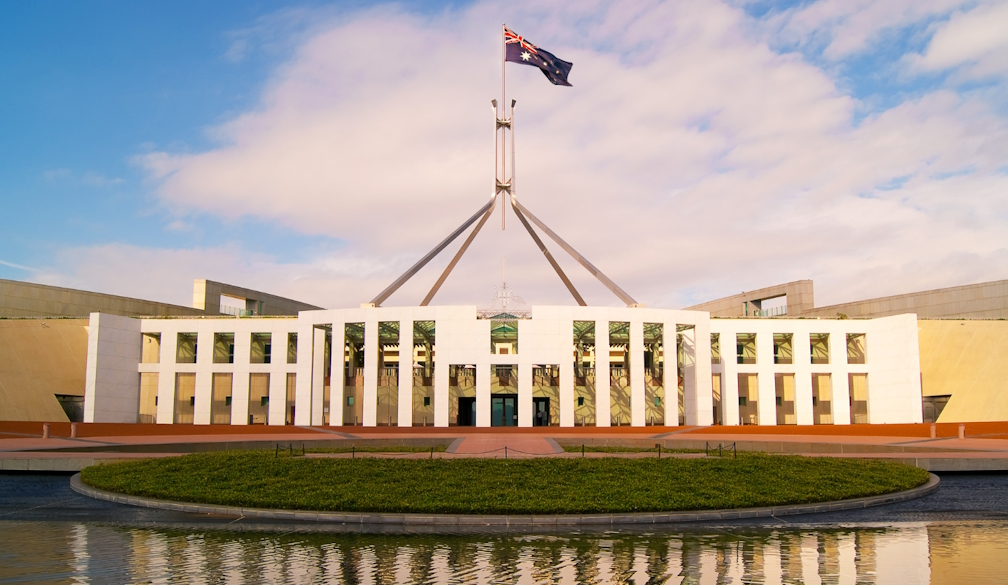
Democracies worldwide are suffering from legitimacy problems. This is reflected in low levels of public trust in key political institutions, the polarisation of politics, and the erosion of public confidence in the capacity of governments to address societal concerns.
According to the 2024 Edelman Trust Barometer[1], only 50% of people worldwide trust their government, and the tally is even lower in many developed countries such as the United States and United Kingdom. A study by the Pew Research Center found only 20% of Americans[2] trust their national government to do what is right “just about always” or “most of the time”.
Citizens almost everywhere view their elected officials and public institutions with suspicion. They believe decisions are made to serve special interests rather than the common good. This culture of discontentment is leading to reduced civic engagement, increased polarisation, the rise of identity politics, and a general sense of disillusionment with the political process. It has also sparked an upsurge in speculation as to whether democracy is dying[3], in recession[4] or crisis[5].
So how does Australia compare with this global pattern[6]?
The Australian context
The findings of the New Democratic Audit of Australia[7] have just been published. They provide a timely and comprehensive evaluation of the current state of Australian democratic life.
The audit promises to bridge significant gaps in our understanding of Australia’s democracy.
A team of leading academics from universities in every state and territory deploys an audit approach to assess the democratic performance of federal, state and territory-level political institutions. It then examines how they have enabled or undermined Australian political life.
For instance, the monopoly of Australian governance by Coalition and Labor parties has only just begun to adjust to growing disillusionment with the two-party system.
To date, Australia has successfully avoided both rancorous populist politics (as in the US) and serious governance decline (as in the UK). However, the Voice to Parliament referendum and continued pandering to regressive immigration policies suggests populism could well be on the rise.
So what did the New Democratic Audit find?
Democracy under stress
1. Declining public trust in government. Trust in Australian political institutions is in decline. Only 30% of Australians report trust in government officials, according to the Australian Election Study[8].
The main concerns driving the decline in trust are lack of transparency in decision-making, perceptions of public sector inefficiency, political corruption, and the disconnection between politicians and citizens. Australians also express concerns about poor communication of policies. Furthermore, they believe governments have failed to deliver solutions to pressing issues such as the cost of living, wage stagnation and climate action.
A significant proportion of the population believes the country has become more divided. Major sources of division are the perception of the rich and powerful as a major dividing force (72%), followed by hostile foreign governments (69%), journalists (51%), and government leaders (49%).
2. Strong public satisfaction with democracy. Despite low trust in government, the 2024 World Values Survey[9] shows that support for democratic values in Australia — such as free and fair elections, the rule of law, and representative democracy — remains strong. There is also a growing emphasis post-pandemic on the need for governments to address long-term challenges such as climate change and income inequality.
3. Australia is viewed internationally as a leading liberal democracy. Despite the challenges, Australia is assessed in most global rankings as one of the leading liberal democracies, with continuous economic growth, a strong federal system, and competitive elections. Its institutions have generally performed well, even in the face of global challenges such as the COVID pandemic. Australia is classed as one of only 24 “full democracies[10]”.
4. The “protective power of democracy” is under pressure. The audit emphasises economist Amartya Sen’s concept of the “protective power of democracy as critical to achieving high quality democratic governance”. This relies on four components: electoral integrity, participatory opportunities, liberal values and good democratic governance.
5. Electoral integrity. Australia’s elections are free and fair, thanks to an independent election commission. However, concerns about government advertising and political donations undermine the fairness of elections, giving incumbent governments an advantage.
6. Public participation. Australia performs poorly in facilitating citizen participation beyond voting. Opportunities for civil society engagement, through localism, citizen juries or assemblies, are limited. Parliaments at various levels are not adequately representative in terms of gender and ethnicity, and regional policy concerns are often ignored.
7. Liberal values. Australia has made improvements in protecting civil rights, especially concerning LGBTQ+ issues and gender equality. But there remain significant gaps in protecting the rights of the most vulnerable groups, including Indigenous communities, differently abled people, and refugees. Australia lacks a comprehensive charter of human rights, and there are ongoing issues with the erosion of civil liberties.
8. Good democratic governance. This component refers to the instrumental importance of governments being responsible and accountable, responsive to the needs of the citizenry in service terms, and free from corruption. This is where the performance or supply of government matters most.
The audit finds Australia’s institutions are generally effective and adaptive, as seen in responses to the bushfires and the COVID pandemic. However, the federal government wields disproportionate power, which undermines traditional checks and balances. Public perception of corruption in politics and the public sector is also a growing public concern.
Reimagining Australian democracy
The audit concludes that Australia remains a full democracy, but faces critical challenges that require reflection and reinvention.
To renew its democracy, Australia must make its system of government more representative, accountable and responsive to the needs of citizens. There is a need for a stronger focus on integrity in politics, ensuring governments act transparently, empathetically and in ways that deliver tangible outcomes for the public. Public dissatisfaction with political corruption, inefficiency and a lack of responsiveness must be addressed to restore trust in political institutions.
While Australia continues to be a leading democracy, it faces pressing challenges that could undermine the sustainability of its democratic institutions if not addressed. The audit calls for a period of democratic reinvention, with an emphasis on improving governance to better serve citizens and maintain public trust in democracy.
The New Democratic Audit is free for download at: https://press.lse.ac.uk/site/books/e/10.31389/lsepress.ada/
References
- ^ Edelman Trust Barometer (www.edelman.com)
- ^ only 20% of Americans (www.pewresearch.org)
- ^ democracy is dying (www.journalofdemocracy.org)
- ^ recession (cddrl.fsi.stanford.edu)
- ^ crisis (doi.org)
- ^ global pattern (perma.cc)
- ^ New Democratic Audit of Australia (press.lse.ac.uk)
- ^ Australian Election Study (australianelectionstudy.org)
- ^ 2024 World Values Survey (www.researchgate.net)
- ^ full democracies (perma.cc)