Albanese promises to legislate minimum age for kids’ access to social media
- Written by: Michelle Grattan, Professorial Fellow, University of Canberra
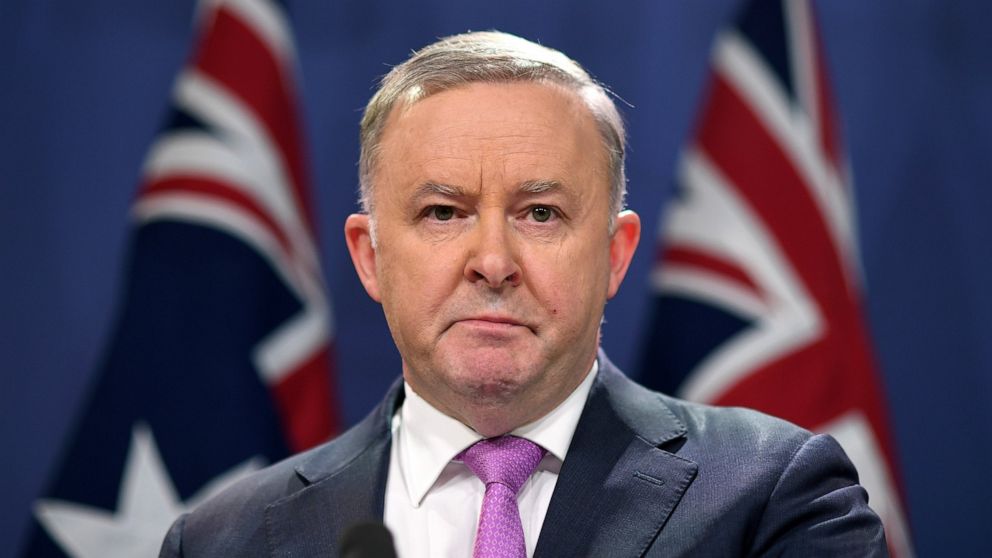
The Albanese government will introduce legislation this term to enforce a minimum age for children to access social media.
Prime Minister Anthony Albanese will make the formal announcement on Tuesday. This follows a discussion at last Friday’s national cabinet meeting, at which all states and territories, as well as the Commonwealth, committed to tackling what has become an increasingly worrying issue for many parents.
The push for legal controls on children’s access to social media has been led by the South Australian government, which has just released a report it commissioned from former chief justice Robert French ahead of that state’s plan for legislation.
The federal government has not nominated a minimum age but is presently trialling age-assurance mechanisms for those aged 13 to 16. The third phase of this trial begins this week.
The South Australian legislation would prevent access for children under 14, with those aged 14 and 15 requiring parental permission.
The federal legislation will draw on the French report.
South Australian Premier Peter Malinauskas, while leading the way on the issue and planning to go it alone if necessary, has always argued a national framework is essential for controls to be effective. Federal legislation would mean state legislation would probably be unnecessary.
Critics of legislated age limits have argued a legal approach is not the best way to proceed, because of both the difficulties of enforcement and fears it would isolate children for whom connection through social media is necessary.
But Albanese said: “No government is going to be able to protect every child from every threat, but we have to do all we can.
"Parents are worried sick about this. We know they’re working without a map - no generation has faced this challenge before.
"Which is why my message to Australian parents is we’ve got your back. We’re listening and determined to act to get this right.”
He said too often, social media took “kids away from real friends and real experiences”.
“Australian young people deserve better. I stand with them and with all Australian parents in protecting our kids. The safety and mental and physical health of our young people is paramount.
"Parents want their kids off their phones and on the footy field. So do I. We are taking this action because enough is enough.”
Malinauskas said evidence showed early access to addictive social media was harming children.
“This is no different to cigarettes or alcohol. When a product or service hurts children, governments must act.”
Meanwhile, the Victorian government announced that state will put age-limits on social media platforms.
Victorian Premier Jacinta Allan said: “One of the biggest things I hear from parents is that they’re worried about their kids on social media. And as a mum myself, so am I.
"Social media can be a great thing. But it’s just not a place for kids before they’re ready. It harms their development, and it hurts their focus, and it’s not just parents telling me, it’s kids and young people too.
"Parents are trying to manage content on devices at home, but it’s hard. It’s like a social media tsunami they feel they can’t stop. So it’s time to give parents the power to push back. Not against kids, but against the tech giants.”
She said the rules “won’t target parents or kids, but they’ll target the tech giants because they’re the ones we need to hold to account”.
There was “a bit more work to do, which is why we’ll be talking with parents, teachers and kids about what should and shouldn’t be included,” she said.
“Age limits will help parents at home and help protect kids from harm. This won’t solve everything, but it’s the right place to start.”
The French report says while social media could be regulated at the state level an alternative would be to confer the function on the existing federal eSafety Commissioner.
“The challenges of compliance with and enforcement of a law restricting access by children in one State and not all are strong indications of the need for a national approach if that can be achieved.”
The French model would impose an obligation on social media platforms to prevent access to children in the designated age ranges.
A regulator would monitor compliance and issue sanctions including, substantial financial penalties for breaches.
Families of children that were harmed as a result of access to social media would be able to sue for damages under the French model.
The French report says social media is used for “positive support and communication by many elements of the public, private and not-for-profit sectors”.
But it “can also be a channel for false and harmful content and a platform for bullying, exploitation and predation. It can be addictive. It can inflict harm on vulnerable members of society and particularly on children. While there are benefits to children learning how to navigate social media and how to use it to advantage there are significant risks.”