I have city kids make comic books to create a buzz about mosquitoes and ecology
- Written by: Katherine Richardson Bruna, Professor, Sociocultural Studies of Education, Iowa State University
If humans and mosquitoes had a battle at the end of the world, who would win? That’s the question I pose to 30 young kids each summer during a two-week camp called “Mosquitoes & Me[1]” in Des Moines, Iowa.
The ‘Mosquito and Me’ summer camp in Des Moines, Iowa.I am an educational anthropologist[2] who studies the cultural dynamics of science education. Along with my colleagues Lyric Bartholomay[3] and Sara Erickson[4], who help run the camp, we have the young camp participants explore the “end-of-world battle” question as they learn about mosquito biology, ecology and disease transmission. Based on what the kids learn from their hands-on activities, they design a mosquito comic book character that is either a hero or a villain.
Since this approach was such a big hit, we worked with Marvel Comics artist Bob Hall[5] to convert “Mosquitoes & Me”[6] into an actual comic book[7]. Some of our young scientists drew images of themselves and made up catchy public health slogans for a page about mosquito control. The idea is to reach kids who can’t attend “Mosquitoes & Me” camp by offering to teach them cool facts about mosquitoes.
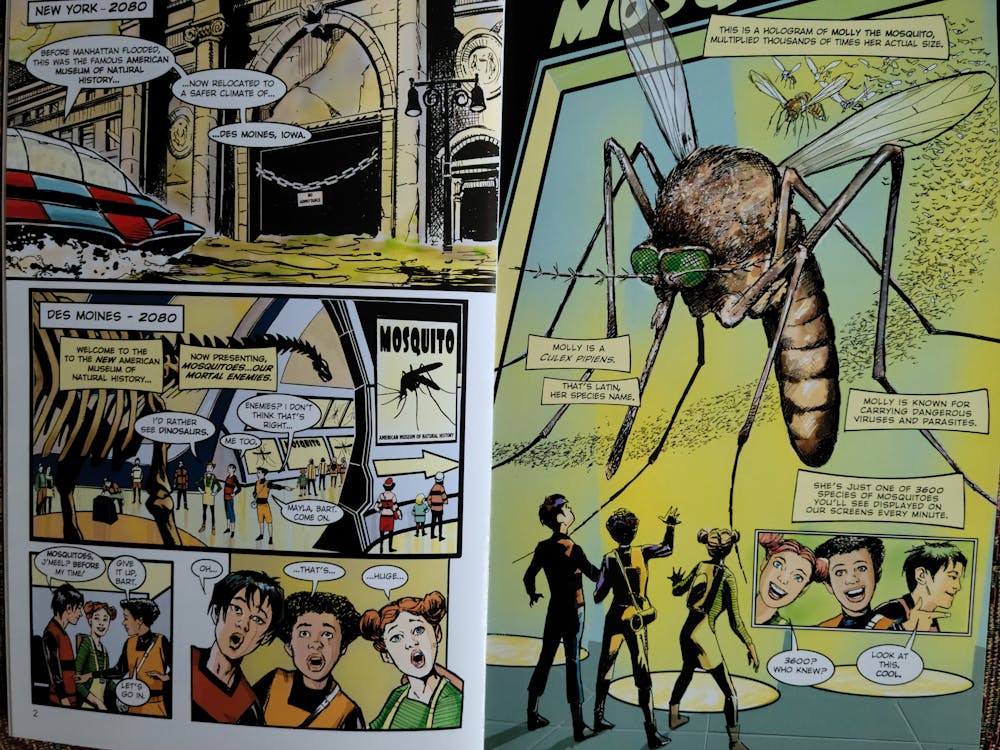 A page from the ‘Mosquitoes & Me’ comic book.
Katherine R. Bruna, CC BY-ND[8]
A page from the ‘Mosquitoes & Me’ comic book.
Katherine R. Bruna, CC BY-ND[8]
Feeding habits
Before we make the comic book, some serious science has to take place. While at the camp, a group of mostly Black and Latino elementary and middle schoolers who are interested in science work in teams. They learn everything they need to know to decide whether humans or mosquitoes would win in an end-of-the-world battle.
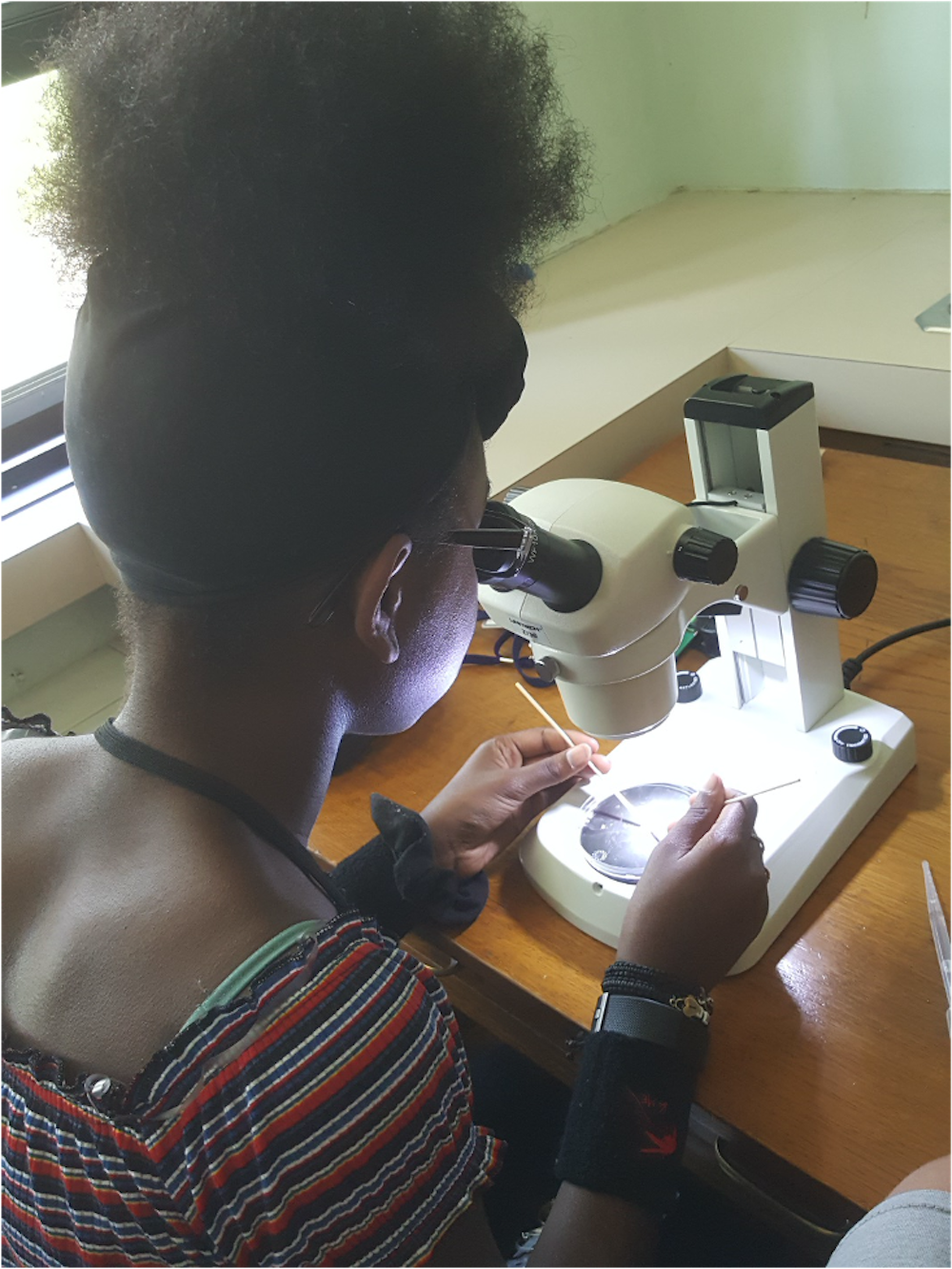 Children at the ‘Mosquitoes & Me’ summer camp have the opportunity to study mosquitoes.
Katherina R. Bruna, CC BY-ND[9]
Children at the ‘Mosquitoes & Me’ summer camp have the opportunity to study mosquitoes.
Katherina R. Bruna, CC BY-ND[9]
They explore mosquito ecology by looking for larvae in local water spots. They examine the important role[10] that mosquitoes play in the ecosystem. They tackle the logistics of disease transmission by thinking through whether mosquitoes actually “bite” or “suck.” And they learn about mosquito biology by feeding larvae foods made from their own kitchens.
The activities engage them in authentic science practices like data tabling, microscope use and dissection. At the end of camp, they create public service announcements to teach mosquito control and disease prevention.
Taking a more involved approach
Research has found that students who experience hands-on learning outperform students[11] who receive more traditional instruction. Most importantly, hands-on science gives them an experience with “object intimacy.” This is a feeling of developing a relationship with the thing they’re studying.
Broadening participation by helping young people “fall for science[12]” is imperative in increasing diversity in entomology – a field in which disparities persist[13], particularly for African Americans.
Less than 2% of the membership[14] of the Entomological Society of America identifies as African American.
Students from underrepresented backgrounds who understand how science can serve their communities show stronger motivation[15] to persist in science studies. Our overarching goal is that the hands-on approach of “Mosquitoes & Me” helps youths, especially those who aren’t engaged by a traditional school science curriculum, see the relevance of science – and especially entomology – to themselves and their community.
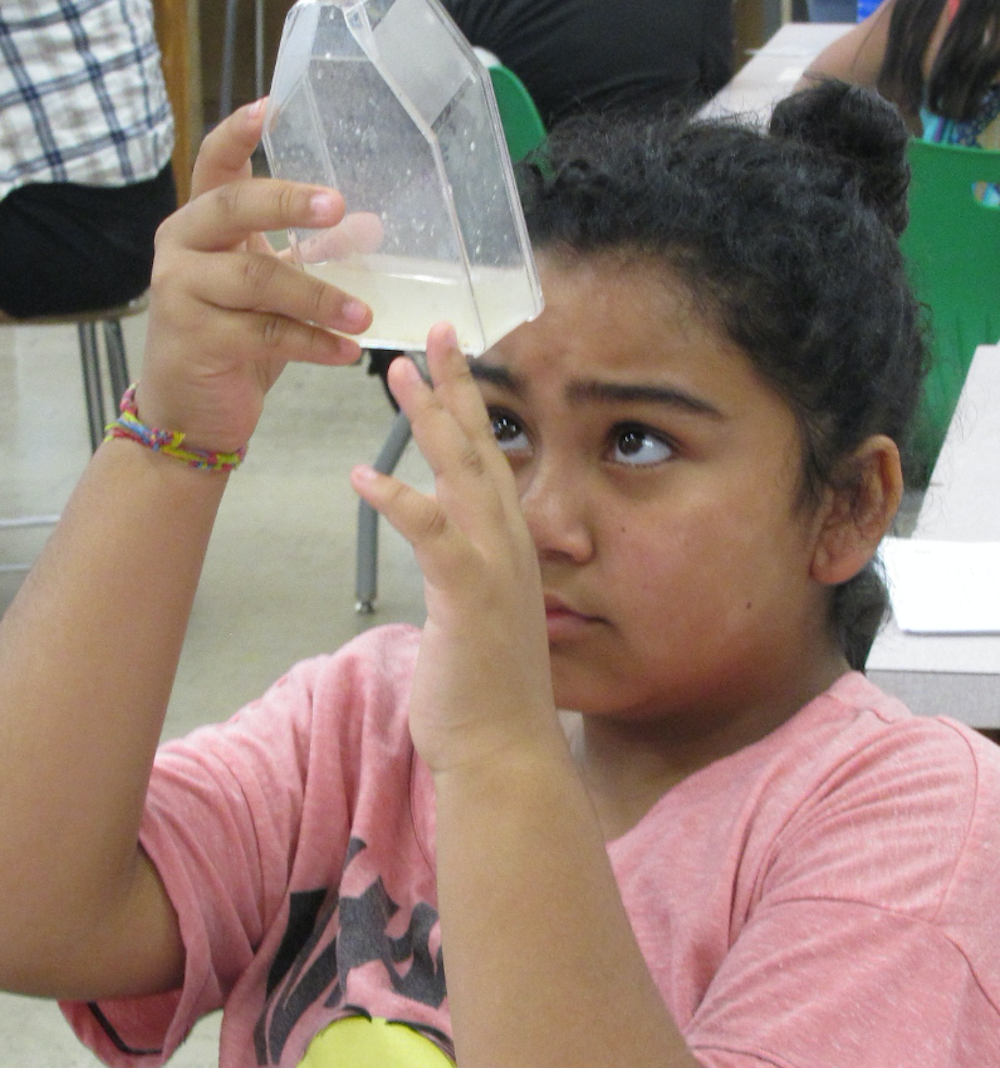 A camper observes the water conditions of her larvae.
Katherine R. Bruna, CC BY-ND[16]
A camper observes the water conditions of her larvae.
Katherine R. Bruna, CC BY-ND[16]
Solving real-world problems
In 2019 roughly 409,000 people died from malaria[17] worldwide. Even though the “skeeter scientists” of “Mosquitoes & Me” summer camps live far away from the countries where malaria remains a dire threat, scientists anticipate that climate change will exacerbate conditions[18] in the U.S. – especially in urban areas – for other mosquito-borne diseases[19]. These include dengue, West Nile virus, chikungunya Zika and yellow fever.
Community members play a significant role in reducing the prevalence of mosquitoes in urban areas. Since entomology is a predominantly white field, residents of urban neighborhoods may be distrustful of entomologists[20] who, to do their work, need to place traps in and around their homes or neighborhoods and do “surveillance” on trash, flower pots, toys, tires and other items that collect water and cause mosquito habitats.
 Pages from the comic book explaining the life cycle and how ‘Mosquitoes & Me’ campers look for mosquitoes in local parks.
Katherine R. Bruna, CC BY-ND[21]
Pages from the comic book explaining the life cycle and how ‘Mosquitoes & Me’ campers look for mosquitoes in local parks.
Katherine R. Bruna, CC BY-ND[21]
The young skeeter scientists of “Mosquitoes & Me” can help their families make sure that everyday items don’t end up holding standing water and become attractive habitats for mosquito moms to lay their eggs.
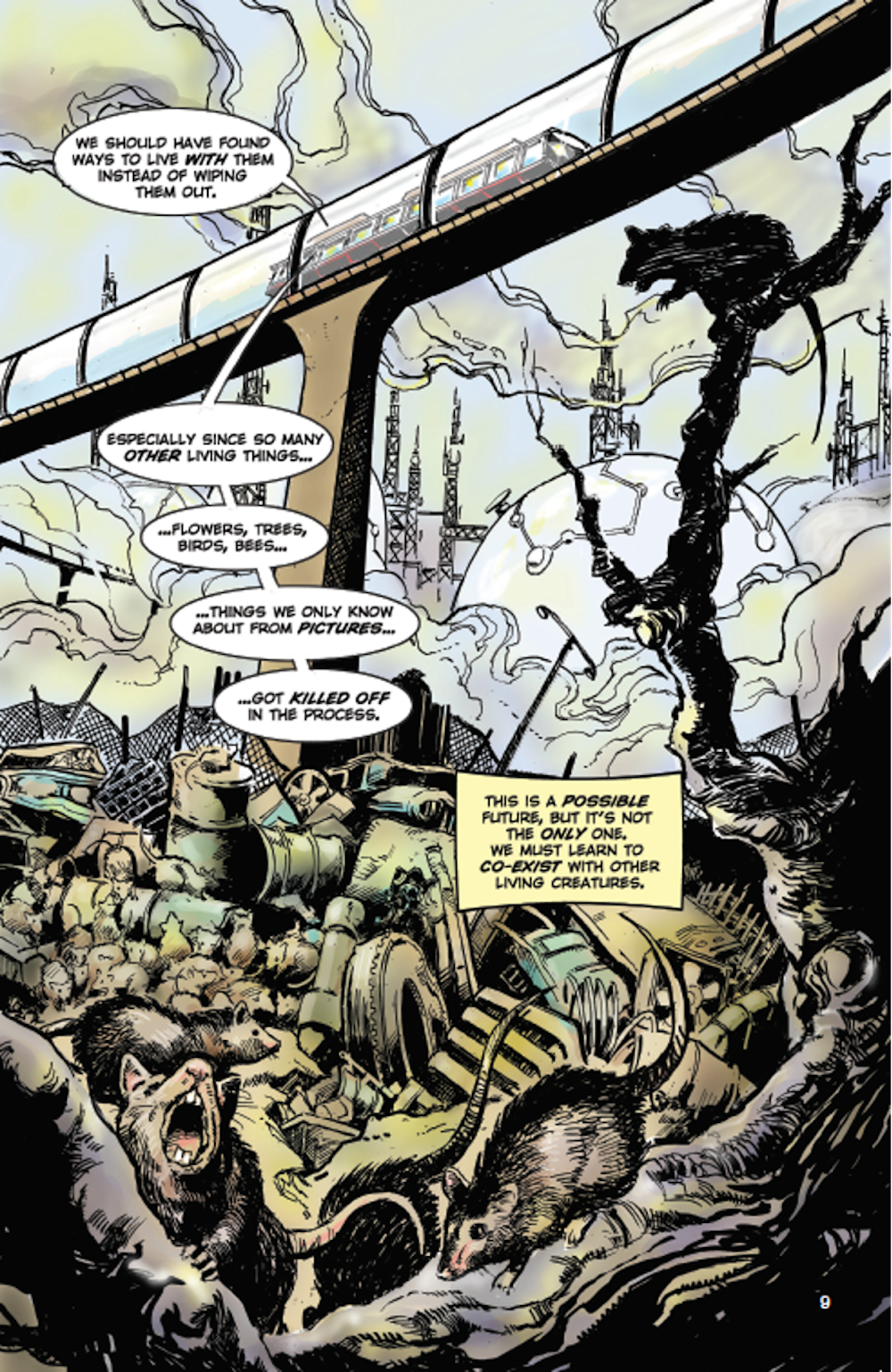 Pages from the ‘Mosqutio and Me’ comic book where rats run around a dystopian world.
Katherine R. Bruna, CC BY-ND[22]
Pages from the ‘Mosqutio and Me’ comic book where rats run around a dystopian world.
Katherine R. Bruna, CC BY-ND[22]
“Mosquitoes Suck!” begins with humans winning the end-of-world battle. But promoting environmental education that avoids such a standoff is the prevailing theme. If humans drive mosquitoes to extinction, we will all lose. They are an essential part of life’s intricate interdependence.
Through “Mosquitoes & Me,” we are helping a future generation of diverse potential scientists and their educators fall for mosquitoes, and for science.
[Over 106,000 readers rely on The Conversation’s newsletter to understand the world. Sign up today[23].]
References
- ^ Mosquitoes & Me (youtu.be)
- ^ educational anthropologist (scholar.google.com)
- ^ Lyric Bartholomay (mcevbd.wisc.edu)
- ^ Sara Erickson (nihsepa.org)
- ^ Bob Hall (bobhall.com)
- ^ “Mosquitoes & Me” (research.hs.iastate.edu)
- ^ actual comic book (www.nebraskapress.unl.edu)
- ^ CC BY-ND (creativecommons.org)
- ^ CC BY-ND (creativecommons.org)
- ^ They examine the important role (www.reconnectwithnature.org)
- ^ outperform students (www.prweb.com)
- ^ fall for science (www.worldcat.org)
- ^ disparities persist (www.sciencenews.org)
- ^ Less than 2% of the membership (moam.info)
- ^ stronger motivation (doi.org)
- ^ CC BY-ND (creativecommons.org)
- ^ 409,000 people died from malaria (www.who.int)
- ^ exacerbate conditions (doi.org)
- ^ other mosquito-borne diseases (doi.org)
- ^ distrustful of entomologists (doi.org)
- ^ CC BY-ND (creativecommons.org)
- ^ CC BY-ND (creativecommons.org)
- ^ Sign up today (theconversation.com)