6 tips to maximise your concert experience, from a live music expert
- Written by: Ben Green, Research fellow, Griffith University
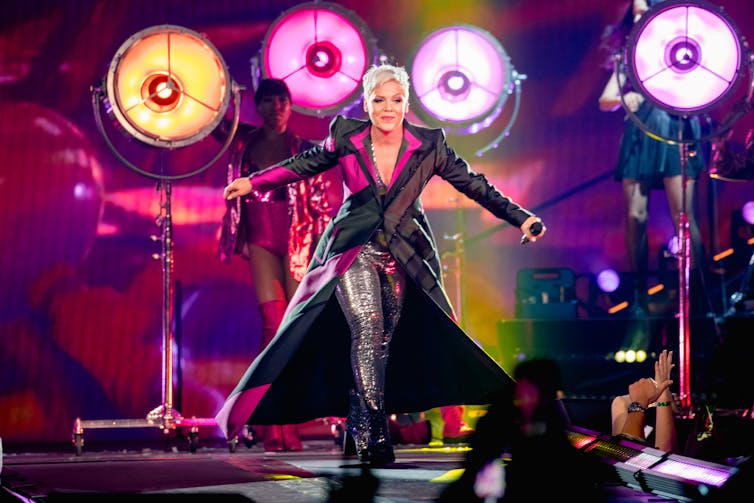
Stadium concert attendance is on the rise in Australia. This month, more than one million people are expected see P!NK and Taylor Swift on their Australian tours, which quickly sold out the country’s biggest stadiums. Both artists added extra dates[1] to meet demand, following extended runs by Ed Sheeran and Foo Fighters in 2023.
What’s drawing such massive crowds to these events? And how can you maximise your fun (in a safe way) when sharing a space with 100,000 other people?
What’s behind the concert boom?
State governments have begun to lift decades-old limits on large stadium concerts. Event caps have gone from six to 12 events per year at Brisbane’s Suncorp Stadium[2], and from four to 20 events per year at the Sydney Cricket Ground precinct[3]. The press releases from both of these announcements trumpeted the benefits for tourism and local economies.
Australia’s live music attendance and revenue doubled[4] in the decade prior to the COVID pandemic, attracting about half the country’s adult population[5]. Large international events contributed significantly to this.
This popularity continues, with ticket prices rising amid a cost-of-living crisis. Consumer research[6] shows people under age 35, and the one-third of Australians who rent their homes, have made the biggest reductions in discretionary spending. But the overall trend is towards saving week-to-week and “splurging” on big events such as concerts[7].
The ‘peak music experience’
Live music is a space where extraordinary things happen. We can celebrate who we are and what’s important to us, individually and collectively. We can have intense feelings and express them in uncommon ways, exploring different – or “more real” – versions of ourselves.
All of this creates memorable experiences that resonate deeply with us and keep us coming back time and again. I call these “peak music experiences”. My research[8] drawing on in-depth interviews with music lovers, media analysis, and participant observation identifies common elements of the peak live music experience.
With that in mind, here are six things to help you get the most out of your next concert.
1. Company
A crucial factor in any concert experience is whom we share it with. The heightened feeling and expression that live music enables can create powerful moments that sociologists call “epiphanies[9]”. Epiphanies reveal and encapsulate what specific people mean to each other.
So when tickets go on sale, and you’re considering whom to call, remember your choice can elevate your concert experience – and your relationship with that person or group.
2. Venue
Music is inseparable from its setting. In live music, this is a feature. Concert halls and dive bars are perfect settings for certain types of experience. But if you’re seeing one of the world’s biggest acts, where better to do so than a giant cauldron of humanity under the stars?
Stadiums have drawbacks, mostly related to their sheer scale and associated logistics. But the journey, the waiting, the challenges, and especially the fellow travellers, often contribute to the unpredictable magic of live music. So plan ahead and leave plenty of time, but also enjoy the whole ride!
3. Sound
Live music doesn’t just sound different than music in your loungeroom; it feels different. High volume, as much as the mass movement of bodies, makes live music a physical experience. Experts suggest[10] the best sonics are in front of the mixing desk, off-centre and not too close to the stage – but this must be balanced with the view! It’s a good idea to pack ear plugs in case your ears need a rest[11].
4. Presence
A good live show requires the performer to be present, not just physically but also emotionally. This is where we judge their authenticity or “realness”. This isn’t an objective quality, but a reflection of our personal tastes and values. Do you prefer flawless virtuosity or relatable vulnerability?
Such notions are deeply ingrained in us. So when choosing a concert, consider how it might confirm or challenge your ideals. Both can be good! And don’t forget to be present yourself[12].
5. Fandom
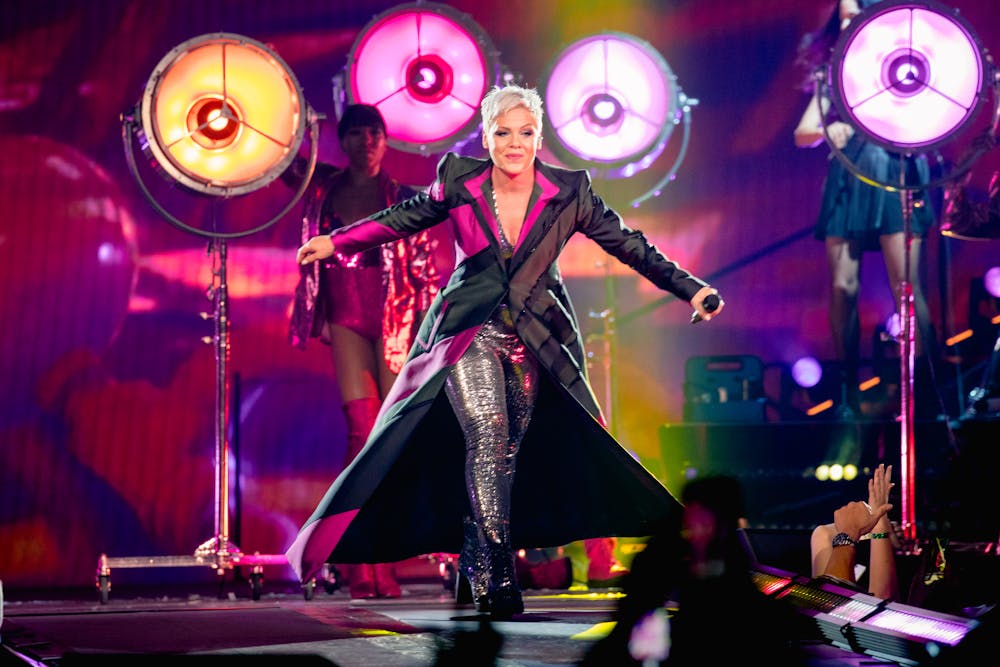
Concerts aren’t just about enjoying and judging the performer(s); they’re also about us. The costly pilgrimage and elaborate ritual to celebrate this very specific thing you love, surrounded by people who love it too, helps join the dots of our fragmented lives.
Just getting to see a favourite artist or song is the source of many people’s peak music experiences. The moral: if it’s an act you really love, always go if you can.
6. Collective feeling
Have you noticed the moment when a roaring crowd becomes aware of itself and roars a bit louder? Live music is about more than just the artist, their performance, or even us. It’s also about other people.
Music synchronises not only our actions but our subjective experience. We feel together, whether in rapt silence or wild abandon. We become a part of something greater – especially at massive concerts with crowds in the tens of thousands. So my tip: join in.
Safety and sustainability
Finally, don’t forget to keep safe. Australia’s love of outdoor events exposes us to extremes, which are a growing reality[13]. Taylor Swift’s recent Brazilian concerts coincided with a heat wave[14] with tragic consequences, highlighting the responsibility of event organisers.
You can manage risks by making plans in advance, knowing your limits, and considering important information such as the availability of water, food, safe spaces and venue exits. Event organisers should provide this information.
The music industry and governments are also beginning to address issues of sexual harassment[15], accessibility[16], drug safety[17] and diverse representation, with a view to making the live music experience available and equitable for all.
Read more: Throwing things on stage is bad concert etiquette – but it's also not a new trend[18]
References
- ^ added extra dates (celebrity.nine.com.au)
- ^ per year at Brisbane’s Suncorp Stadium (statements.qld.gov.au)
- ^ per year at the Sydney Cricket Ground precinct (www.nsw.gov.au)
- ^ attendance and revenue doubled (reports.liveperformance.com.au)
- ^ country’s adult population (theconversation.com)
- ^ Consumer research (www.commbank.com.au)
- ^ such as concerts (www.theguardian.com)
- ^ My research (www.routledge.com)
- ^ epiphanies (journals.sagepub.com)
- ^ Experts suggest (www.lifehacker.com.au)
- ^ ears need a rest (www.ncbi.nlm.nih.gov)
- ^ be present yourself (time.com)
- ^ growing reality (theconversation.com)
- ^ with a heat wave (theconversation.com)
- ^ sexual harassment (theconversation.com)
- ^ accessibility (www.abc.net.au)
- ^ drug safety (theconversation.com)
- ^ Throwing things on stage is bad concert etiquette – but it's also not a new trend (theconversation.com)