Why a controversial Hindu temple in India could prove pivotal to Narendra Modi's party in upcoming elections
- Written by: Aviroop Gupta, PhD Candidate, Curtin University
Jawaharlal Nehru, India’s first prime minister, famously opposed government interference in the rebuilding of the Somnath temple, a popular religious site for the Hindus in Gujarat, because he saw the project as a form of “Hindu revivalism”[1].
In line with his idea of a secular India, Nehru wanted complete separation of state and religion[2].
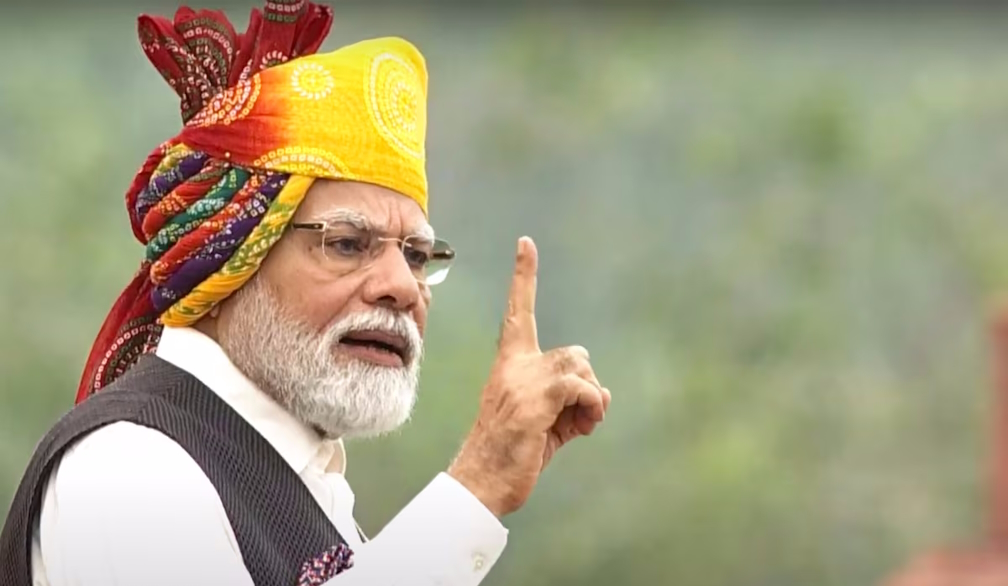
There are no such qualms for the current prime minister, Narendra Modi, head of the ruling Bharatiya Janata Party (BJP). Images of him were beamed live across the country in 2020[3] performing Hindu rituals during the foundation stone-laying ceremony of a grand temple dedicated to Lord Ram, a revered Hindu deity.
The half-completed temple, which will be the largest in India and will be inaugurated[4] on Monday, has been built on the site of the 16th century Babri mosque, that was reduced to rubble by a Hindu mob in 1992. Violent riots followed, killing more than 2,000 people[5], most of them minority Muslims[6].
After a prolonged legal battle, the Indian Supreme Court in 2019 awarded the land[7] where the mosque once stood to Hindus for the building of a temple.
The inauguration of the temple comes at a pivotal time for the country, with elections due in a few months. It is likely to play a significant role in the upcoming polls, for three main reasons.
Drawing Hindus together across castes
First, the Ram Temple movement has allowed the BJP to unite[8] large sections of the Hindu population behind a singular political and religious goal, irrespective of caste considerations. Prior to this, mainly upper castes identified with its ideology.
To expand its voter base, the party resorted to a strategy of “social engineering[9]”. It went on a drive to recruit large numbers of leaders from lower castes[10] (or as they are known in India, “scheduled castes” and “other backward classes”) in order to project an image as a party representing all Hindus that wants to better living conditions for all.
The strategy was successful. Having won just two seats out of 543 in India’s parliament in 1984, the BJP became the single largest party in parliament in 1996, the first national election after the mosque demolition.
Read more: Why Hindu nationalists are cheering moves to build a temple, challenging a secular tradition[11]
Last October, an opposition-ruled state (Bihar) released a caste census, despite much push-back from the BJP. The census revealed that 63% of the state’s population belong to the “other backward classes”[12].
This could be seen as damaging to the BJP as it shows the party hasn’t done enough to lift people out of poverty. There was always a demand for such surveys so that jobs could be reserved for the lower castes according to their actual share in population. The BJP has resisted them, however, fearing this would anger their upper caste supporters.
The opposition has promised similar nationwide surveys if it manages to defeat the BJP in the 2024 election. And it has committed to distributing resources[13] in a more equitable way, if elected.
These developments have put the BJP’s mantra of Hindu unity on rather shaky ground. To ensure this doesn’t become a major election issue, BJP leaders will have to amplify the noise around the temple, demonstrating the unity of all Hindus irrespective of caste.
Sectarian tensions bring out voters
Second, sectarian tension has always helped the BJP electorally[14]. Studies show that whenever there’s a riot in the year before an election, the party gains an increase of 0.8% in the share of the vote[15].
This is a substantial gain because in India’s first-past-the-post voting system, winning just 37% of the total votes in the 2019 parliamentary elections ensured an overwhelming majority of seats[16] for Modi’s party.
Read more: Why some Indians want to change the country's name to 'Bharat'[17]
Of course, not all Hindus support the Ram Temple. But the BJP is well aware that the number of Hindu temple supporters is large enough to help the party win elections comfortably.
In a survey held after the 2022 election in the state of Uttar Pradesh, over two-thirds of the Hindu respondents[18] who thought the temple was a “very important” election issue voted for the BJP.
This is arguably the single-most polarising issue in the country and some Hindu nationalists want to keep the pot boiling. They have already petitioned the courts with claims to two other historical mosques in Varanasi and Mathura[19]. The Supreme Court also seems to be taking a favourable view of these claims[20].
Distraction from other big issues
And last but not least, a grand inauguration ceremony – and its continuous month-long coverage on pro-government mainstream TV channels – will distract voters from real issues and help the BJP control the electoral narrative.
There are plenty of other issues to be concerned with. India’s economic growth hasn’t necessarily led to more jobs, with about 42% of graduates under 25 unemployed[21].
Despite the fact that Modi promised to double the incomes of farmers by 2022[22], they are still struggling to keep up with ever-rising debts. More than 100,000 farmers committed suicide[23] from 2014–22, a rate of more than 30 per day.
Human rights activists, journalists and student protesters are regularly charged with stringent anti-terrorism laws[24] and thrown in prison. Amnesty International was forced to shut down[25] after the government froze its accounts following the publication of critical reports of its human rights record.
Ethnic violence has wracked[26] the northeastern state of Manipur since last May. An influential member of parliament who asked tough questions about industrialist Gautam Adani’s relationship with Modi was expelled from parliament[27] in December. The government claimed[28] she had accepted bribes to ask the questions; she denies this.
And institutions meant to safeguard India’s democracy are being systematically dismantled[29].
The government has also been accused by UN special rapporteurs of “collective punishment[30]” of Muslims suspected of taking part in inter-communal violence or protests through the bulldozing of their properties, often disregarding standard procedures[31]. One demolition was even telecast live with news anchors cheering from the sidelines[32].
In two states that have seen the worst of such bulldozer actions (Uttar Pradesh and Madhya Pradesh), the BJP was returned to power in state elections.
Modi’s government doesn’t want to lose any support from its Hindu base, so the temple inauguration will presumably bring much BJP chest-thumping, especially as the election draws closer.
References
- ^ form of “Hindu revivalism” (www.theweek.in)
- ^ complete separation of state and religion (indianexpress.com)
- ^ were beamed live across the country in 2020 (www.nytimes.com)
- ^ inaugurated (www.thehindu.com)
- ^ killing more than 2,000 people (carnegieendowment.org)
- ^ most of them minority Muslims (www.reuters.com)
- ^ awarded the land (www.hindustantimes.com)
- ^ unite (www.tandfonline.com)
- ^ social engineering (www.business-standard.com)
- ^ It went on a drive to recruit large numbers of leaders from lower castes (doi.org)
- ^ Why Hindu nationalists are cheering moves to build a temple, challenging a secular tradition (theconversation.com)
- ^ 63% of the state’s population belong to the “other backward classes” (frontline.thehindu.com)
- ^ committed to distributing resources (www.deccanherald.com)
- ^ helped the BJP electorally (economictimes.indiatimes.com)
- ^ gains an increase of 0.8% in the share of the vote (dx.doi.org)
- ^ ensured an overwhelming majority of seats (www.economist.com)
- ^ Why some Indians want to change the country's name to 'Bharat' (theconversation.com)
- ^ over two-thirds of the Hindu respondents (www.thehindu.com)
- ^ two other historical mosques in Varanasi and Mathura (scroll.in)
- ^ favourable view of these claims (thewire.in)
- ^ unemployed (indianexpress.com)
- ^ double the incomes of farmers by 2022 (www.thehindu.com)
- ^ committed suicide (thewire.in)
- ^ regularly charged with stringent anti-terrorism laws (www.hrw.org)
- ^ forced to shut down (www.theguardian.com)
- ^ wracked (www.aljazeera.com)
- ^ expelled from parliament (www.theguardian.com)
- ^ claimed (www.bbc.com)
- ^ systematically dismantled (thewire.in)
- ^ collective punishment (www.hrw.org)
- ^ often disregarding standard procedures (doij.org)
- ^ news anchors cheering from the sidelines (scroll.in)