Koalas suffer in the heat – here's how to help this summer
- Written by: Edward Narayan, Senior Lecturer in Animal Science, The University of Queensland
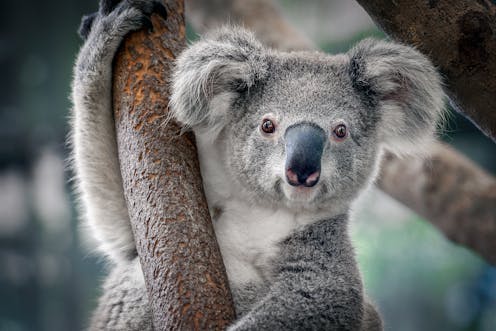
As we brace for an unusually hot summer[1], spare a thought for koalas. They will be out and about in search of love, food and water[2] in the searing heat.
Mother koalas with pouch young are especially vulnerable. Many will be killed or injured on our roads as they attempt to cross. Sometimes joeys are orphaned in the process, but even if they make it to one of Australia’s rehabilitation centres these young koalas can be stressed by well-meaning visitors[3] such as potential donors and media.
Hot and dry conditions make gum tree leaves less nutritious, so koalas tend to seek additional water sources[4]. Some diseases can also damage their kidneys, making them drink more.
As habitat loss pushes koalas into our cities[5], people frequently encounter these wild animals on roads, in parks and sometimes even in their backyards. So it’s worth knowing how to help keep koalas healthy and what to do if you encounter a koala in distress.
Read more: Koalas can learn to live the city life if we give them the trees and safe spaces they need[6]
What to do if you encounter a sick or injured koala
Put clean water out in a shallow bowl such as an ice-cream container at the base of a gum tree. Thirsty koalas will gently lap up the water[7] using their tongue. Never give a koala water from a bottle[8] because koalas can choke if their heads are tilted back while drinking.
Avoid any interaction with wild koalas. Leave this[9] to veterinarians, wildlife officers, researchers with permits, and licensed rehabilitators. Koalas have strong arms, sharp claws and a very tight grip[10]. They also find the presence of humans very stressful.
If you find a koala on the ground and it lets you approach, there must be a problem. Call your local koala rescue group. The name of the organisation will vary depending on your location. If you don’t know where to begin, Google “wildlife rescue near me”. Dial the number and follow the instructions from the koala rescue team. Do not try to touch, handle or pick up the koala. Also discourage other people from gathering to look on, as it can do more harm. Distressed koalas produce the stress hormone cortisol, which can raise blood pressure, increase heart rate variability and make recovery and rehabilitation more challenging.
Keep dogs on a leash when you are out and attend to any barking at home. Train your dog to respect wildlife[11]. Ensure the dog will come to you when called. Reward good behaviour.
Koalas can end up in suburban backyards with or without food trees. You might like to install an “escape pole” such as timber log placed vertically against the fence in your yard. Follow these handy koala-sensitive design guidelines[12].
Secure swimming pools[13] so koalas are less likely to fall in and drown. Australia’s largest wildlife rescue organisation, WIRES, suggests draping something over the edge of the pool[14] so animals can climb out. A length of heavy-duty rope or even a bodyboard, secured at one end to something heavy outside the pool, works well because it does not absorb water and provides a platform for an exhausted animal to rest on. You can also place bricks or large stones to the side of each step, to make it easier for animals to gain a foothold and climb out.
Understanding stress in koalas
Koalas are well adapted to life in Australian forests. They have insulating fur and an ability to adjust body posture when exposed to environmental challenges – such as rolling up in a ball in high wind and covering their ears. They can stay in the trees even in very windy conditions.
If you wander into the bush at night during breeding season[15] – from spring through to autumn – you may hear the deafening bellowing of male koalas[16] trying to attract females.
Breeding season is a stressful time for wild koalas because there is so much activity involved, including energy expended in the search for mate.
Koalas generally keep to their family groups[17]. Mum and joeys usually stay together in the treetops. Adult males father many joeys[18], sometimes with different females.
The diseases chlamydia and koala retrovirus are among the biggest threats[19] to koalas’ survival. Chlamydia[20] is a bacteria found in many species of bird and mammals worldwide. Koala retrovirus[21] is thought to cause koala immune deficiency syndrome (KIDS), an AIDS-like immunodeficiency that leaves infected koalas more susceptible to infectious disease and cancers.
A lack of appropriate food trees is another source of stress, because koalas rely on fresh gum leaves to maintain their body’s water balance[22].
Ask An Expert: How Extensive is Chlamydia? (Koala Life)Read more: Testing the stress levels of rescued koalas allows us to tweak their care so more survive in the wild[23]
Be a friend to koalas
Habitat loss, bushfire, drought, heat and pressure to find a mate mean koalas are frequently on the move. Here’s how to help keep them safe and well:
watch out for koalas on the road[24] and slow down
put local koala wildlife rescue group contact numbers in your phone so you know whom to call in an emergency
report urban koala sightings to your local rescue group – it’s likely to indicate an ongoing problem. Well-informed koala rescue groups can better manage the situation and put appropriate action plans in place
ask your council about programs available for koalas in your local area and volunteer for food tree planting days and other activities
support local koala hospitals and donate if you can
share this article with family and friends.
References
- ^ unusually hot summer (media.bom.gov.au)
- ^ out and about in search of love, food and water (rcc.news)
- ^ young koalas can be stressed by well-meaning visitors (www.biorxiv.org)
- ^ seek additional water sources (www.newscientist.com)
- ^ into our cities (theconversation.com)
- ^ Koalas can learn to live the city life if we give them the trees and safe spaces they need (theconversation.com)
- ^ gently lap up the water (youtu.be)
- ^ Never give a koala water from a bottle (www.theweathernetwork.com)
- ^ Leave this (environment.des.qld.gov.au)
- ^ a very tight grip (environment.des.qld.gov.au)
- ^ Train your dog to respect wildlife (loganwestnews.com.au)
- ^ koala-sensitive design guidelines (www.des.qld.gov.au)
- ^ Secure swimming pools (environment.des.qld.gov.au)
- ^ draping something over the edge of the pool (www.wires.org.au)
- ^ breeding season (www.bushheritage.org.au)
- ^ bellowing of male koalas (onlinelibrary.wiley.com)
- ^ keep to their family groups (koalaclancy.wordpress.com)
- ^ father many joeys (koalaclancy.wordpress.com)
- ^ among the biggest threats (koalahospital.org.au)
- ^ Chlamydia (koalahospital.org.au)
- ^ Koala retrovirus (www.uniprot.org)
- ^ maintain their body’s water balance (koalainfo.com)
- ^ Testing the stress levels of rescued koalas allows us to tweak their care so more survive in the wild (theconversation.com)
- ^ koalas on the road (www.koala.nsw.gov.au)
Read more https://theconversation.com/koalas-suffer-in-the-heat-heres-how-to-help-this-summer-216435