Meet Andrew Hauser, the outsider from the UK who'll be deputy governor of the RBA
- Written by: Isaac Gross, Lecturer in Economics, Monash University

In a significant step towards reforming Australia’s Reserve Bank, Treasurer Jim Chalmers has stepped outside the bank and outside of Australia to select Andrew Hauser, a British economist, as its new deputy governor[1].
The deputy governor’s job has traditionally been a springboard to the governor’s job, and Hauser will replace Michele Bullock who was herself deputy governor until her appointment as governor on Philip Lowe’s retirement in September.
Hauser is the first deputy governor to be appointed from outside the bank, and also the first non-Australian to be appointed to a high-ranking position in the bank.
The selection of a complete outsider is a sign that Treasurer Jim Chalmers has taken on board the concerns of the independent review of the Reserve Bank which in April expressed concern about what it called groupthink[2] at the bank, which it defined as
a phenomenon in which a group of individuals tries to minimise conflict and reach a consensus decision without critical evaluation of alternative viewpoints, by actively suppressing dissenting viewpoints and isolating themselves from outside influences
The review found a “lack of openness to external ideas” at the bank and a tendency to avoid difficult discussions to resolve issues.
It wanted the bank “open to diverse voices” and suggested advertising vacancies for management roles externally as a default, with external members on all selection panels for deputy-head of department roles and above.
The RBA and the Bank of England face similar challenges
Hauser has worked at the Bank of England for over 30 years, giving him a deep understanding of the operation of monetary policy in an open economy similar to Australia’s, in which interest rates and the the exchange rates are important economic levers.
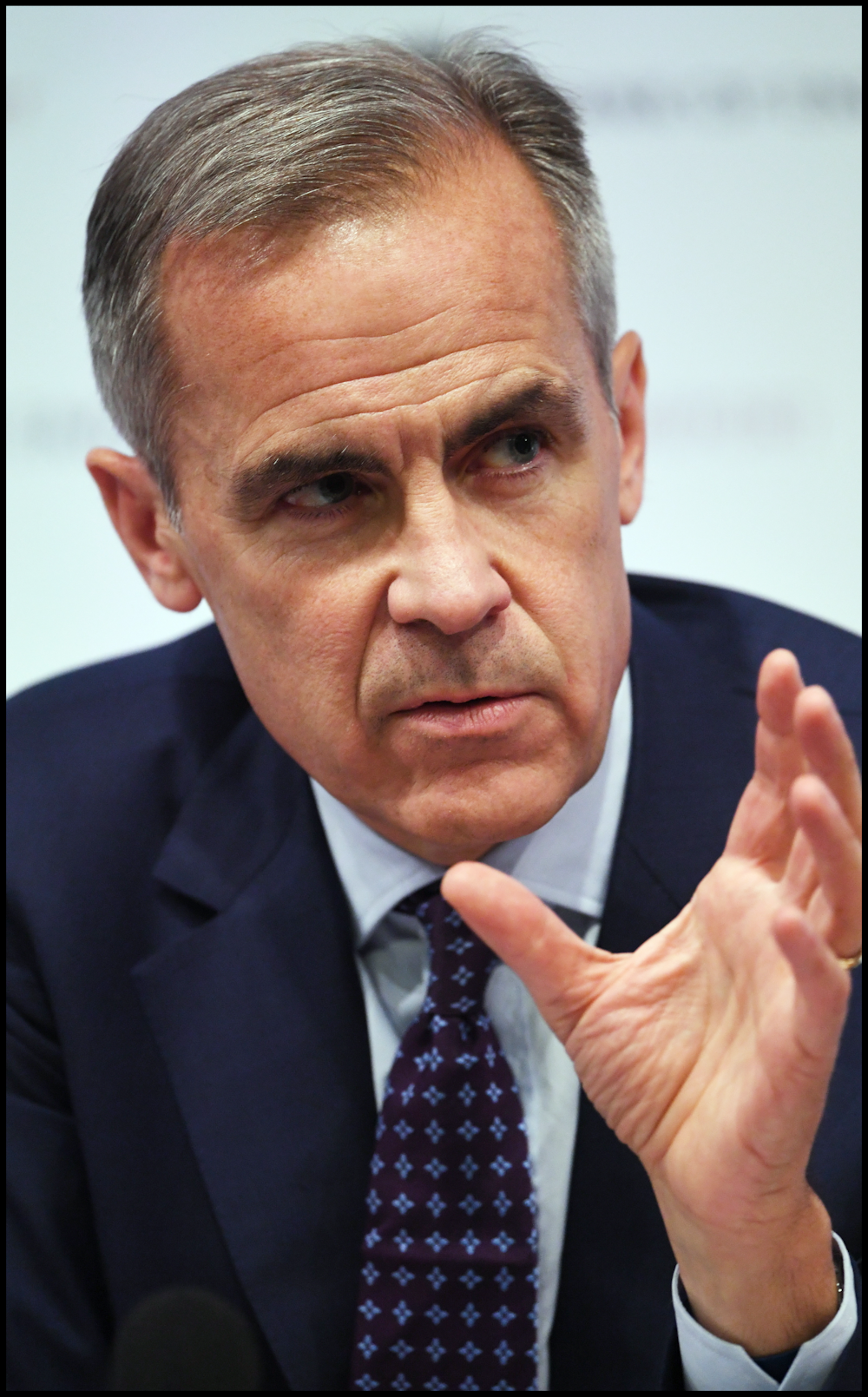
If the experience of his former governor at the Bank of England, Mark Carney, is any guide, he’ll make the transition without too much difficulty.
Carney was appointed Governor of the Bank of England in 2013 from Canada where he had been Governor of the Bank of Canada, and served until 2020.
Hauser’s experience as executive director for markets at the Bank of England and his involvement in managing its response to the global financial crisis and the early stages of COVID will make him especially useful to Australia’s Reserve Bank.
The Reserve Bank has been without top-level experience in managing markets during crises since the departure of Guy Debelle[4] in March 2022.
Debelle had long been the bank’s point person on markets. As head of its financial markets group during the crisis he coordinated and directed the bank’s attempt to keep financial markets open on a daily basis, a role he fulfilled again as deputy governor during the COVID crisis.
Hauser will help the bank decide how quickly to shrink
A major challenge for the bank under Hauser’s deputy governorship will be managing the size of its balance sheet.
During the COVID crisis, the bank bought government bonds with money it created in order to support the economy and keep interest rates low.
This led to a quadrupling[5] of its balance sheet, from A$161.4 billion in financial assets before COVID to a peak of $637 billion in March this year.
Now that the crisis has passed, the bank is slowly contracting its balance sheet by gradually letting the bonds they bought expire.
Read more: RBA revolution: how Chalmers will recraft the bank for the 21st century[6]
At issue is whether the bank should contract its balance sheet faster (and contract the economy) by actively selling bonds, and also when it should stop selling bonds and letting them expire.
While these are new questions for the Reserve Bank, the Bank of England has been grappling with them for years, having bought bonds with created money during the global financial crisis.
As executive director of markets at the Bank of England, Andrew Hauser is well versed in the problem. He outlined the issues earlier this month in what might be his final speech[7] for the Bank of England, entitled “Less is more or less is a bore? Re-calibrating the role of central bank reserves”.
His appointment marks a pivotal moment in the Reserve Bank’s history, underlining the government’s commitment to revitalising the bank and refashioning it for the 21st century.
He is expected to take up his new role in early 2024.
References
- ^ new deputy governor (ministers.treasury.gov.au)
- ^ groupthink (rbareview.gov.au)
- ^ Facundo Arrizabalaga/AAP (photos.aap.com.au)
- ^ Guy Debelle (www.rba.gov.au)
- ^ quadrupling (www.rba.gov.au)
- ^ RBA revolution: how Chalmers will recraft the bank for the 21st century (theconversation.com)
- ^ final speech (www.bis.org)