what Australian condolence letters reveal about us
- Written by: Jennifer Clark, Professor of History, University of Adelaide
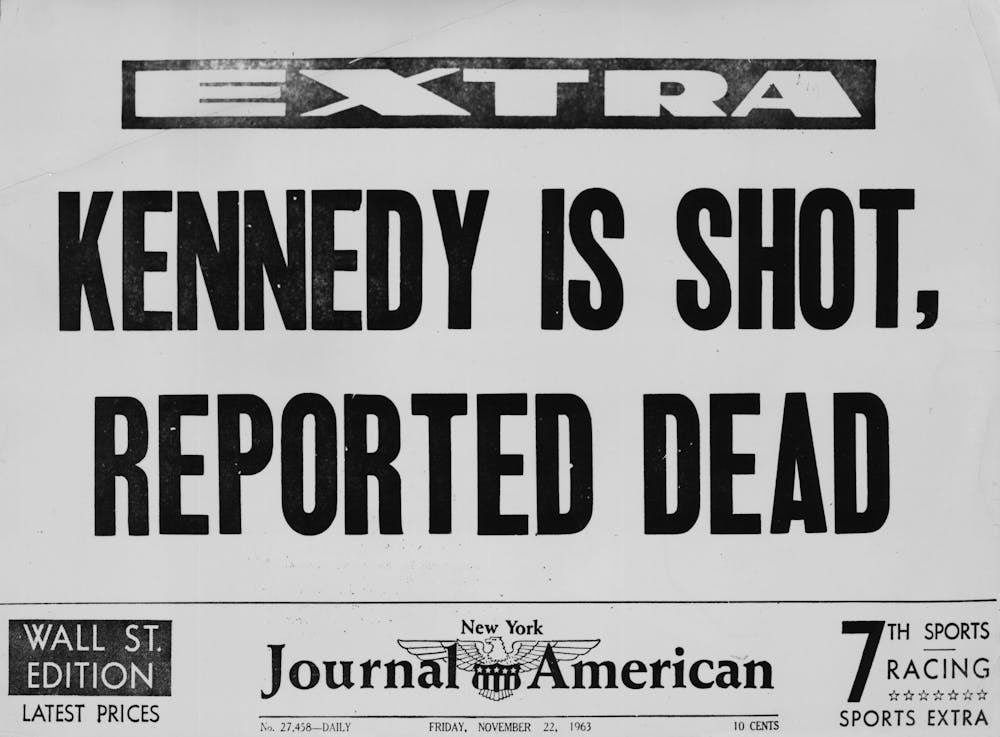
US President John F. Kennedy was assassinated in Dallas 60 years ago, on November 22 1963. Within hours, the news ricocheted around the world.
Perhaps we could imagine a substantial impact in Europe, where Kennedy had only recently, and somewhat famously, declared[1] “Ich bin ein Berliner”.
But Kennedy’s death was also deeply felt in Australia, prompting many people to write personal letters to Jacqueline Kennedy. They paint a revealing portrait of life down under in the 1960s.
Read more: JFK conspiracy theory is debunked in Mexico 57 years after Kennedy assassination[2]
Letters from ‘far flung corners’
People from around the world felt compelled to write to the first lady.
Some 45,000 letters[3] arrived on one day alone. White House staff were still processing more than one million letters years later.
Sometimes they came with cards and gifts, including pieces of especially composed music.
Hundreds of letters came all the way from Australia, from what a Rockhampton woman described as “a far flung corner”.
At a time when the national sentiment under Menzies’ leadership was more in favour of the United Kingdom than the United States, it’s somewhat surprising Kennedy’s death prompted such an outpouring of grief.
Kennedy never visited the “far flung corner”. There was some talk that he would come to Australia as part of a wider visit to the Pacific, but diplomatic sensibilities and logistics proved difficult to overcome.
In any case, one of the proposed dates clashed with a visit[4] from the Queen Mother.
But some believed it was the assassination that ended the plans. A Sydney couple wrote to Jacqueline Kennedy:
I believe you were to honour us by a visit from you & the President this year […] but fate decided against it to our deepest disappointment […] and regret. We were all looking forward so eagerly to that great pleasure.
Interestingly, that same letter suggested that Robert Kennedy might have time in the future to bring Jacqueline and the children to Australia, revealing how restrictive gender roles were understood in 1963.
Political figures as personal friends
Many of the letter writers admitted they mourned Kennedy as if he was a family member or a close friend.
A lot of this intimacy came from watching Kennedy on television.
One man from Mt Kuring-gai explained after he began his letter with “Dear Jacki”:
I ask your pardon for using your Christian name, but I feel that both you and John Kennedy are my personal friends.
Similar sentiments were expressed by a Brisbane woman:
Television is a wonderful thing […] although you have never met me, yet by seeing you several times on the television screen, I feel that I have met you.
During the Kennedy years, the quantity of TV time devoted to news in the US expanded considerably, meaning that mediated access to Kennedy also increased.
His youth, Hollywood good looks, and his glamorous wife became part of US and Australian cultural consumption.
Read more: Can withering public trust in government be traced back to the JFK assassination?[5]
The Australian Women’s Weekly[6] also helped to popularise the Kennedy image. Readers were shown how to make their own Jackie pillbox hat and cultivate Jacqueline Kennedy’s intellectual style. The magazine instructed:
Start by reading the newspaper, go to art exhibitions, see a few historical film spectaculars, and learn to read a menu in French. Don’t chatter.
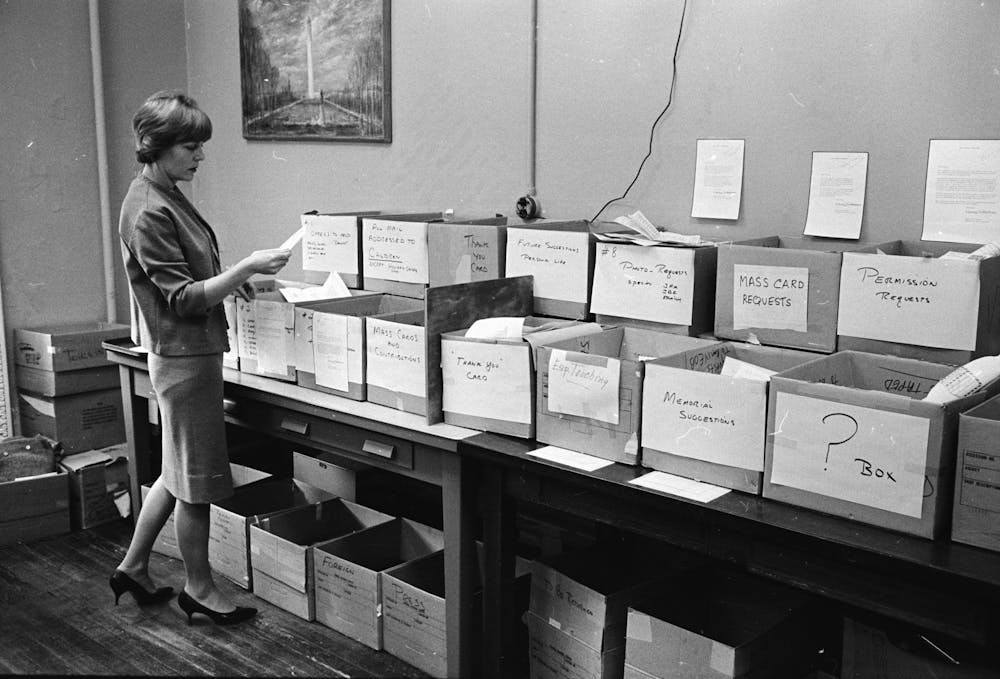 Jackie Kennedy received millions of letters after her husband’s death.
Interim Archives/Getty Images
Jackie Kennedy received millions of letters after her husband’s death.
Interim Archives/Getty Images
Seeing themselves in the Kennedys
Widows and mothers especially identified with Jacqueline Kennedy. They wrote to her “as woman to woman”, relating their own grief experiences and offering to help mind the “kiddies”, if only she lived closer.
Catholics also wrote in large numbers. Kennedy was the great Catholic hero at a time of deep sectarianism in Australian society. They were proud of his political success.
It also helped that he had Irish roots, like much of the Catholic priesthood in Australia at the time.
Read more: The luck of the Irish might surface on St. Patrick's Day, but it evades the Kennedy family, America's best-known Irish dynasty[7]
During the Cold War, Kennedy offered a sense of security.
That proved important to Robert Menzies in his reelection campaign, given that Kennedy died only a week before polling day. Labor Party leader Arthur Calwell saw the writing on the wall.
When Menzies mentioned Kennedy while electioneering, Calwell complained[8] that Menzies was trying to use the assassination for political purposes.
Calwell’s messaging didn’t cut through. Instead, voters wanted safety and familiarity in their leadership amid global upheaval.
One Strathfield woman who wrote to Jacqueline Kennedy explained that the idea of Menzies’ having “been in too long” disappeared with the assassination. She said:
[…] there was a great swing to Liberals & they won with the amazing majority of 22 seats.
A unique mixture of television, religion and personality meant Kennedy’s death had cultural repercussions in “the far flung corner”. We would not see a grief response like this again until the death of the Princess of Wales, 34 years later.
But so great was the impact in Cold War-era Australia that the death of an overseas president also had some bearing on the formation of government back home.
References
- ^ declared (www.jfklibrary.org)
- ^ JFK conspiracy theory is debunked in Mexico 57 years after Kennedy assassination (theconversation.com)
- ^ 45,000 letters (slate.com)
- ^ a visit (pmtranscripts.pmc.gov.au)
- ^ Can withering public trust in government be traced back to the JFK assassination? (theconversation.com)
- ^ Australian Women’s Weekly (trove.nla.gov.au)
- ^ The luck of the Irish might surface on St. Patrick's Day, but it evades the Kennedy family, America's best-known Irish dynasty (theconversation.com)
- ^ complained (www.jstor.org)