


Pregnant this winter? Here's how to prepare for COVID and get vaccinated
- Written by: Hannah Dahlen, Professor of Midwifery, Associate Dean Research and HDR, Midwifery Discipline Leader, Western Sydney University
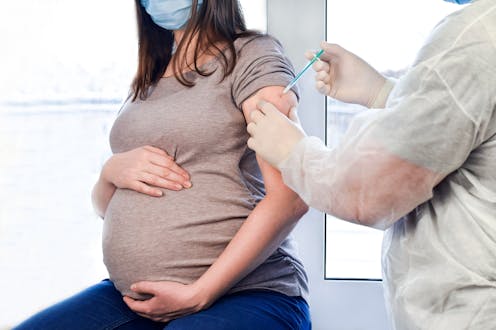
With the days becoming noticeably shorter, winter is on its way in the Southern Hemisphere.
Most pregnant women are aware of the recommendations[1] around getting vaccinated against influenza (flu) and pertussis (whooping cough). However, COVID is still relatively new, meaning women who have never been pregnant before may be unaware of the current recommendations and research.
Like the flu and whooping cough, COVID can strike at anytime over the course of the year – as shown by the ongoing reports of COVID cases and deaths[2] in Australia.
However, viruses[3] that cause respiratory conditions thrive in cold, dry conditions, and our bodies change how they respond to disease. We will likely stay indoors more in closed spaces that are heated – making the air drier – and not well ventilated.
It all makes for a worrying mix for expectant parents – and some will also be worried about vaccines.
1 in 10 pregnant women are vaccine hesitant
We are following more than 6,000 Australian women in the Birth in the Time of COVID-19 study who were pregnant or gave birth during the first two years of the pandemic. We also sent them follow-up surveys at two months, six months, 12 months and 24 months after giving birth.
This sample included more respondents who could read and write English and were born in Australia than the general population and were generally more socioeconomically advantaged than average. So the real level of hesitancy about COVID vaccines may be higher.
Our latest findings reporting on 2,144 responses to questions on vaccine uptake, published in the journal BMJ Open[4] show around one in ten pregnant women and just over one in 13 postnatal women were hesitant to get a COVID vaccination.
Those who expressed hesitancy during pregnancy were more likely to live in a state other than New South Wales, were younger (aged under 30), did not have a university education and earned less than A$80,000. They were also more likely not to have pregnancy risk factors and were generally less satisfied with life.
Concerns about taking any medication when pregnant are common and understandable.
So what does the evidence say?
Women might worry[5] there is not enough information on safety yet. But real-life data[6] shows no evidence of a negative impact[7] on fertility[8], miscarriage[9], stillbirth[10], preterm birth or other problematic pregnancy outcomes, and no negative impact[11] on newborns or via breastfeeding.
We also know most side effects are mild and go away[12] within a couple of days.
But getting COVID[13] when pregnant and unvaccinated leads to a higher risk of severe illness[14] which can require hospital admission and, sometimes ventilation for breathing assistance. The baby may have a higher risk[15] of premature birth (before 37 weeks of pregnancy), stillbirth or admission to the hospital newborn unit.
COVID vaccination protects the mother and can provide some protection to babies by transferring antibodies[16] through the placenta (during pregnancy) or through breast milk (during breastfeeding).
New research from the Doherty Institute shows[17] pregnant women mount a strong immune reponse to COVID and vaccination provides an advantage by inducing cells that fight the infection.
What do pregnant women need to know now winter is coming?
If you are trying to become pregnant, you do not need to delay vaccination or avoid becoming pregnant after vaccination.
For pregnant women[18], there are special considerations that need to be discussed so informed decisions can be made.
Advice[19] from the Department of Health and Aged Care is that if you are pregnant, you should have two COVID vaccine doses (called the primary course). If your immunity is severely compromised, you should receive a third dose of a COVID vaccine.
An mRNA vaccine such as Pfizer is recommended as part of the primary course. If you can’t have Pfizer[20], you can have Novavax. The original Moderna[21] vaccine is no longer available in Australia.
While research has shown the Pfizer vaccine is safe if you are pregnant and/or breastfeeding, there is less data available on Novavax in pregnancy.
What if you’re already vaccinated?
If you are pregnant and have previously been vaccinated[23] then you can have a booster dose, six months after your last vaccine dose or most recent COVID infection. Recommendations for booster doses if you are pregnant are now the same as for non-pregnant people of the same age[24]. Discuss this with your health provider.
As of earlier this year, pregnancy is no longer considered a risk factor for severe illness[25] for those who have already had their primary COVID vaccinations plus a booster, provided they do not have any special medical risks.
To book a COVID vaccine or booster dose, use the health Service Finder[26] or text “Hey Eva” a callback service for Easy Vaccine Access[27].
Read more: Sepsis is serious during pregnancy, but thankfully it is still rare[28]
References
- ^ recommendations (www.health.gov.au)
- ^ COVID cases and deaths (www.health.gov.au)
- ^ viruses (www.vu.edu.au)
- ^ BMJ Open (protect-au.mimecast.com)
- ^ might worry (www.science.org.au)
- ^ real-life data (theconversation.com)
- ^ no evidence of a negative impact (www.nejm.org)
- ^ fertility (www.ncbi.nlm.nih.gov)
- ^ miscarriage (europepmc.org)
- ^ stillbirth (pubmed.ncbi.nlm.nih.gov)
- ^ no negative impact (www.ncbi.nlm.nih.gov)
- ^ are mild and go away (www.tga.gov.au)
- ^ getting COVID (theconversation.com)
- ^ higher risk of severe illness (www.bmj.com)
- ^ higher risk (bmcpregnancychildbirth.biomedcentral.com)
- ^ transferring antibodies (jamanetwork.com)
- ^ shows (insight.jci.org)
- ^ pregnant women (www.health.gov.au)
- ^ Advice (www.health.gov.au)
- ^ can’t have Pfizer (www.health.gov.au)
- ^ Moderna (www.health.gov.au)
- ^ Shutterstock (www.shutterstock.com)
- ^ pregnant and have previously been vaccinated (www.health.gov.au)
- ^ non-pregnant people of the same age (www.health.gov.au)
- ^ risk factor for severe illness (www.health.gov.au)
- ^ Service Finder (www.healthdirect.gov.au)
- ^ Easy Vaccine Access (www.health.gov.au)
- ^ Sepsis is serious during pregnancy, but thankfully it is still rare (theconversation.com)










