Do beach cabanas actually protect you from the sun?
- Written by: Katie Lee, PhD Candidate, The University of Queensland
You may have seen them popping up on beaches everywhere – colourful, breezy, shady, beach cabanas.
Unlike beach umbrellas, they’re sturdy enough to withstand a stiff sea breeze and have pockets for sand to anchor them firmly. Best of all, there’s plenty of room for you, and your friends and family.
Some people have complained[1] about beach cabanas blocking the view for other beach goers, and surf lifesavers. But beach cabanas are certainly having a moment in Australia. It’s a trend sun safety experts[2] are keen to see continue.
But do beach cabanas provide as much sun protection as you think?
Read more: I can't get sunburnt through glass, shade or in water, right? 5 common sunburn myths busted[3]
Chasing shade
Seeking shade is an important element of the slip-slop-slap-seek-slide[4] method of sun protection (clothes, sunscreen, hat, shade, sunnies). The aim is to reduce your exposure to UV light, which is responsible for about 95%[5] of all skin cancers.
In Queensland alone, more people die[6] from skin cancer than road crashes. Australia-wide, we spend A$1.7 billion on skin cancer diagnosis and treatment a year.
Shading yourself from the direct sun will reduce your UV exposure by up to 75%[7], depending on the surrounding environment.
People who frequently use shade are much[8] less likely[9] to be sunburned than those who rely on sunscreen only. So beach cabanas seem to fit the bill nicely.
Read more: How long does it take for skin to repair after sun exposure?[10]
How much protection do they provide, exactly?
Beach cabanas are usually made from canvas, polyester or spandex. Look for fabric with UPF 50+ protection[11].
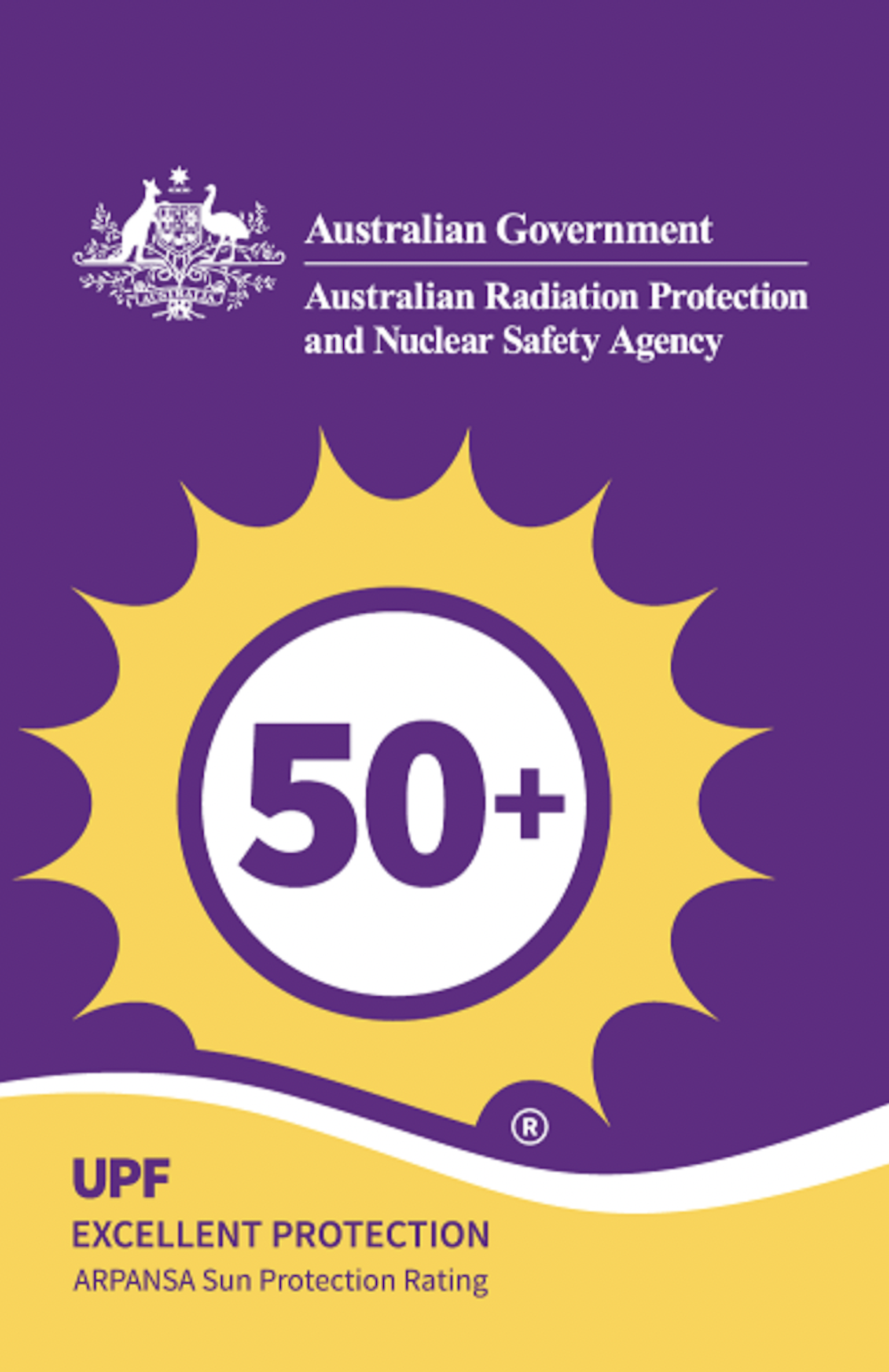
UPF (ultraviolet protection factor) ratings are similar to the SPF (sun protection factor) ratings on sunscreen. They measure the amount of UV that penetrates the fabric.
UPF 50+ means only 1/50th (2%) or less of UV light gets through. That includes both UVA, responsible mostly for accelerated skin ageing, and UVB, responsible mostly for sunburn and skin cancers.
UPF ratings are accredited[13] by the Australian Radiation Protection and Nuclear Safety Agency. Anything with its tag has been laboratory tested to show it does what it claims to.
Read more: Explainer: how does sunscreen work, what is SPF and can I still tan with it on?[14]
Beware: reflection and scattering
However, you could still get sunburned under your cabana. Although some brands say they offer “100% protection”, that’s only from UV rays coming from above.
Sand can reflect up to 18%[15] of UV rays reaching the ground, concrete can reflect around 10%, and a grassy park or backyard 2-3%. In other words, you’ll still be exposed to UV reflecting off the surrounding surfaces and into the cabana from the sides.
Also, because of the way light is scattered in the atmosphere, UV light does not just come straight down from the sun but is also diffusely scattered in all directions.
So even when you are under shade, some of this scattered UV will still reach you[16]. The more sky you can see, the more diffuse UV[17] you are exposed to. This is where larger beach cabanas really win out over beach umbrellas.
 Sand can reflect up to 18% of UV light reaching the ground. So you can still get burnt in the shade.
Flo Dahm/Pexels[18]
Sand can reflect up to 18% of UV light reaching the ground. So you can still get burnt in the shade.
Flo Dahm/Pexels[18]
Read more: Curious Kids: Why is the sky blue and where does it start?[19]
So, can you still get burnt?
The amount of UV that causes just-perceptible sunburn on white skin is called a minimal erythemal dose (MED). A full day outside in the middle of an Australian summer will deliver 20-30 MEDs[20].
In the best-case scenario, your cabana shields you from 75% of UV, so you could still get 5 MEDs on a full day at the beach. That’s enough for a very unpleasant burn for many people, even if they spent the whole day under cover. Spending time away from the shelter, exposes people to even more.
There has been little study of beach cabanas specifically. But there has been an Italian study[21] of similar gazebos used by Tuscan lifesavers. This found that if people sat or stood under a gazebo between 8.30am and 4.30pm, they got 35% of the UV they would have had in the full sun.
Someone lying absolutely flat would only get 10%, but this seems an unlikely posture to maintain all day long.
Read more: How to treat sunburn pain, according to skin experts[22]
You can’t just rely on your cabana
Fortunately, there are several sun protection practices[23] you can layer with your shade.
A UPF 50+ rashie, and perhaps leggings, will help block UV reflection and also protect you when you’re in the surf or making an ice-cream run. Use sunglasses to protect your eyes from developing photokeratitis[24], a sunburn on the corneas of your eyes. Add a broad-brimmed hat when you leave the cabana.
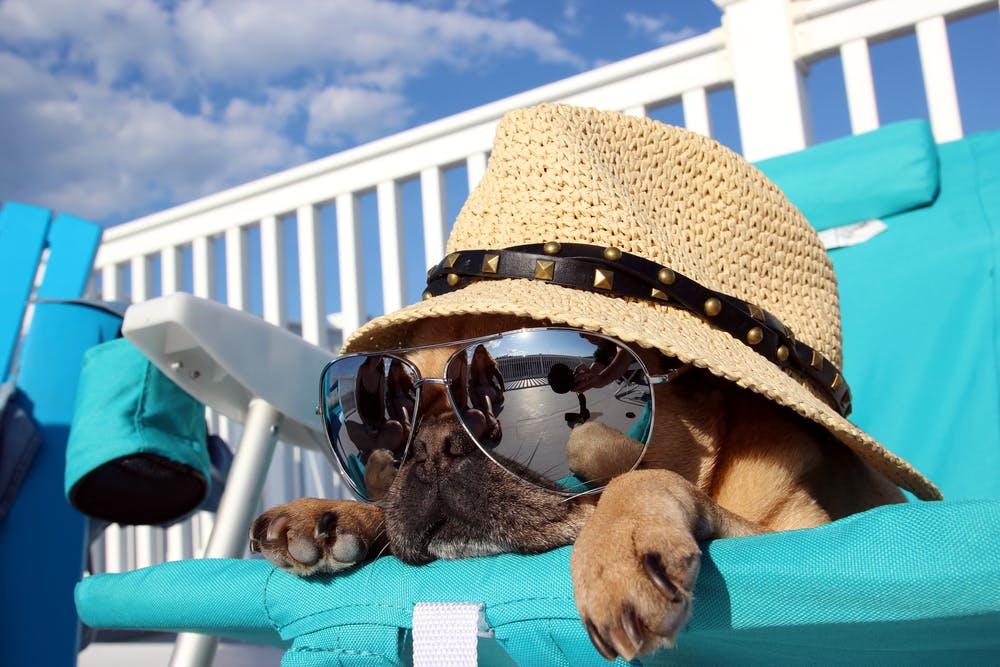 Hat, check. Sunnies, check. Now for some shade.
Shutterstock[25]
Hat, check. Sunnies, check. Now for some shade.
Shutterstock[25]
Sunscreen[26] reapplied every two hours[27], and straight after swimming, will also protect you, but it’s not a suit of armour. For long exposure times it’s better to use it as a back-up[28] to clothing for your face, neck, hands and feet.
Finally, consider heading indoors in the middle of the day[29] when the UV index[30] is at its peak.
Read more: What is the UV index? An expert explains what it means and how it's calculated[31]
References
- ^ complained (www.smh.com.au)
- ^ sun safety experts (www.abc.net.au)
- ^ I can't get sunburnt through glass, shade or in water, right? 5 common sunburn myths busted (theconversation.com)
- ^ slip-slop-slap-seek-slide (www.cancer.org.au)
- ^ about 95% (www.assc.org.au)
- ^ more people die (www.assc.org.au)
- ^ up to 75% (www.assc.org.au)
- ^ are much (www.sciencedirect.com)
- ^ less likely (www.ncbi.nlm.nih.gov)
- ^ How long does it take for skin to repair after sun exposure? (theconversation.com)
- ^ UPF 50+ protection (www.sunsmart.com.au)
- ^ ARPANSA (www.arpansa.gov.au)
- ^ accredited (www.arpansa.gov.au)
- ^ Explainer: how does sunscreen work, what is SPF and can I still tan with it on? (theconversation.com)
- ^ up to 18% (www.ncbi.nlm.nih.gov)
- ^ will still reach you (onlinelibrary.wiley.com)
- ^ diffuse UV (onlinelibrary.wiley.com)
- ^ Flo Dahm/Pexels (www.pexels.com)
- ^ Curious Kids: Why is the sky blue and where does it start? (theconversation.com)
- ^ 20-30 MEDs (onlinelibrary.wiley.com)
- ^ Italian study (www.ncbi.nlm.nih.gov)
- ^ How to treat sunburn pain, according to skin experts (theconversation.com)
- ^ sun protection practices (www.assc.org.au)
- ^ photokeratitis (eyewiki.aao.org)
- ^ Shutterstock (www.shutterstock.com)
- ^ Sunscreen (theconversation.com)
- ^ every two hours (www.cancer.org.au)
- ^ use it as a back-up (onlinelibrary.wiley.com)
- ^ middle of the day (onlinelibrary.wiley.com)
- ^ UV index (theconversation.com)
- ^ What is the UV index? An expert explains what it means and how it's calculated (theconversation.com)
Read more https://theconversation.com/do-beach-cabanas-actually-protect-you-from-the-sun-199102