


Northanger Abbey has attracted a trigger warning for ‘toxic relationships’ but I love its gentle romance. Bookworm Mr Tilney is my favourite Austen hero
- Written by Jodi McAlister, Senior Lecturer in Writing, Literature and Culture, Deakin University

In our Guide to the Classics series, experts explain key works of literature.
“The person, be it gentleman or lady, who has not pleasure in a good novel, must be intolerably stupid.”
So says Henry Tilney to Catherine Morland, the hero and heroine respectively of Jane Austen’s Northanger Abbey[1] (completed 1803, published posthumously in 1817). It is a neat summation of the entire attitude of the book.
A biting satire of popular 19th-century Gothic romances, Northanger Abbey is also a passionate defence of the novel and of novel-reading.
“[T]here seems almost a general wish of decrying the capacity and undervaluing the labour of the novelist, and of slighting the performances which have only genius, wit, and taste to recommend them,” Austen writes in chapter five, directly addressing the reader – and assuring them that she has no interest in doing the same.
Here, Austen is speaking about the context in which she was writing. Northanger Abbey is a pointed response to moralising texts like James Fordyce’s Sermons to Young Women[2] (1766) – yes, the one that Mr Collins is so fond of in Pride and Prejudice[3] – as well as to a broader literary culture that devalued novels and worried about their effects on their (young women) readers.
However, her defence of the novel and its pleasures continues to resonate today for many readers of popular romance fiction[4]: a literary form often imagined as “trashy”, and about whose readers (again, frequently young women) concern is often expressed.
Emphasis is often placed on the harm books can do to their readers (interestingly, one university has chosen to place trigger warnings[5] on Northanger Abbey for “gender stereotypes” and “toxic relationships and friendships”); however, here, Austen focuses on the pleasure and delight books can provoke and takes it seriously.
Read more: Friday essay: romance fiction rewrites the rulebook[6]
Training to be a heroine, by reading
Northanger Abbey is self-aware from its very first line: “No one who had ever seen Catherine Morland in her infancy would have supposed her born to be an heroine.”
Indeed, the first two chapters are almost entirely about Catherine’s qualifications – or lack thereof – to be a heroine. She has “by nature nothing heroic about her”: she is average in most aspects of her life, from appearance to intelligence to temper to family situation. However, “from fifteen to seventeen she was in training for a heroine” – that is, she begins reading voraciously, which allows her to grasp narrative structure and a heroine’s place within it.
At home, Catherine is missing one important thing: a potential hero. There are no likely candidates to be found in her vicinity. This provides us with our inciting incident, for
when a young lady is to be a heroine, the perverseness of forty surrounding families cannot prevent her. Something must and will happen to throw a hero in her way.
When Mr and Mrs Allen, neighbours of the Morlands, go on a trip to Bath, they take Catherine with them, opening up a whole new world and a variety of new people to her.
Some of these people ultimately turn out to be villains. Isabella Thorpe, for instance, is the first friend Catherine makes in Bath; they bond over their mutual love of Gothic novels.
However, Isabella has an ulterior motive: she wants to marry Catherine’s brother James (whom she believes possesses a much larger fortune than he actually does). Isabella also pushes Catherine towards her unbearable brother John, who is by turns a comical and frightening figure. These are, one can assume, the “toxic relationships and friendships” that prompted the trigger warning[7].
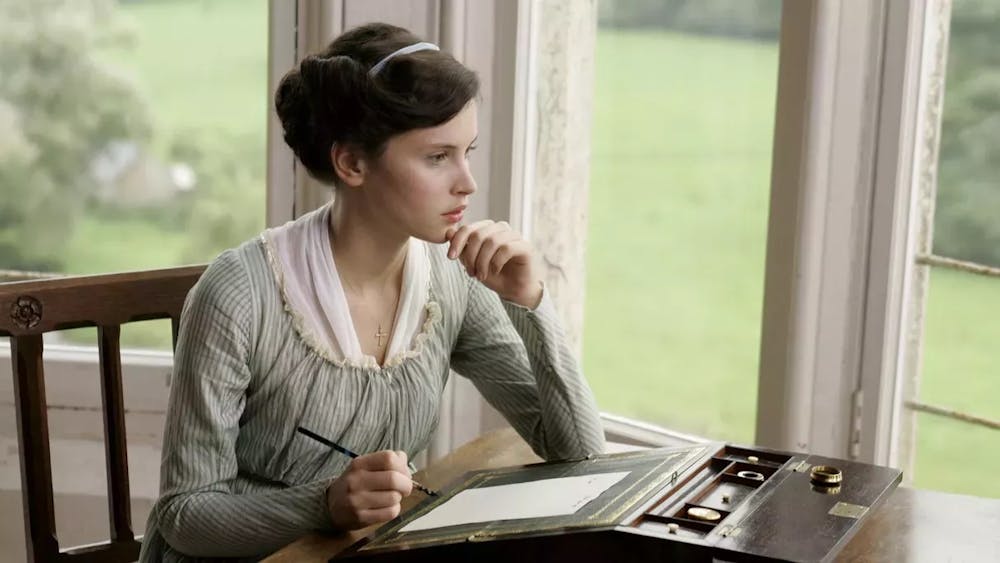
But as Austen promises us in the deeply metatextual first two chapters, Catherine also meets her romantic hero: Mr Henry Tilney.
Low-conflict liking
In many ways, their first meeting is fairly unremarkable. Like Elizabeth and Mr Darcy in Pride and Prejudice, they’re at a dance; but unlike the contentious first encounter between the former, Catherine and Mr Tilney become acquainted with very little conflict at all.
He is an inherently gentle, kind and down-to-earth clergyman (which arguably makes him, like Catherine, ill-suited to be a romantic lead). They are introduced, dance together, and engage in free-flowing small talk, where he good-naturedly teases her about how she will write about him in her journal the next day.
This lack of major interpersonal conflict characterises their whole romance. In Pride and Prejudice, Elizabeth and Mr Darcy must overcome a great number of obstacles to be together: external (in the form of their differing social stations), but especially internal (his pride, her prejudice). Between Catherine and Mr Tilney, however, there are no internal obstacles. They meet, they like each other, and as the novel progresses, they only like each other more – a like that turns into love.
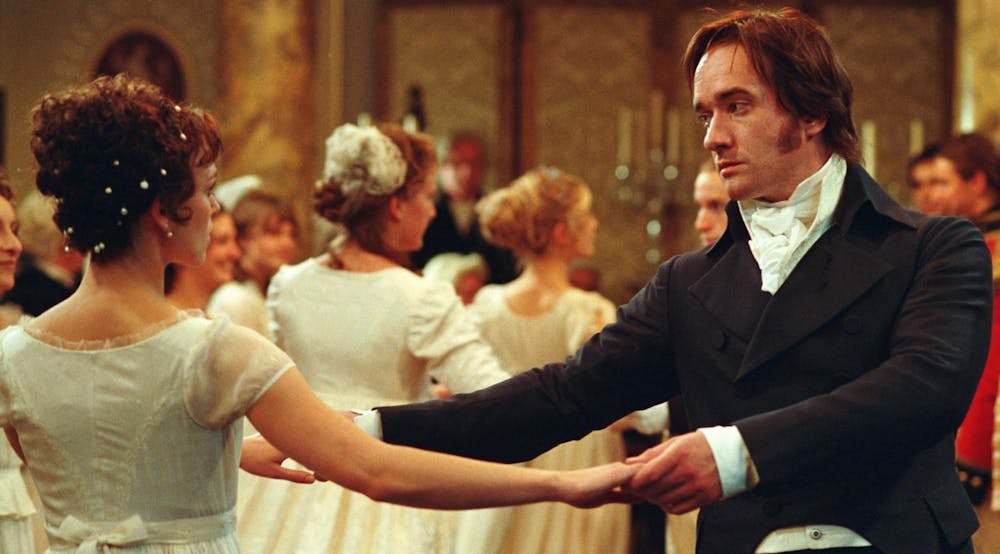 Catherine and Mr Tilney, like Elizabeth and Darcy in Pride and Prejudice (pictured), meet at a dance. But unlike the latter couple, Catherine and Mr Tilney encounter no internal obstacles.
Working Title
Catherine and Mr Tilney, like Elizabeth and Darcy in Pride and Prejudice (pictured), meet at a dance. But unlike the latter couple, Catherine and Mr Tilney encounter no internal obstacles.
Working Title
The obstacles between are almost entirely external. The Thorpes seek to throw wrenches into their burgeoning romance – especially John, who wants Catherine for himself. When Catherine goes to stay with Mr Tilney and his sister Eleanor at their family home, the titular Northanger Abbey, Mr Tilney’s father, General Tilney, allows it because he believes Catherine to be the heiress to the Allens’ considerable fortune. When he runs into a disaffected John Thorpe in London, who spitefully tells him Catherine is almost destitute, General Tilney hurries home and swiftly evicts her.
Perhaps the greatest moment of internal conflict belongs to Mr Tilney, who defies his father by following Catherine home, where he proposes to her. However, even this is quickly overcome, once General Tilney realises that Catherine, while not an heiress to a huge fortune, is not penniless either.
Just as there was little drama to their romance, so is there little drama to their happy ending. Mr Tilney is a younger son and thus not particularly wealthy, so there is no Pemberley in his and Catherine’s future – but this does not distract from their happiness. As Austen writes in the book’s last paragraph, “Henry and Catherine were married, the bells rang, and everybody smiled.”
Read more: Exes, alcohol and loose historical licence: why Netflix's Persuasion is Jane Austen via Fleabag[8]
Gothic romance
The peculiarly conflict-free romance of Catherine and Mr Tilney stands in contrast not just to works like Pride and Prejudice, but also to the form Austen explicitly parodies in Northanger Abbey: the Gothic romance.
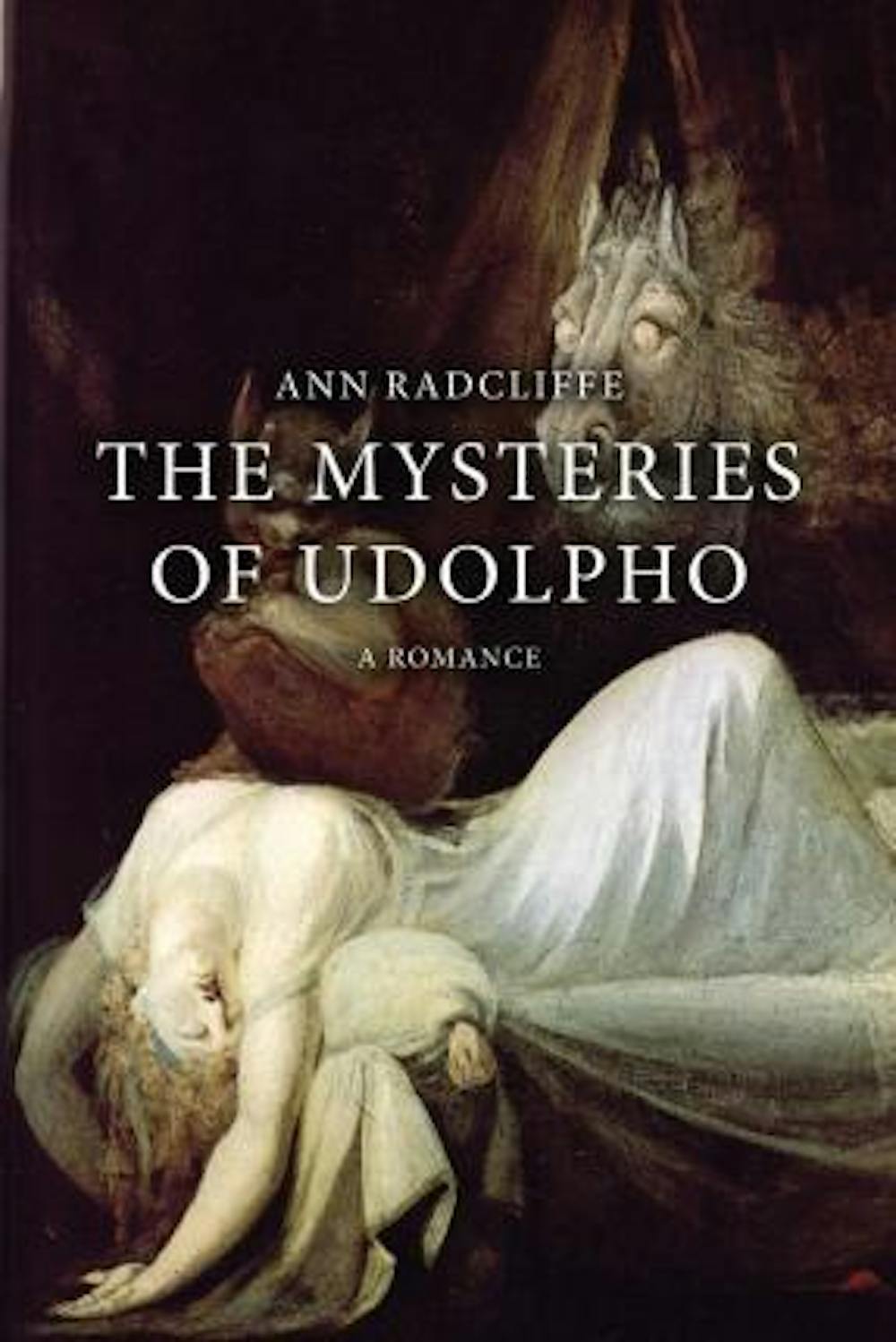 These novels, very popular in the 18th and 19th centuries, focus on young women who find themselves in dangerous and sometimes supernatural situations, often trapped in old houses filled with secrets. One famous example, which Catherine and Isabella read, is Ann Radcliffe’s The Mysteries of Udolpho[9] (1794), in which heroine Emily St Aubert is imprisoned in Castle Udolpho by her aunt’s mysterious new husband, Montoni.
When Catherine visits Northanger Abbey and discovers there is a wing no one ever enters, she immediately starts imagining the Abbey as Castle Udolpho-esque. Because the wing contains rooms that belonged to Mr Tilney’s late mother, she envisions his father General Tilney in place of Montoni, concocting a story in which he has either killed the mother or imprisoned her.
She is, of course, incorrect – as a rather humiliating encounter with Mr Tilney, when she is snooping around looking for evidence, reveals. On the surface, this would seem to endorse the view that reading novels has a deleterious effect on young women.
However, while she has parsed it through the wrong narrative lens, Catherine is not entirely wrong about Mr Tilney’s father, as shown when he unceremoniously throws her out of Northanger Abbey and leaves her to travel 70 miles home alone – something potentially quite unsafe for an unchaperoned young woman.
In other words, Catherine might have read the circumstances incorrectly, but her reading of novels allowed her to read General Tilney. Northanger Abbey thus pushes back at the most common criticisms levelled at novels: that either they were not educational, or were teaching their readers the wrong things.
Instead, according to Austen, in novels,
the most thorough knowledge of human nature, the happiest delineation of its varieties, the liveliest effusions of wit and humour, are conveyed to the world in the best-chosen language.
Read more:
Guide to the classics: Rebecca by Daphne du Maurier — gender, gothic haunting and gaslighting[10]
A ‘romantic’ shared love of novel-reading
English Studies professor Katie Halsey argues[11] that Austen (in Northanger Abbey) and Fordyce (in his sermons) – along with much contemporaneous writing about writing – are informed by the principle “that works of literature should both delight and instruct”. The instructional is of most interest to moralisers like Fordyce; however, here, Austen takes the delight found in novels just as seriously.
Catherine has two potential love interests: Mr Tilney and Mr Thorpe. The latter decries novel-reading (“I never read novels; I have something else to do,” Mr Thorpe declares). The former, however, voraciously and unabashedly consumes novels; he enjoyed The Mysteries of Udolpho as much as Catherine did.
This shared delight is a major point of connection between Catherine and Mr Tilney. Not only does he take what she likes seriously, but he also likes – and values – what she likes.
As a writer, reader[12] and scholar[13] of popular romance fiction, Mr Tilney is my favourite of Austen’s heroes. While conflict is the typical driver of a romance narrative, and Catherine and Mr Tilney’s relationship contains remarkably little, this shared love of novel-reading is, for me, one of the most romantic things in all of Austen’s work.
Anyone who has ever had their favourite form of media rubbished by a potential friend or partner and felt they had to hide their consumption of it will know how terrible that can feel.
Catherine and Mr Tilney might be two average people whose romance has one of Austen’s most prosaic happy endings. However, their mutual delight in novels means they will never run out of things to talk about.
References^ Northanger Abbey (www.penguin.com.au)^ Sermons to Young Women (www.bl.uk)^ Pride and Prejudice (www.penguin.com.au)^ popular romance fiction (theconversation.com)^ to place trigger warnings (www.theguardian.com)^ Friday essay: romance fiction rewrites the rulebook (theconversation.com)^ the trigger warning (www.theguardian.com)^ Exes, alcohol and loose historical licence: why Netflix's Persuasion is Jane Austen via Fleabag (theconversation.com)^ The Mysteries of Udolpho (www.goodreads.com)^ Guide to the classics: Rebecca by Daphne du Maurier — gender, gothic haunting and gaslighting (theconversation.com)^ argues (books.google.com.au)^ reader (theconversation.com)^ scholar (theconversation.com)
These novels, very popular in the 18th and 19th centuries, focus on young women who find themselves in dangerous and sometimes supernatural situations, often trapped in old houses filled with secrets. One famous example, which Catherine and Isabella read, is Ann Radcliffe’s The Mysteries of Udolpho[9] (1794), in which heroine Emily St Aubert is imprisoned in Castle Udolpho by her aunt’s mysterious new husband, Montoni.
When Catherine visits Northanger Abbey and discovers there is a wing no one ever enters, she immediately starts imagining the Abbey as Castle Udolpho-esque. Because the wing contains rooms that belonged to Mr Tilney’s late mother, she envisions his father General Tilney in place of Montoni, concocting a story in which he has either killed the mother or imprisoned her.
She is, of course, incorrect – as a rather humiliating encounter with Mr Tilney, when she is snooping around looking for evidence, reveals. On the surface, this would seem to endorse the view that reading novels has a deleterious effect on young women.
However, while she has parsed it through the wrong narrative lens, Catherine is not entirely wrong about Mr Tilney’s father, as shown when he unceremoniously throws her out of Northanger Abbey and leaves her to travel 70 miles home alone – something potentially quite unsafe for an unchaperoned young woman.
In other words, Catherine might have read the circumstances incorrectly, but her reading of novels allowed her to read General Tilney. Northanger Abbey thus pushes back at the most common criticisms levelled at novels: that either they were not educational, or were teaching their readers the wrong things.
Instead, according to Austen, in novels,
the most thorough knowledge of human nature, the happiest delineation of its varieties, the liveliest effusions of wit and humour, are conveyed to the world in the best-chosen language.
Read more:
Guide to the classics: Rebecca by Daphne du Maurier — gender, gothic haunting and gaslighting[10]
A ‘romantic’ shared love of novel-reading
English Studies professor Katie Halsey argues[11] that Austen (in Northanger Abbey) and Fordyce (in his sermons) – along with much contemporaneous writing about writing – are informed by the principle “that works of literature should both delight and instruct”. The instructional is of most interest to moralisers like Fordyce; however, here, Austen takes the delight found in novels just as seriously.
Catherine has two potential love interests: Mr Tilney and Mr Thorpe. The latter decries novel-reading (“I never read novels; I have something else to do,” Mr Thorpe declares). The former, however, voraciously and unabashedly consumes novels; he enjoyed The Mysteries of Udolpho as much as Catherine did.
This shared delight is a major point of connection between Catherine and Mr Tilney. Not only does he take what she likes seriously, but he also likes – and values – what she likes.
As a writer, reader[12] and scholar[13] of popular romance fiction, Mr Tilney is my favourite of Austen’s heroes. While conflict is the typical driver of a romance narrative, and Catherine and Mr Tilney’s relationship contains remarkably little, this shared love of novel-reading is, for me, one of the most romantic things in all of Austen’s work.
Anyone who has ever had their favourite form of media rubbished by a potential friend or partner and felt they had to hide their consumption of it will know how terrible that can feel.
Catherine and Mr Tilney might be two average people whose romance has one of Austen’s most prosaic happy endings. However, their mutual delight in novels means they will never run out of things to talk about.
References^ Northanger Abbey (www.penguin.com.au)^ Sermons to Young Women (www.bl.uk)^ Pride and Prejudice (www.penguin.com.au)^ popular romance fiction (theconversation.com)^ to place trigger warnings (www.theguardian.com)^ Friday essay: romance fiction rewrites the rulebook (theconversation.com)^ the trigger warning (www.theguardian.com)^ Exes, alcohol and loose historical licence: why Netflix's Persuasion is Jane Austen via Fleabag (theconversation.com)^ The Mysteries of Udolpho (www.goodreads.com)^ Guide to the classics: Rebecca by Daphne du Maurier — gender, gothic haunting and gaslighting (theconversation.com)^ argues (books.google.com.au)^ reader (theconversation.com)^ scholar (theconversation.com)