can a plane normally fly on just one engine? An aviation expert explains
- Written by: Doug Drury, Professor/Head of Aviation, CQUniversity Australia
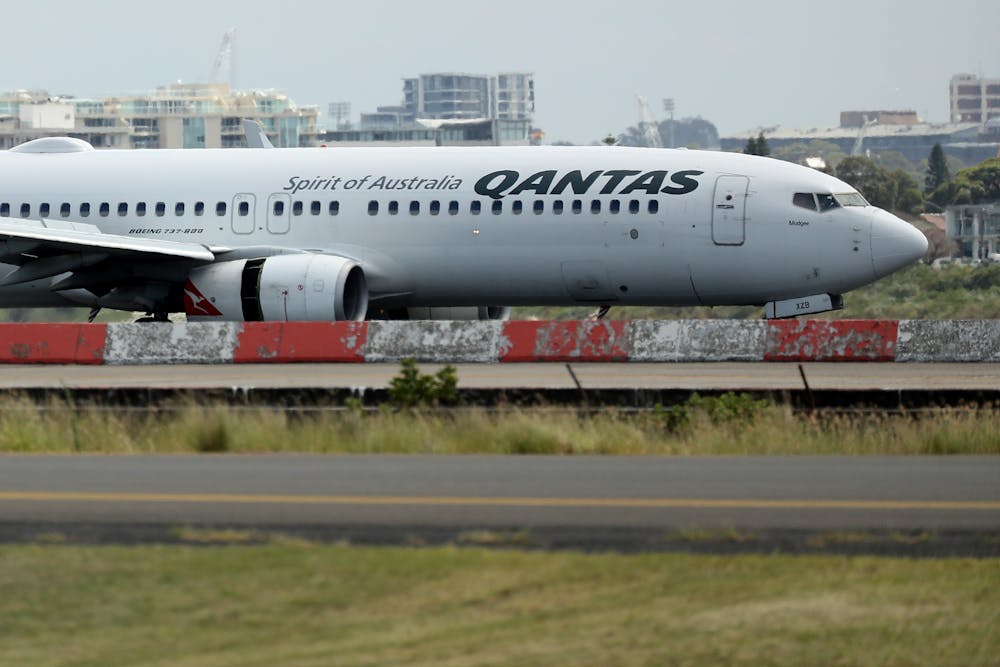
You may have seen the news Qantas flight 144 from Auckland landed safely in Sydney yesterday after the pilot was forced to shut down an engine and issue a mayday call while flying over the Pacific Ocean.
The plane was reportedly[1] a ten-year-old, twin-jet Boeing 737 and was carrying 145 passengers, all of whom disembarked normally after landing yesterday afternoon.
These events do, unfortunately, happen occasionally in aviation – I myself have lost an engine while flying – but the good news is it’s extremely rare. That makes aviation the safest form of transport in the world.
These are highly trained pilots who spend a lot of time in full-motion simulators going over events exactly like this.
When you’re down an engine and you have lot of water under you, you have a process to follow.
It becomes rote; you don’t panic, you don’t go off the rails, you remember your training, and that’s what happened here.
Read more: Here's the real reason to turn on aeroplane mode when you fly[2]
Can planes fly on just one engine?
Absolutely. That is what they are designed to do.
By law, planes have to be able to fly from point A to point B, over water, on just one engine. The guidance set by safety regulators[3] in Australia mandates that any plane that takes off with the intention of getting to a certain destination has to be able to get there on one engine – based on the departure loads determined before takeoff.
That rule ensures that even if one engine goes down – as appears to have happened here – the plane can still arrive safely. It can fly until it runs out of fuel. Basically, these planes are built to fly as well on one engine as they can on two.
Having just one engine operating means you won’t have the maximum thrust power for take off, but you’d be able to fly and land just fine.
But while a plane can fly on one engine, it is very rare for an engine to go down in the middle of a flight.
Airline maintenance procedures are meticulous and technicians are licensed at the same level and quality as pilots. Typically you have someone do the maintenance on a plane on the ground, but they have someone come after them and inspect it and test it to make sure it is operating at 100% performance.
There are ground tests and flight tests and certification processes that need to be followed before a plane can take passengers. That’s why these events are so unusual.
A bang and air-con shutdown
Passengers said they heard[4] a bang during the Qantas flight yesterday.
Details on what exactly happened are yet to emerge, but it’s certainly possible for engine failure to make a sound. It depends on the type of failure. If it was a section within the engine breaking, that could make a noise loud enough for passengers to hear it.
But normally if the pilot needed to isolate the engine and could see pressure fluctuation or engine temperature exceeding normal levels, then the pilot could choose to shut it down even before they heard a bang.
Reports the plane’s air conditioning subsequently stopped working suggests to me the crew probably had to turn off some systems to achieve their goal of landing successfully back in Sydney.
Anatomy of a crisis
When an event like this happens, pilots have a process for scanning their instrumentation to isolate and figure out what’s happening.
Once they do, we have what’s known as a Quick Reference Handbook[5] to consult. It lists all the potential emergency situations that might happen on a plane. The pilots then follow that handbook to analyse each step and each possibility, which helps isolate and solve the problem.
In this case, it appears the solution was to shut that engine down.
For the sake of precaution, aviators announce a mayday call when we have a situation we think means we need priority help. The mayday call clears out the airspace to permit this plane to be number one in the queue for priority; all other aircraft have to get out of the way.
The air traffic controllers put everyone else in the air in a holding pattern or give them a big turn to keep them out of the area.
However, sometime after the pilot on QF144 issued a mayday call, it was downgraded[6] to what’s known as a PAN – that stands for Possible Assistance Needed.
A PAN is a less extreme event; it still signals it is an emergency, and meant yesterday there were emergency vehicles on the runway and the plane retained its priority status in the queue. But it is not quite as serious as a mayday.
From here, a very thorough review will help shed light on what happened. The pilots typically go through drug and alcohol testing and there will be a full investigation to ensure nothing was missed and help Qantas return to normal operations.
Remembering your training
I wasn’t there on the flight deck yesterday and can only infer from what I have heard and read that the pilots on this plane did exactly what they are trained to do.
Airlines spend a lot of money on training so pilots and crew can handle events like this.
As we begin the conversation toward single pilot planes and autonomous aircraft, it’s worth asking how AI and autonomous systems might respond to circumstances that are not normal events.
Read more: What happens to your body on a long-haul flight?[7]
References
- ^ The plane was reportedly (www.sbs.com.au)
- ^ Here's the real reason to turn on aeroplane mode when you fly (theconversation.com)
- ^ guidance set by safety regulators (www.casa.gov.au)
- ^ said they heard (www.sbs.com.au)
- ^ Quick Reference Handbook (www.skybrary.aero)
- ^ it was downgraded (www.sbs.com.au)
- ^ What happens to your body on a long-haul flight? (theconversation.com)