Made in 1972, the documentary Ningla-A’Na is a powerful look at establishment of the Aboriginal Tent Embassy
- Written by: Bronwyn Carlson, Professor, Indigenous Studies and Director of The Centre for Global Indigenous Futures, Macquarie University
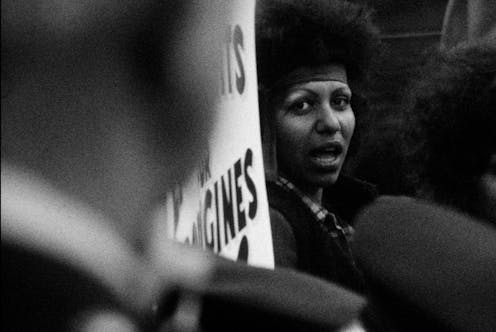
This year, we acknowledge the 50th anniversary [1] of the establishment of the Aboriginal Tent Embassy, the site of the longest protest for Indigenous land rights, sovereignty and self-determination in the world.
Now, a documentary made at the time of the Embassy’s establishment, Ningla-A’Na (“hungry for our land[2]”), has been restored and is being re-released in Australian cinemas.
Gary Foley, one of the people who established the Embassy, calls it “the single most important film on the Aboriginal political struggle in the last 50 years”.
Director Alessandro Cavadini was the only filmmaker who was able to get up close and film intimate footage of the organisation and thinking behind the establishment of the Aboriginal Tent Embassy. The film also looks at the Aboriginal Medical Service, the Aboriginal Legal Service and the National Black Theatre.
The documentary features some of our most militant political organisers well known for their involvement in the Black Liberation movement, with footage of Foley, Paul Coe, Roberta Sykes, Isabelle Coe, Bob Maza, Shirley Smith – more fondly known as “Mum Shirl[3]” – and many other significant Aboriginal voices from the 1970s.
But watching the film 50 years on, it feels to me we are still having the same conversations we did in the 1970s.
A protest embassy
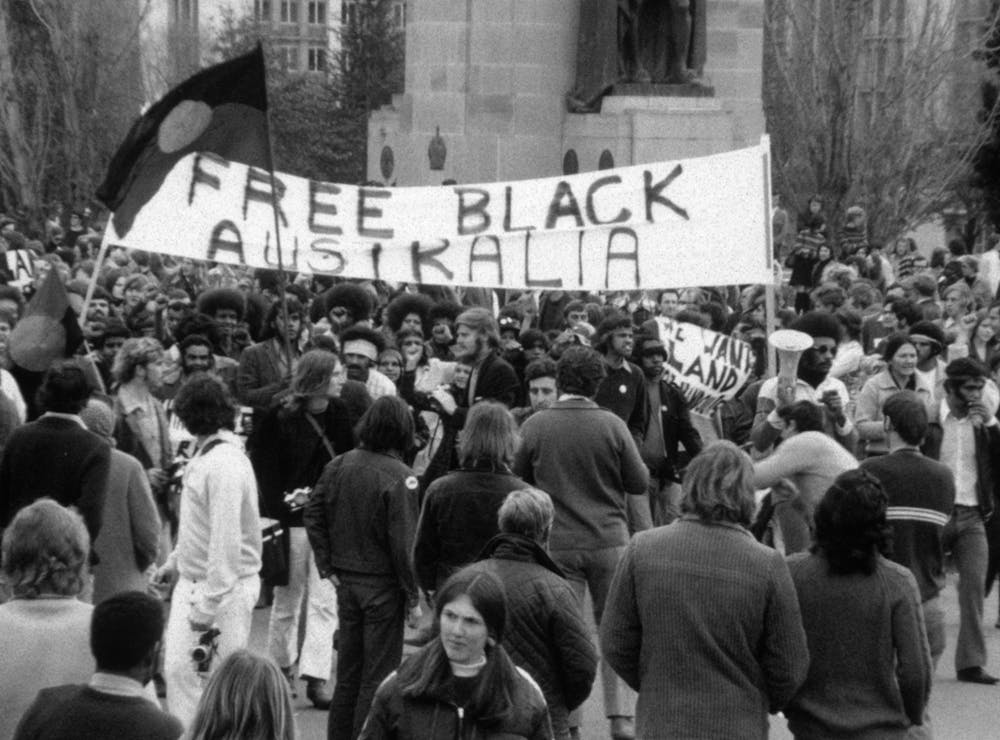
The Aboriginal Tent Embassy was established as a protest to prime minister Billy McMahon’s announcement[4] his government would never grant Aboriginal land rights.
This left Aboriginal people little choice other than to mobilise and become strategically politicised. The Black Liberation movement was, and continues to be, focused on the oppressive systems that operate to harm Aboriginal peoples and deny human rights.
As I watched Ningla-A’Na, I felt a great sense of pride at the staunch stand made by Aboriginal and Torres Strait Islander peoples, even as they faced violent police intervention.
In one moment in the film, Mum Shirl steps forward with determination to ensure her grandchild bears witness to the Black leadership driving the movement.
Read more: A short history of the Aboriginal Tent Embassy – an indelible reminder of unceded sovereignty[5]
Continuing stories
While set around the establishment of the Tent Embassy, Ningla-A’Na places this into the broader political conversation of the time.
The film captures the absolute frustration Aboriginal people felt with decades of inaction by governments to address the high levels of discrimination and racism, including the high rates of Aboriginal child mortality.
Fred Hollows features, speaking to the disgraceful state of healthcare Aboriginal people were suffering.
Hollows speaks about trachoma[6] in Aboriginal communities, and how it had been eradicated in non-Indigenous communities. Trachoma is one of the major causes of preventable blindness in the world. In Australia it is solely a disease[7] of Aboriginal people.
The neglect of the government to provide adequate healthcare and address racism is an ongoing battle seen recently in the ABC Four Corners report[8] highlighting the ongoing deaths of Aboriginal people from preventable diseases.
Read more: Why is trachoma blinding Aboriginal children when mainstream Australia eliminated it 100 years ago?[9]
A place for anger
Throughout the documentary, Aboriginal people are told to approach the situation politely and not swear or be angry.
But the people at the heart of this story have had enough of being told to be polite to appease the people and structures that continue to oppress them.
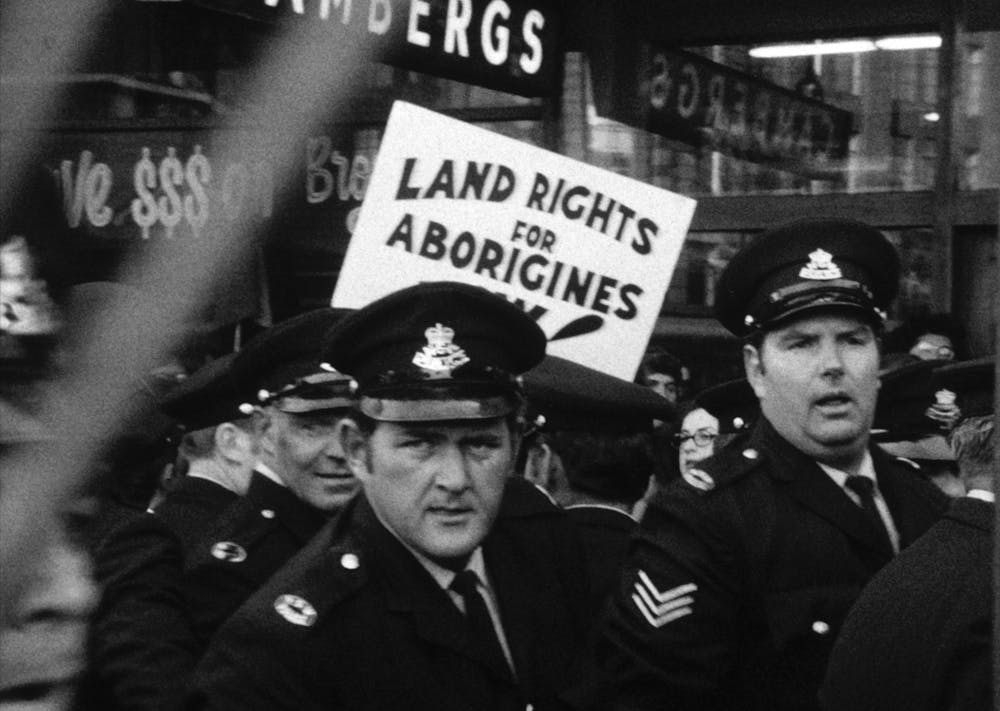 Police making arrests in George St from the film NINGLA ANA.
Anger circulates throughout the film. Anger can be an immensely effective force. This is why oppressed groups are almost inevitably discouraged from expressing anger.
Aboriginal people’s anger, their refusal to move on, their refusal to “reconcile” can clearly be understood as hope for a different future.
Ningla-A’Na shows people imagining a future without their children dying young or being removed from their families. A future where Aboriginal people are not killed in custody and have access to healthcare. A future in which Aboriginal lives matter.
Black liberation
In one scene, Isabelle Coe is talking about the white women who are trying to convince Aboriginal women to join the feminist movement. “Blacks have to liberate ourselves” she says.
I am reminded of the contemporary work of Jackie Huggins[10] and Aileen Moreton Robinson[11], who have both challenged white feminism and its lack of consideration or inclusion of Aboriginal women.
Aboriginal women are discriminated against for being both a woman and for being Aboriginal.
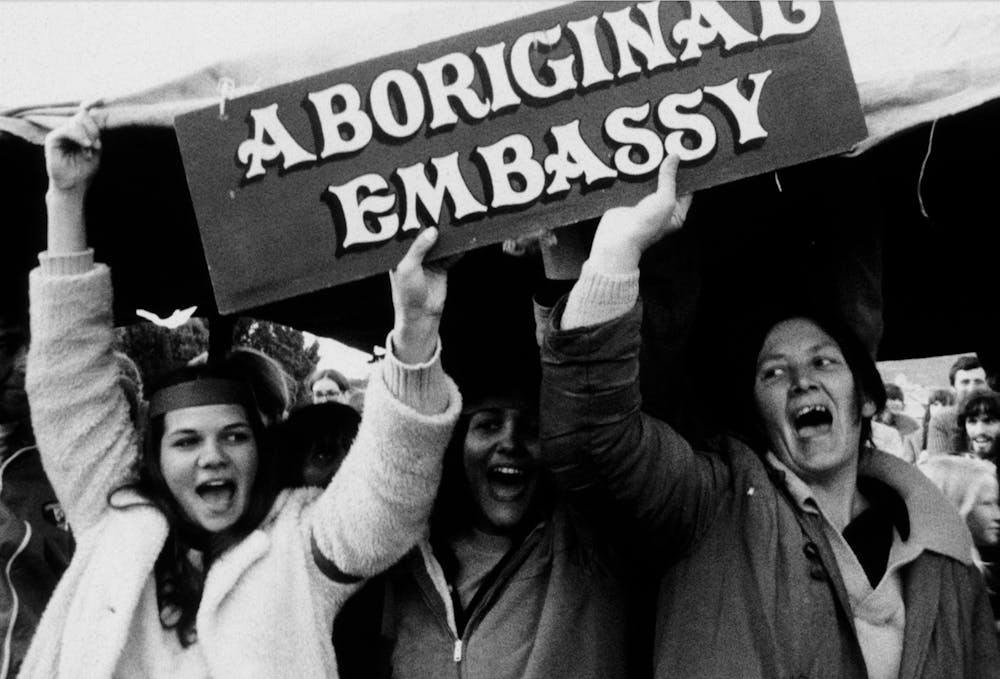 Embassy protesters from the film NINGLA ANA.
Interviewed in the film, Gary Foley talks about his frustrations that the broader population is completely devoid of any knowledge of the basic principles that are at stake.
Aboriginal people have never been idle when it comes to defending our lands and fighting for land rights.
From the resistance to British colonisation recently highlighted in the documentary The Australian Wars[12] to coordinated protests to “abolish the monarchy[13]” to the #LandBack movement[14] using digital technologies, Aboriginal people continue to call for action and land to be returned.
Ningla-A’Na is a must-watch. It is a glimpse into the past with all too much relevance to contemporary struggles.
Ningla-A’Na is in select cinemas from today.
Read more: In The Australian Wars, Rachel Perkins dispenses with the myth Aboriginal people didn't fight back[15]
References
- ^ 50th anniversary (theconversation.com)
- ^ hungry for our land (www.ozmovies.com.au)
- ^ Mum Shirl (www.nma.gov.au)
- ^ announcement (newmatilda.com)
- ^ A short history of the Aboriginal Tent Embassy – an indelible reminder of unceded sovereignty (theconversation.com)
- ^ trachoma (theconversation.com)
- ^ solely a disease (pubmed.ncbi.nlm.nih.gov)
- ^ ABC Four Corners report (www.abc.net.au)
- ^ Why is trachoma blinding Aboriginal children when mainstream Australia eliminated it 100 years ago? (theconversation.com)
- ^ Jackie Huggins (australianhumanitiesreview.org)
- ^ Aileen Moreton Robinson (www.uqp.com.au)
- ^ The Australian Wars (theconversation.com)
- ^ abolish the monarchy (www.abc.net.au)
- ^ #LandBack movement (www.commonground.org.au)
- ^ In The Australian Wars, Rachel Perkins dispenses with the myth Aboriginal people didn't fight back (theconversation.com)