


How to deal with fossil fuel lobbying and its growing influence in Australian politics
- Written by: Joo-Cheong Tham, Professor, Melbourne Law School, The University of Melbourne
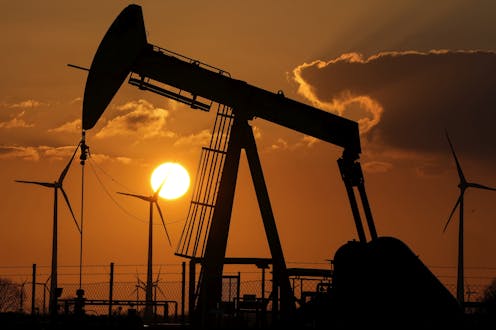
Will climate action undermine Australia’s democracy? This question might not be as outlandish as it seems.
A recent investigation[1] details a campaign by the car industry to have its (low) voluntary standards on fuel efficiency legislated into national standards. This campaign fits into a broader pattern of lobbying by the fossil fuel industry to hinder effective climate action and highlights the importance of democratic integrity in addressing the climate crisis as well as the urgent need for robust regulation of lobbying.
The fossil fuel lobby and climate inaction
University of Melbourne professor Ross Garnaut has observed[2] that “(e)missions-intensive industries have invested heavily to influence climate change policy since the early days of discussion of these issues”.
We see the influence of these investments in various ways:
Read more: Be worried when fossil fuel lobbyists support current environmental laws[3]
Rise of the ‘greenhouse mafia’
Marian Wilkinson’s book The Carbon Club[4] provides a compelling account of how a network of climate-science sceptics, politicians and business leaders brought about decades of climate inaction in Australia.
Under the Howard government, climate change policy was determined by fossil fuel lobbyists who likened themselves to organised crime through a self-styled label — the greenhouse mafia[5].
The group has contributed to the outsized role the fossil fuels industry has in steering government policy. Perhaps most importantly, fossil fuel companies have played an instrumental role in ousting two out of the six prime ministers Australia has had since 2007; Kevin Rudd[6] and Malcolm Turnbull[7].
The term, “policy capture[8]” is described by the OECD to mean when public decisions over policies are consistently directed away from the public interest towards a specific interest, leading to inequalities and undermining democratic values, economic growth, and trust in government. The use of the phrase in this context has a certain validity.
The lobbying risks of climate action
Paradoxically, the risks associated with fossil fuel lobbying increase with higher levels of climate action.
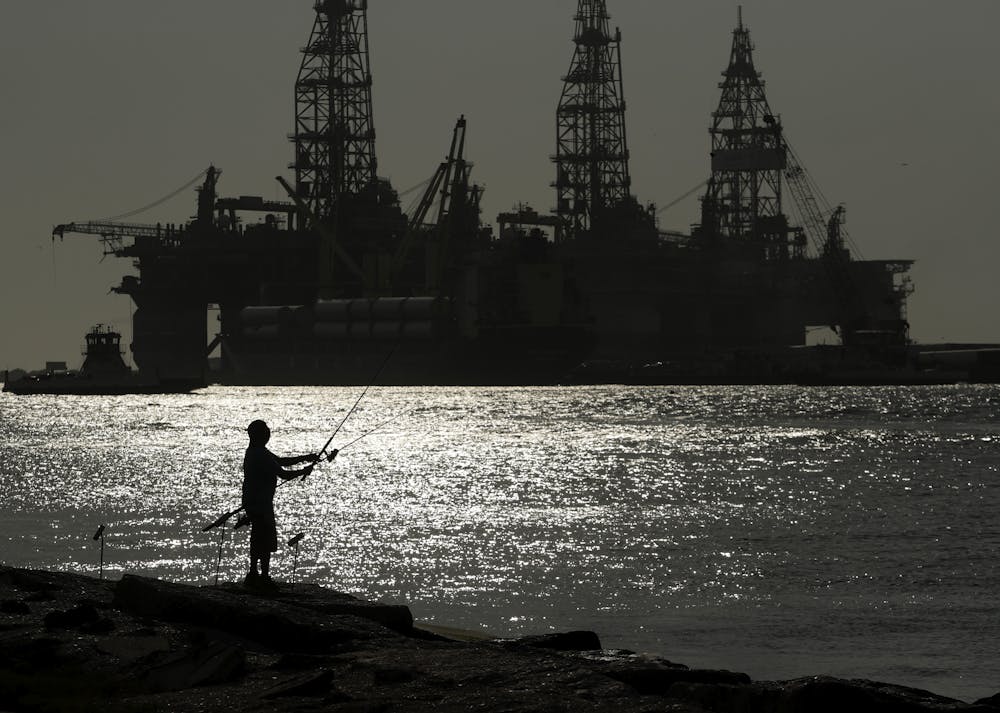
Effective climate action will mean increased regulation of fossil fuel industries, such as more stringent emission standards for the largest greenhouse emitters under the ALP’s Powering Australia[9] plan. Under the plan, substantial amounts of public funds will go towards climate action.
As a result, the fossil fuel industries and other sections of the community will naturally seek to influence government climate decisions. That in itself is not undemocratic – fossil fuel industries have a legitimate role in influencing government policy.
However, what is undemocratic is their disproportionate influence and how it is often wielded behind closed doors.
Regulatory failures of federal lobbying system
Lobbying regulation in Australia[10] is particularly scant. It currently takes the form of a public lobbyist register and a code of conduct[11].
The secrecy and lack of integrity around fossil fuel lobbying stems directly from the shortcomings of federal lobbying regulation. This lack of transparency also includes:
- lobbying coverage that has been confined to commercial lobbyists, who only comprise 20% of the lobbyist population[12], excluding other “repeat players” such as in-house lobbyists
- Dismal disclosure obligations that require only the name and contact details of the lobbyist and the client they are representing. There is a vacuum of knowledge about when lobbyists are contacting government officials and over what issues.
Enforcing violations is also a huge concern. In 2018, the Commonwealth Auditor-General found[13] the Department of the Prime Minister and Cabinet, which oversaw the federal lobbyist register, did not take any action against lobbyists despite identifying at least 11 possible breaches.
Read more: Politicians must mine the divide between coal lobbies and energy companies[14]
The way forward
Three essential reforms will make federal lobbying regulation more effective, while also assisting with effective climate action.
First, coverage under federal lobbying regulation should extend to both commercial lobbyists and in-house lobbyists. Following the NSW Independent Commission Against Corruption’s (ICAC) Operation Eclipse[15], the NSW government will implement[16] lobbying laws that will regulate these two classes of lobbyists (as is done in Canada[17] and the United States[18]).
Second, there should be greater transparency of lobbying activity by requiring:
- lobbyists to disclose every lobbying contact (such as in Queensland[19], Canada[20] and Scotland[21])
- ministers, senior ministerial advisers and senior public servants to provide monthly disclosures of who has contacted them and why. Currently, Queensland[22] discloses ministerial diaries, while NSW will[23] disclose diaries of ministers and MPs
- the establishment of an independent regulator or commissioner to regularly monitor and take action in these matters if needed, such as the NSW government has committed[24] to do.
Safeguarding democracy[25] is imperative in the climate crisis and to the functioning of government overall. Robust lobbying regulation is an essential measure to ensure that all are protected.
References
- ^ investigation (www.smh.com.au)
- ^ observed (cpb-ap-se2.wpmucdn.com)
- ^ Be worried when fossil fuel lobbyists support current environmental laws (theconversation.com)
- ^ The Carbon Club (www.amazon.com.au)
- ^ greenhouse mafia (www.abc.net.au)
- ^ Kevin Rudd (www.smh.com.au)
- ^ Malcolm Turnbull (www.abc.net.au)
- ^ policy capture (www.oecd.org)
- ^ Powering Australia (keystone-alp.s3-ap-southeast-2.amazonaws.com)
- ^ Lobbying regulation in Australia (classic.austlii.edu.au)
- ^ code of conduct (www.ag.gov.au)
- ^ 20% of the lobbyist population (law.adelaide.edu.au)
- ^ found (apo.org.au)
- ^ Politicians must mine the divide between coal lobbies and energy companies (theconversation.com)
- ^ Operation Eclipse (www.icac.nsw.gov.au)
- ^ will implement (www.nsw.gov.au)
- ^ Canada (laws-lois.justice.gc.ca)
- ^ United States (lobbyingdisclosure.house.gov)
- ^ Queensland (lobbyists.integrity.qld.gov.au)
- ^ Canada (lobbycanada.gc.ca)
- ^ Scotland (www.lobbying.scot)
- ^ Queensland (cabinet.qld.gov.au)
- ^ NSW will (www.nsw.gov.au)
- ^ committed (www.nsw.gov.au)
- ^ Safeguarding democracy (papers.ssrn.com)










