Nature's deteriorating health is threatening the wellbeing of Australians, the State of the Environment report finds
- Written by: John Turnbull, Postdoctoral Research Associate, University of Sydney
For the first time, the new State of the Environment report[1] explicitly assessed the dependency of humans on nature. We, as report authors, evaluated trends and changes in the environment’s health for their impact on human society. This is described in terms of “human wellbeing”.
Wellbeing encompasses people’s life quality and satisfaction, and is increasingly being recognised in national policy[2]. It spans our physical and mental health, living standards, sense of community, our safety, freedom and rights, cultural and spiritual fulfilment, and connection to Country.
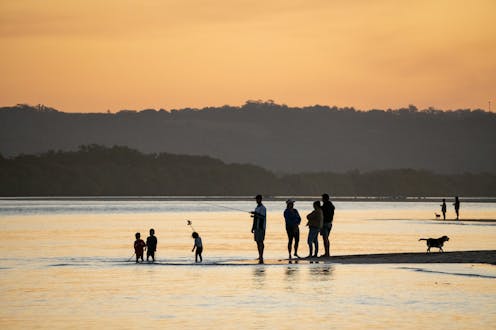
For example, over 85% of Australians live near the coast[3], and beach activities – swimming, surfing, walking – are an important part of our coastal lifestyle. Such nature-based activities can relieve stress[4] and connect with our individual and national identities. Healthy coastal ecosystems also provide our seafood and support many businesses.
Yet, these ecosystems are under great pressure from human activities. The Great Barrier Reef has suffered four mass bleaching events in the last seven years, kelp forests are in decline in southern Australia, storms are eroding beaches, and coastal fishing pressure is high.
Australia’s ecosystems are collapsing[5], and our unsustainable actions are threatening our own wellbeing[6]. But there are signs of change, and it’s not too late to make a difference in your own community.

Good, but deteriorating
The State of the Environment report[7], released last week, contains several new wellbeing assessments, where data were available.
Overall, wellbeing as determined by the environment is graded as “good but deteriorating[8]”. Examples of such assessments include:
land management: graded partially effective as community participation is improving, but our sense of loss is mounting
extreme events: graded good to date, but deteriorating as climate change impacts accelerate
Antarctica: graded good but deteriorating, as its changing environment will negatively effect marine ecosystems and global climate.
Our urban spaces are ranked well in terms of livability, particularly in Australia’s capital cities. Air and water quality are good most of the time, and Australians can generally access adequate nutrition.
But these conditions are not universal, and they are changing. Remote and rural areas score lower on liveability and some social groups, such as Indigenous people, do not have fair and adequate access to essential resources like fresh water.
Indigenous people in Australia are also disproportionately impacted[9] by extreme events.
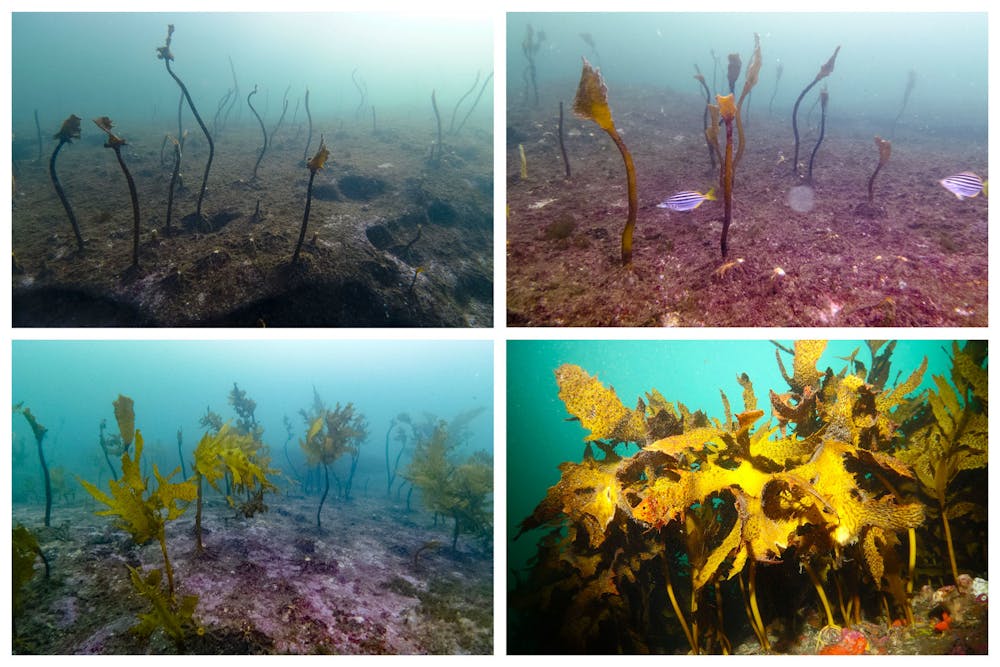 Kelp losses around Bare Island after months of extreme weather (heavy rains, storms, warm water, polluted runoff). The last photo shows what the kelp was like in shallow water before the severe conditions.
John Turnbull, Author provided
Kelp losses around Bare Island after months of extreme weather (heavy rains, storms, warm water, polluted runoff). The last photo shows what the kelp was like in shallow water before the severe conditions.
John Turnbull, Author provided
Climate change is already hurting our wellbeing
Previous State of Environment Reports warned of future impacts of climate change. The new report documents impacts already here – and getting worse.
This includes many recent extreme events, from the 2019-2020 bushfires to the recent extreme floods. These have measurable impacts on both our environment and our lives.
Read more: This is Australia's most important report on the environment's deteriorating health. We present its grim findings[10]
While cyclones, floods and bushfires directly destroy our homes and landscapes, heatwaves kill more people in Australia than any other extreme event.
Heatwave intensity in Australia has increased by 33% over the last two decades[11], with at least 350 deaths[12] between 2000 and 2018. And when heatwaves strike, we see flow-on consequences to, for instance, our hospital emergency departments.
Climate change is also exacerbating air quality issues through dust, smoke and emissions. For example, the 2019-2020 bushfires exposed over 80% of the Australian population to smoke. This exposure killed an estimated 417 people[13].
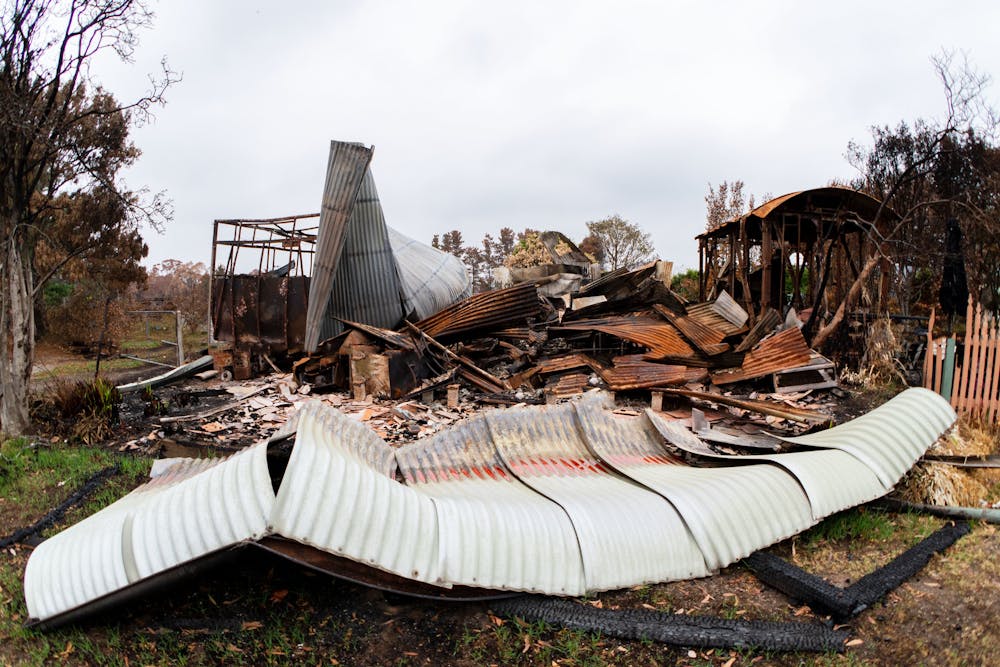 Bushfires impacted many homes and businesses through loss of properties and infrastructure.
John Turnbull, Author provided
Bushfires impacted many homes and businesses through loss of properties and infrastructure.
John Turnbull, Author provided
Other pressures to the environment – industrial pollution, land clearing, unsustainable water consumption, extraction of natural resources – also lower our wellbeing, due to their degradation to nature.
These pressures are, of course, often by-products of producing food, water and wealth. We need to find ways to more effectively monitor, manage and prioritise them to ensure they’re sustainable.
A sustainable future
The State of the Environment report, for the first time, links to the United Nation’s Sustainable Development Goals, which include good health, quality education, clean energy, and the health of life on land and in the water.
Sustainability means meeting today’s needs without compromising the needs of future generations. It is founded on effective ecosystem protection and environmental stewardship[14].
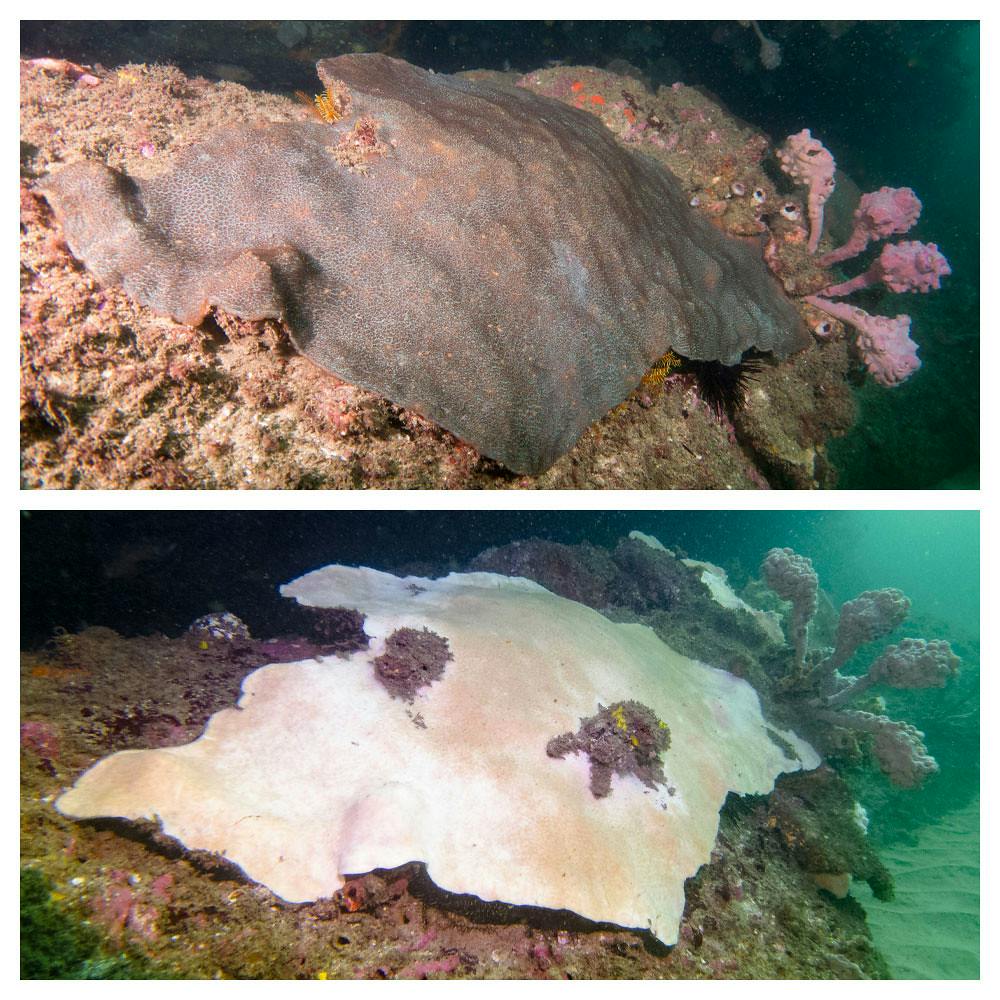 This large coral is thought to be over a century, maybe 300 years old. After months of extreme conditions including a marine heatwaves, it was found totally bleached for the first time. The top image shows the coral before bleaching.
John Tunbull, Author provided
This large coral is thought to be over a century, maybe 300 years old. After months of extreme conditions including a marine heatwaves, it was found totally bleached for the first time. The top image shows the coral before bleaching.
John Tunbull, Author provided
The State of the Environment report contains a range of recommendations to tackle our sustainability challenges. Foremost is the need to strengthen and build connections: between people and Country, economics and environment.
Learning from and empowering Indigenous management of Country[15] is a key part of this success, as is greater national leadership, reducing pollution, better monitoring, and long-term reliable funding for the environment.
Read more: Caring for Country means tackling the climate crisis with Indigenous leadership: 3 things the new government must do[16]
An important step is the environment minister’s recent announcement that Australia’s proposed wellbeing budget[17] will include environmental factors.
Establishing more protected areas with higher standards of protection is another important part of the solution. The federal government’s recent commitment[18] to expand Australia’s national estate to protect 30% of land and 30% of oceans by 2030 is a good start.
However, we must be careful to ensure this protection is effective[19] and representative of all our precious ecosystems.
 Sustainability means meeting today’s needs without compromising the needs of future generations.
John Turnbull, Author provided
Sustainability means meeting today’s needs without compromising the needs of future generations.
John Turnbull, Author provided
What can you do?
There’s much we can do at a personal level, too. You can become informed about the urgency of the twin climate and biodiversity crises - and getting familiar with the State of Environment Report[20] is a great place to start.
Immersing yourself in nature, and encouraging children to do so as well, is also essential. Spending time in nature raises our understanding of its plight.
There are also opportunities to make a tangible impact on the wellbeing of our communities by getting involved in nature restoration, citizen science and other community programs.
We don’t lack the knowledge of what needs to be done. What we need now is urgent action by individuals, organisations and government. Our lives, and our environmental life support system, depend on it.
Read more: From Kangaroo Island to Mallacoota, citizen scientists proved vital to Australia's bushfire recovery[21]
References
- ^ State of the Environment report (soe.dcceew.gov.au)
- ^ national policy (theconversation.com)
- ^ live near the coast (www.abs.gov.au)
- ^ can relieve stress (www.tandfonline.com)
- ^ are collapsing (theconversation.com)
- ^ own wellbeing (theconversation.com)
- ^ State of the Environment report (theconversation.com)
- ^ good but deteriorating (soe.dcceew.gov.au)
- ^ disproportionately impacted (theconversation.com)
- ^ This is Australia's most important report on the environment's deteriorating health. We present its grim findings (theconversation.com)
- ^ increased by 33% over the last two decades (www.mja.com.au)
- ^ at least 350 deaths (www.sciencedirect.com)
- ^ 417 people (www.mja.com.au)
- ^ environmental stewardship (link.springer.com)
- ^ Indigenous management of Country (theconversation.com)
- ^ Caring for Country means tackling the climate crisis with Indigenous leadership: 3 things the new government must do (theconversation.com)
- ^ wellbeing budget (theconversation.com)
- ^ recent commitment (theconversation.com)
- ^ this protection is effective (theconversation.com)
- ^ State of Environment Report (theconversation.com)
- ^ From Kangaroo Island to Mallacoota, citizen scientists proved vital to Australia's bushfire recovery (theconversation.com)