A thought experiment that reveals the flaws our in environment laws
- Written by: David Lindenmayer, Professor, The Fenner School of Environment and Society, Australian National University
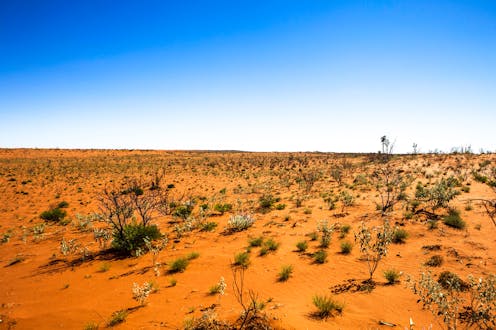
Imagine this fictitious scenario. The federal environment minister announces government approval for a large-scale penguin farm near Alice Springs. It will produce 300,000 penguins each year for the high-end feather market in Europe.
Penguin feathers are also, in this make-believe world, proven superconductors that could provide an alternative to lithium for renewable energy batteries. The $40 million farming project promises to create jobs and growth in regional Australia.
To any informed reader, the idea of farming cold-ocean seabirds in the Australian desert is mind-numbingly silly. But this hypothetical idea helps us better understand how environmental governance in Australia has gone badly wrong.
The real-world problems were laid bare on Tuesday when the State of the Environment report[1] was released. It showed a devastating loss of plants, animals and habitat on land and in oceans. And without dramatic action, the problem will only get worse.
So let’s look at the policies the federal government should fix to tackle this sorry state of affairs.
Penguins R Us
First, let’s explore our make-believe penguin farm a little further.
The venture would use river water to create a new, cool aquatic environment for the penguins. It will be located near two other large farm projects that also draw water from the river. The proponent, Penguins R Us, will monitor environmental impacts at the site.
Environmental groups oppose the plan. But the fictitious environment minister said the department thoroughly reviewed the proposal and it represents “world’s best practice” penguin farming.
Environmental conditions attached to the project stipulate that water from only one river can be diverted to the project. Loss of habitat for the endangered orange-throated parrot – a fictitious species invented for the purposes of this example – will be offset by tree planting on a neighbouring pastoral station.
Penguins R Us is a generous donor to major political parties. The fictitious federal government of the day will provide 50% of the project’s initial finance.
No-one – yet – has proposed this silly farming idea. But all too often, a similar script plays out in real life. Here are five reasons why.
Read more: This is Australia's most important report on the environment's deteriorating health. We present its grim findings[2]
2. Gross underfunding
Proper conservation of the fictitious orange-throated parrot is likely to be hampered by inadequate funding for conservation actions.
Australia is a true laggard on environmental spending. Current expenditure is just 15% of what’s needed[4] to avoid extinctions and recover threatened species.
Good science is needed to ensure funding is well-targeted and effective. The federally funded Threatened Species Recovery Hub once conducted targeted practical research[5] on how to best and most effectively conserve threatened plants, animals and ecosystems. It partnered closely with land mangers, including Traditional Owners.
But the hub was axed last year by the Morrison government. With it went a huge amount of capacity to tackle Australia’s biodiversity crisis in many parts of the continent. This, and many other shortsighted funding decisions, must be reversed.
3. Poor offset process
Under our make-believe scenario, loss of habitat for the endangered orange-throated parrot will be compensated by planting trees elsewhere. This is known as “biodiversity offsetting”.
The body[6] of evidence[7] on poorly performing offsets is vast. They are supposed to prevent net loss of habitats or populations of a particular species. This almost never happens.
The Samuel review found[8] environmental offsetting should be “immediately improved” to ensure, among other things, it delivers genuine protection and restoration.
This reform is urgent. Offsets must be properly assessed, rigorously verified and robustly monitored to ensure they deliver.
4. Inadequate environmental monitoring
In this fictitious scenario, the proponent will monitor the impacts of the penguin farm. This often means[9] a poorly designed and executed monitoring program[10].
What’s more, it will be almost impossible for governments and the general public to evaluate the proponents’ efforts to fix any environmental problems it causes. A string[11] of reviews[12] have shown Australia’s record on monitoring species recovery and environmental remediation is woeful.
Mandatory monitoring of projects should be conducted independently – and by people who know how to design and implement such programs.
Read more: 'Bad and getting worse': Labor promises law reform for Australia's environment. Here's what you need to know[13]
5. Problematic political donations
Penguins R Us is a major donor to the fictitious party in government. The government then invested in the penguin project to get it off the ground.
Australia’s political donations system lacks transparency[14]. But from what we do know, the donations often buy companies access to politicians and influence[15] over the political process, including environmental decisions on developments.
For example, research[16] suggests powerful corporate interests have played a major role in the climate policy decisions and actions in Australia over the past 15 years.
So reform on campaign donations is essential to protecting Australia’s environment.
Doing better
Australia may not be farming penguins in one of the world’s hottest and driest environments. But this hypothetical scenario highlights serious deficiencies in species conservation, environmental management, project approvals, and monitoring of major development impacts.
Clearly, non-Indigenous Australians are failing in our custodial role to protect and properly manage the priceless natural assets of this continent. We can - and must - do far better.
Read more: 'That patch of bush is gone, and so are the birds': a scientist reacts to the State of the Environment report[17]
References
- ^ State of the Environment report (theconversation.com)
- ^ This is Australia's most important report on the environment's deteriorating health. We present its grim findings (theconversation.com)
- ^ independent review (epbcactreview.environment.gov.au)
- ^ needed (conbio.onlinelibrary.wiley.com)
- ^ practical research (www.nespthreatenedspecies.edu.au)
- ^ body (doi.org)
- ^ evidence (www.sciencedirect.com)
- ^ found (epbcactreview.environment.gov.au)
- ^ often means (birdlife.org.au)
- ^ program (www.publish.csiro.au)
- ^ string (www.sciencedirect.com)
- ^ reviews (doi.org)
- ^ 'Bad and getting worse': Labor promises law reform for Australia's environment. Here's what you need to know (theconversation.com)
- ^ lacks transparency (www.researchgate.net)
- ^ influence (grattan.edu.au)
- ^ research (www.sciencedirect.com)
- ^ 'That patch of bush is gone, and so are the birds': a scientist reacts to the State of the Environment report (theconversation.com)