Stellar first week for Anthony Albanese but tough months ahead
- Written by: Michelle Grattan, Professorial Fellow, University of Canberra
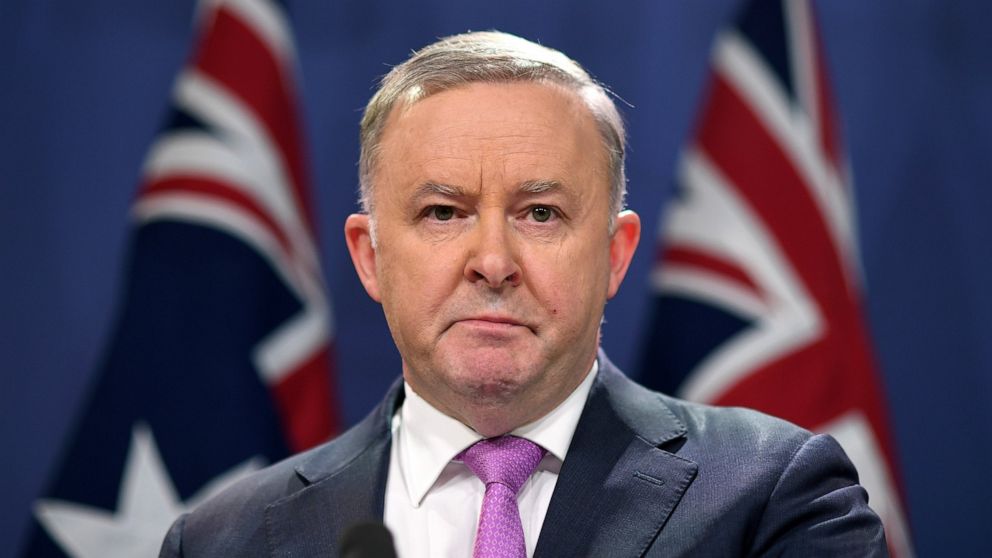
Anthony Albanese had expected the election might be a week earlier than it was, because last Saturday would bump up against Tuesday’s Quad meeting in Tokyo.
But Scott Morrison wanted maximum time to try to wear down his opponent. Then, when it emerged publicly that Albanese was making arrangements with officials to attend the Quad if he won, Morrison accused him of being presumptuous.
The preparations were prudent and proper, not presumptuous.
The new prime minister’s Quad trip has been an obvious success, with leaders – especially US President Joe Biden – impressed he was there at all, so soon after the election. Albanese’s resetting of Australia’s policy on climate change, which he emphasised inside and outside the meeting, has also gone down well internationally.
The timing of the Quad has been much to Albanese’s advantage. Immediately after becoming PM, he’s had face-to-face talks not just with the US president but also the Japanese and Indian prime ministers, in a diplomatic top-level job lot.
As opposition leader, Albanese was focused on domestic rather than foreign policy. The Quad was an opportunity to get a first-hand feel for issues and positions, as well to indicate the direction his government will take on regional policy.
It’s been a stellar first week for Albanese, but it will only get harder from now, even internationally but especially domestically.
Labor fiercely attacked the Morrison government for its Pacific policy failure, after the China-Solomons security agreement exploded into Australian politics during the campaign.
China’s foreign minister, Wang Yi, is currently on a diplomatic sweep of the Pacific, with China offering some ten countries region-wide security and free trade agreements.
Albanese said Australia is paying a big price for cutting aid. But whatever points it might score against its predecessor, the Labor government has to put in place Australia’s response to this fresh Chinese assertiveness.
After the Quad, Foreign Minister Penny Wong flew to Fiji, addressing the Pacific Islands Forum. Her speech strongly focused on the climate issue. “I understand that – under past governments – Australia has neglected its responsibility to act on climate change,” she said. “This is a different Australian government and a different Australia.”
Before the election, Labor announced a range of extra assistance measures for the small Pacific nations. But some experts believe that, to counter China’s Pacific push (if it can be effectively countered), Australia needs to do better than raise climate ambition, boost aid, improve diplomacy and build on existing labour and visas access.
Michael Shoebridge, director of defence, strategy and national security at the Australian Strategic Policy Institute (ASPI), says Australia should have the same arrangements with the small Pacific states as it has with New Zealand.
This would mean visa-free entry for work and travel, and closer economic arrangements for businesses, far beyond current arrangements. It would be a serious Pacific “step up”.
As in the campaign, when voters were more concerned about the rising cost of living than the national security debate, so over the coming months people’s attention will be primarily on economic issues.
And the picture is grim, as Treasurer Jim Chalmers has underlined this week.
Read more: Quad praises Albanese government's higher ambition on climate[1]
An incoming government has, for a limited period, a sort of immunity from blame. It’s able to say it has “inherited” a bad situation. But this doesn’t last – anyway, the situation itself has to be dealt with, as best the government can.
Chalmers on Wednesday said he would be “blunt” in the economic statement he’ll deliver when parliament sits. He highlighted the negatives facing the Australian economy – rising inflation, increasing interest rates, the squeeze on wages. He pointed in particular to the inflationary spikes in power prices and building costs.
A day later the Australian Energy Regulator delivered its bad news on electricity costs, with increases of between about 4.5% and 18% in the “benchmark” prices. This follows a rise in the wholesale cost, driven by higher coal and gas prices, and also contributed to by outages at large coal generators.
On wages, the government has made it clear it wants the Fair Work Commission to deliver an increase of 5.1% – the inflation rate – in the minimum wage. The decision will come before the end of June.
But much or all of whatever low-paid workers do get (and it may be below 5.1%) will before long be swallowed up by price increases, for example for petrol. Chalmers this week reaffirmed Labor was unlikely to extend the six-month cut in petrol excise the Morrison government made in the March budget.
For many Australians the remainder of this year will be very difficult, and there is not much the government can do about it. The October budget will be a juggling act for Chalmers and Finance Minister Katy Gallagher (they’re already searching for savings), and not as benign as the March one.
One feature of Albanese’s first week was his signal he is apparently determined to try to improve political behaviour.
He publicly rebuked his frontbencher Tanya Plibersek for insulting Peter Dutton, who next week will become opposition leader.
Plibersek described Dutton as looking “a bit like Voldemort”, the villain from Harry Potter, saying: “I think there will be a lot of children who have watched a lot of Harry Potter films who will be very frightened of what they are seeing on TV at night, that’s for sure.”
Read more: As Albanese heads to the Quad, what are the security challenges facing Australia's new government?[2]
She later contacted Dutton to apologise. Albanese said her comment had been unacceptable. “I think that in politics, we need to treat each other with respect. And I think that’s important. Tanya recognises that, which is why she apologised.”
Albanese said of the man who’ll become his opposite number: “I have a much better relationship with Peter Dutton than I had with Scott Morrison. Peter Dutton has never broken a confidence that I’ve had with him.”
He went on: “I think it’s very important that the prime minister and the leader of the opposition are able to exchange ideas and information and get co-operation wherever it’s possible.
"I want to lead a government that gets things done for Australia. And I’ll have discussions with Peter Dutton directly if he becomes the leader of the opposition, as I will have discussions with members of the crossbench.”
One message from this election – most notably in the large vote for the “teals” – as well as from extensive other evidence, is Australians are deeply disillusioned with the way politicians conduct themselves.
They are looking for a more civil discourse. Admittedly the adversarial system, the nature of today’s media, and feral social media work against this. And broad statements of good intentions – “I want to lead a gentler parliament,” said Albanese on Thursday – are not enough.
But if Albanese can actually succeed in raising the tone on the political battleground that will be very welcome for many voters.
References
- ^ Quad praises Albanese government's higher ambition on climate (theconversation.com)
- ^ As Albanese heads to the Quad, what are the security challenges facing Australia's new government? (theconversation.com)