On the Pacific, the new government must be bold and go big. Here's how the repair work could begin
- Written by: Patricia A. O'Brien, Faculty Member, Asian Studies Program, Georgetown University; Visiting Fellow, Department of Pacific Affairs, Australian National University; Adjunct Fellow, Center for Strategic and International Studies, Washington DC., Georgetown U
The federal election has delivered a monumental win for Australia’s relations with the Pacific. The stunning victories of the teal and Greens candidates means climate action will be at the top of the new government’s agenda.
In one fell swoop, the Pacific’s leading source of deep frustration with Australia is back at the centre of policy debate. The Australian government and its Pacific neighbours are now much closer to being on the same page.
This is a profoundly important turn of events, allowing other much-needed improvements to Australia’s regional image and outreach.
When it comes to the Pacific, the new government must be bold and go big.
Read more: The teals and Greens will turn up the heat on Labor's climate policy. Here's what to expect[1]
Swift action on climate
To repair our relationship with the Pacific, the new government must make swift decisions addressing the climate emergency.
During the campaign, Labor[2] equivocated about its stance on coal, fearing losses in vital “coal country” seats.
But Australian voters have made clear that they want action on climate.
As a result, Labor’s governing mandate – enforced by the teal independents and the Greens – will likely involve the winding down of Australia’s coal industry.
This is doing right by the Pacific – and by fire and flood-ravaged Australia, too.
The new government must effect this change in ways that secure a strong future for coal country people.
Otherwise, the politics of coal that have marred Australia’s Pacific relations will undoubtedly be revived.
A big repair job ahead
Addressing the climate crisis should be the first order of business for the new government. But the new government has a lot of other repair work ahead of it.
Under the Coalition, Australia’s record of relations with the Pacific ran the gamut from positive, to checkered, to tone-deaf, to downright embarrassing.
Take, for example, the confounding election night revelation[3] the Morrison government rejected doubling the Pacific aid budget in the wake of the Solomon Islands-China security deal.
Despite such decisions, the Morrison government was fond of using the sentimental slogan “our Pacific family”. It rang profoundly hollow, given it left the greatest existential crisis facing “our family” unaddressed.

What has Labor promised on the Pacific?
Labor is using the language of “our Pacific family” too, but has pledged to back it up with a broad-ranging Pacific policy[4] announced during the campaign.
The policy pledges include:
- establishing an Australia Pacific Defence School
- boosting maritime assistance support and development assistance
- developing climate infrastructure financing and
- reforming the Pacific Australian Mobility Scheme (criticised[5] in the past for failing to address exploitation).
Labor also signalled it will issue 3,000 visas annually to boost permanent migration “for nationals of Pacific Island countries and Timor-Leste”.
While this is a step in the right direction, Labor’s migration and labour goals are too modest.
Its vital Australia addresses the low numbers of Pacific Islanders living in Australia. Boosting these numbers in Australia opens economic and educational opportunities of Pacific Islanders, but also directly benefits home islands through remittances.
The Solomon Islands High Commissioner to Canberra, despite the acute tensions between Australia and his government due to the China security deal, has underscored how vital worker access to Australian jobs is, saying[6]:
If only the scheme can be extended to the whole of Australia and metropolitan cities like Sydney, Brisbane, Wollongong, Perth, Melbourne, Adelaide, Newcastle, Gold Coast, where the demand for plumbers, bricklayers, caregivers is huge.
This fills labour market gaps. It also generates earnings and valuable skills on islands, like the Solomons, that face high rates of youth unemployment (which feeds social unrest).
The incoming government should take heed – there is no better way to build and secure bridges between Australia and the Pacific than by creating job opportunities for Pacific Islanders in Australia.
Read more: Labor's proposed Pacific labour scheme reforms might be good soft diplomacy but will it address worker exploitation?[7]
Educational opportunities
The way forward for the new government must also help raise Australian literacy and understanding about the islands.
School children should learn about Australia’s Pacific history and Pacific cultures as a matter of course.
Australia’s universities must expand opportunities for Australian students to learn about the Pacific and establish on-island campuses.
This would facilitate circulation of people, learning and expertise between Australian and island-based campuses.
It would represent an excellent investment but would need government support.
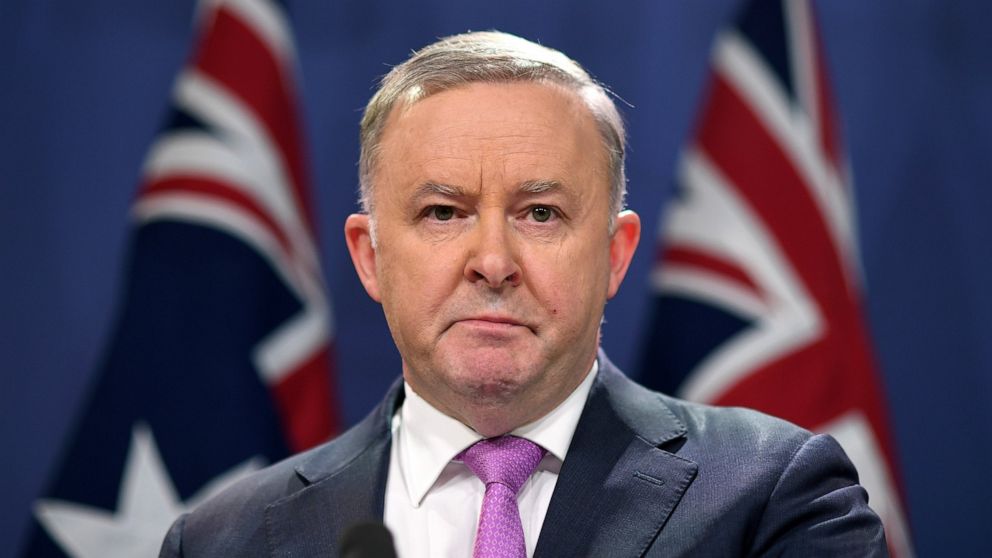
 Labor, under Prime Minister Anthony Albanese and Foreign Minister Penny Wong, must now follow through on a suite of election promises it made to repair Australia’s relations with the Pacific. AAP Image/Lukas Coch
Reckoning with history
Australia also needs to reckon with its Pacific history, focusing on colonial Papua New Guinea and the history of “blackbirding[8]” – where Pacific Islanders were lured or taken forcibly to work in Australia.
The Australian War Memorial could also do a better job of educating Australians about Australia’s military history of “pacifying” islanders.
Prime Minister Anthony Albanese also must follow the example of New Zealand Prime Ministers Helen Clark[9] and Jacinda Ardern[10]. Both formally apologised for past policies and practices that caused untold harm to the Samoan people and peoples from Niue, Tokelau and the Cook Islands.
Albanese should issue a similar apology for the people of Papua New Guinea, the Solomons and Vanuatu.
Only by providing civic education and acknowledging a troubled past can more Australians appreciate the immense debt Australia owes the Pacific Islands.
This is a debt that has yet to be paid.
Read more: How should the next Australian government handle the Pacific?[11]
References
- ^ The teals and Greens will turn up the heat on Labor's climate policy. Here's what to expect (theconversation.com)
- ^ Labor (www.smh.com.au)
- ^ revelation (www.theguardian.com)
- ^ Pacific policy (alp.org.au)
- ^ criticised (theconversation.com)
- ^ saying (www.skynews.com.au)
- ^ Labor's proposed Pacific labour scheme reforms might be good soft diplomacy but will it address worker exploitation? (theconversation.com)
- ^ blackbirding (theconversation.com)
- ^ Helen Clark (www.nzherald.co.nz)
- ^ Jacinda Ardern (www.beehive.govt.nz)
- ^ How should the next Australian government handle the Pacific? (theconversation.com)