It's legal to buy over-the-counter cannabis in Australia – but it's still a long way from your local chemist
- Written by: Jennifer Martin, Professor of Medicine and Chair of Clinical Pharmacology, University of Newcastle
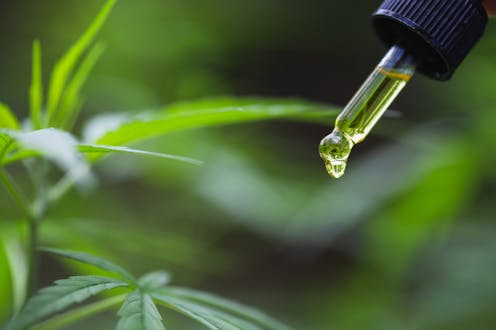
Since early 2021[1], the Therapeutic Goods Administration (TGA) has allowed the sale of low-dose cannabidiol (CBD) preparations over the counter at Australian pharmacies. But you won’t find any at your local chemist.
The situation is different overseas[2]. In the United States, although not approved[3] at a federal level, it is possible to buy over-the-counter products such as sweets containing CBD[4] in several states. In the United Kingdom, low-dose CBD oil can be sold as a dietary supplement, but not a medicine.
CBD is a chemical found in the cannabis plant. Like tetrahydrocannabinol (THC), also found in cannabis, it does have psychoactive effects. It can make people sleepy and affect the brain’s electrical signals. Unlike THC, it won’t get you “high” or induce other psychotic effects.
Getting a medicine to market in Australia, even a non-prescription one, requires extensive research and investment. It might be too much for small cannabis producers to take on, and a turn-off for big pharmaceutical companies if that investment is at the expense of upcoming blockbuster drugs. And the process might not be worth it if research shows the benefit of cannabinoids is small compared with other therapies.
Read more: How does smoking marijuana affect academic performance? Two researchers explain how it can alter more than just moods[5]
Setting high standards
In Australia, it became legal to purchase products containing low-dose (less than 150 milligrams a day) CBD over the counter after the TGA down-scheduled the substance[6] from a Schedule 4 (prescription medicine) to a Schedule 3 (pharmacist-only medicine).
But so far, no product containing CBD has been approved by the Australian Register of Therapeutic Goods (ARTG), which is a requirement of pharmacist sale. ARTG approval means regulatory quality data on its safety, contaminants, microbial content, shelf-life and efficacy meet the TGA standards and is known and tested in regulatory grade laboratories.
The time and financial costs for drug development to meet the ARTG standards can be significant. Aspiring cannabis companies may not anticipate the difference between selling a product like cannabidiol compared to other products such as toys or clothing.
Expert clinical groups including physicians, psychiatrists, the Australian Medical Association[7] and Australasian Society of Clinical and Experimental Pharmacologists and Toxicologists opposed the down-scheduling, citing the lack safety data, lack of efficacy data, issues with product labelling and the potential for interactions with prescription medicines.
In fact there is only one regulatory-grade CBD product approved for use in Australia, Epidyolex[8], which is approved for treating forms of severe childhood epilepsy, and only available on prescription. (A drug called Sativex is also approved that contains both CBD and THC.)
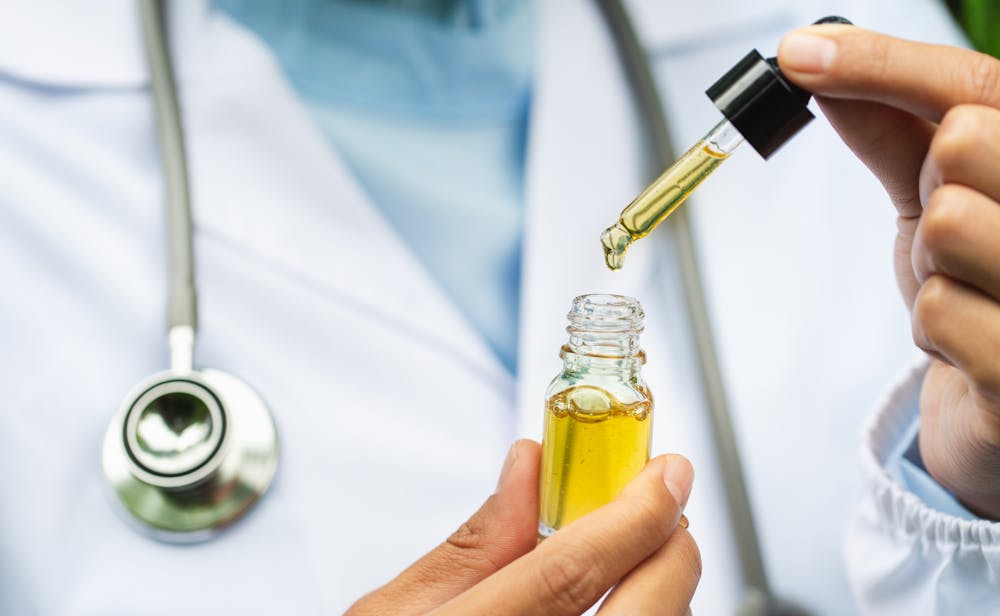
From a patient-safety perspective, regulating formulation and ensuring safety and quality data has met the TGA bar is imperative. Proving effectiveness is reasonable too. By down-scheduling and yet insisting on ARTG approval, the use of illicit CBD products may decrease – a win for population health if it transpires.
For industry, the TGA’s decision to down-schedule but require ARTG approval could be seen helpful to ensure quality and restrict supply. It has been estimated there is a potential[10] for hundreds of millions of dollars of market in Australia and crop development is already underway[11]. So, major investment into drug development by a CBD company could be financially rewarding, as long as the standards are met.
Read more: Why it's time to treat medicinal cannabis as an alternative therapy, not a pharmaceutical[12]
What could low dose CBD be good for?
There are currently no recommended medical uses for low-dose CBD. Clinical trial data[13] suggests a benefit of higher dose CBD for some children with a severe form of epilepsy who haven’t responded to other drugs. But it’s not clear whether the benefits could also have been explained by the fact patients also took Valium[14]. And there were significant side effects reported that were higher in the CBD group.
With some high-profile proponents including basketballer Lauren Jackson[15], there are increasing calls in many countries for patients, particularly those with chronic pain, to legally use cannabinoids. There are also claims[16] low-dose CBD could help people with anxiety, insomnia, arthritis or inflammatory issues, but this has yet to be backed by research into effectiveness or safety.
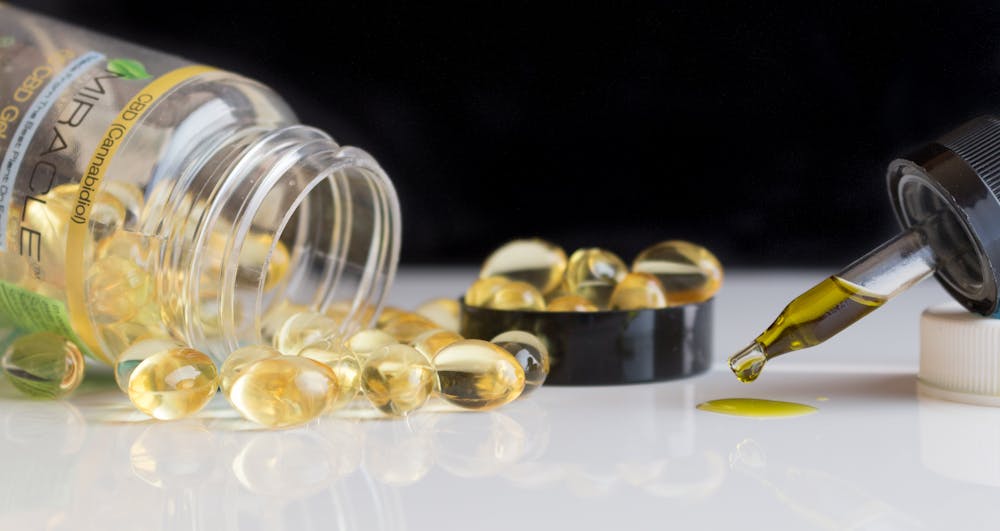 Over-the-counter CBD products must be approved for registration to be sold in Australian. So far, none have passed those tests.
Shutterstock[17]
Over-the-counter CBD products must be approved for registration to be sold in Australian. So far, none have passed those tests.
Shutterstock[17]
We don’t know whether any cannabis business has applied to the TGA to have its product registered and been rejected due to failures on the safety, efficacy and quality side.
However, due to cannabis’ complicated extraction, synthesis, combinations, drug interactions and side-effects profile, it seems unlikely many non-medical companies would have the facilities, systems and people available in Australia to be able to achieve the required standards.
So far, big pharmaceutical companies have not shown significant interest in low-dose CBD. They may not be sure low-dose drugs will be recommended by doctors, or be waiting for more research. They may not judge CBD to be a potential blockbuster compared with other therapies in their pipelines.
There are some local producers exporting cannabis[18] and embarking on clinical trials. Federal health minister Greg Hunt has said[19] Australia is “poised to become a recognised leader in the global supply of the highest-quality medicinal cannabis products”.
Read more: Cannabis products are being sold as sleep remedies – here's the evidence about their effectiveness[20]
Coming to a chemist soon?
If we are using cannabis as a medicine, we should make the same demands[21] we do of other medicines to protect patient safety. This requires good manufacturing practice, good laboratory standards of measurement, appropriate labelling, and sufficient clinical information for informed patient consent.
Medical professionals should know what they are prescribing or recommending and be able to refer to dose-response data for each compound. They need to know the pharmacology and the drug interactions, the evidence for their use in specific conditions and any negative effects.
They also need to understand the legal, professional and regulatory obligations placed on prescribers and dispensers. If products are being bought at the chemist, they may interfere with other drugs or foods. Companies who want to sell such products in Australia will need to focus on bringing their drug development into line with regulatory standards. Time will tell how many can do that.
References
- ^ early 2021 (www.news.com.au)
- ^ different overseas (www.sciencedirect.com)
- ^ not approved (www.raps.org)
- ^ containing CBD (www.healthline.com)
- ^ How does smoking marijuana affect academic performance? Two researchers explain how it can alter more than just moods (theconversation.com)
- ^ down-scheduled the substance (www.tga.gov.au)
- ^ Australian Medical Association (ama.com.au)
- ^ Epidyolex (www.tga.gov.au)
- ^ Shutterstock (image.shutterstock.com)
- ^ potential (www.grandviewresearch.com)
- ^ already underway (www.abc.net.au)
- ^ Why it's time to treat medicinal cannabis as an alternative therapy, not a pharmaceutical (theconversation.com)
- ^ Clinical trial data (pubmed.ncbi.nlm.nih.gov)
- ^ also took Valium (pubmed.ncbi.nlm.nih.gov)
- ^ basketballer Lauren Jackson (www.abc.net.au)
- ^ claims (www.news.com.au)
- ^ Shutterstock (image.shutterstock.com)
- ^ local producers exporting cannabis (www.afr.com)
- ^ said (www.afr.com)
- ^ Cannabis products are being sold as sleep remedies – here's the evidence about their effectiveness (theconversation.com)
- ^ make the same demands (www.tga.gov.au)