


the COVID experience is a rich resource for year 12 English exams
- Written by: Janet Dutton, Senior Lecturer, Secondary English, Macquarie University
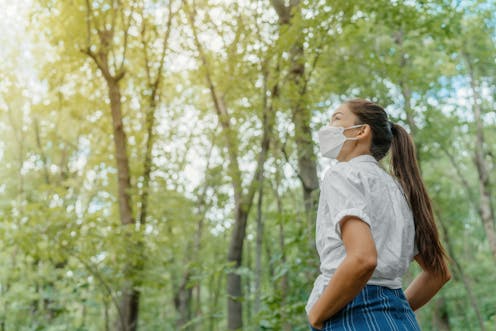
Generations of students sitting exams would know what Australian poet Joanne Burns means when she writes of the fear of failure[1] when expressing ideas.
they don’t come out of your mouth in smooth formation very often […]
you become intimidated far too easily by the prospect of that great black trapdoor under your words, that might open and tumble you down to the cavern of indefinite shame if you start to make the slightest mistake […]
In 2021, English students are not only striving to overcome the “trapdoor” under their words, they are doing so in a year that has challenged them to see their world very differently.
COVID-19 has shaped a year of uncertainty. For secondary students eyeing the finish line of their school days, the disruptions to life, and disappointments from cancelled rites of passage, have been a crash course in the vicissitudes of human experiences.
Read more: Fears loom for teens undergoing vital brain development during COVID. Telling stories might help[2]
There is no denying the serious challenges faced by so many. But senior students writing English exams can also use their experiences from this period of turbulence as a source of inspiration.
Write what you know, but stand outside your experience
Classroom-based research[3] has long supported the importance of “harnessing students’ own knowledge, experience, imagination and memories” in writing. Helping students to tell their own stories[4] is a powerful way to value their experiences and support their identity.
Read more: 'I'm in another world': writing without rules lets kids find their voice, just like professional authors[5]
Authors often use their everyday perceptions of the world as a source of inspiration. Novelist P.D. James famously observed[6]:
You absolutely should write about what you know… [but] You have to learn to stand outside of yourself. All experience, whether it is painful or whether it is happy, is somehow stored up and sooner or later it’s used.
Drawing on lived experience doesn’t have to be explicit. Standing outside of yourself means not literally recounting a life story in boring detail. It means being original and doing what good writers do by asking questions to re-imagine personal experiences.
Questions you could ask yourself include:
what if the personal experience was told from a different perspective?
how could a character trait or emotion be exaggerated for comic or tragic effect?
how could the setting be changed to become more dramatic, unfamiliar, surreal, or perhaps possible in the future?
what if you use a flashback or flashforward to delay the action and build suspense?
could the dominant mood be altered to take the narrative in a different direction?

Using these techniques you could write about Zoom gatherings and viral TikTok dances in a satirical way.
Or consider using the enduring tensions around individual choice and collective responsibility as an example or metaphor in a writing task or persuasive text (writing an argument).
Use the writing prompt, but be interesting
Writing tasks in English exams include prompts. These vary widely but commonly focus on human experience and are broad enough to open a wide range of possibilities you could use in your writing.
In a past senior English Queensland exam[8], students were asked to use a set of images and develop a narrative using the theme of “a fork in the road”.
In one of the images a man wearing a backpack is standing in a forest.
For this task, you could use the image and “fork in the road” theme to explore potential decisions that could come about from having experienced social isolation during COVID. For instance, after the pandemic is over, do you want to return to your old social life or continue spending more time by yourself?
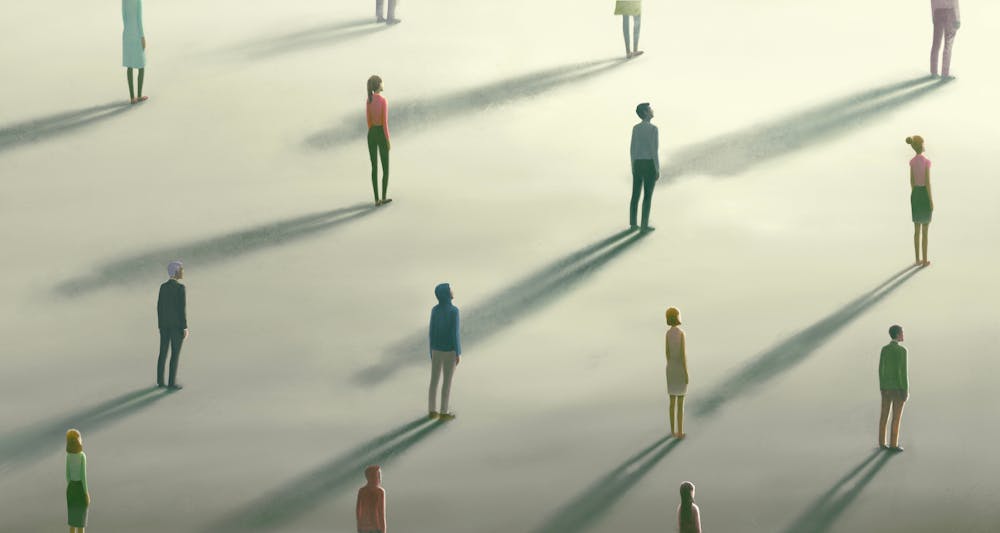 You could explore the idea of social isolation.
Shutterstock[9]
You could explore the idea of social isolation.
Shutterstock[9]
English exams often contain excerpts from texts as a writing stimulus, like this one from the short story Underdog, by Tobias Madden, which appeared in a NSW exam[10].
This is my world now, and it can be yours too, if you like. A place can soak through your skin like sweat, and ooze into your heart and soul. Breathe it in, and let me tell you a story.
With a prompt like this, you could use personal experiences such as:
a familiar location such as a disused warehouse in a local street, or the carefully styled loft apartment from an influencer’s social media post
comparisons between two worlds – your known world (a bustling commercial landscape) and another world (a desolate, urban landscape waiting for people to re-inhabit it)
a memoir-style description of a grandparents’ house, as told to a younger family member with use of dialogue in English and the student’s first language to construct authenticity.
Read more: Inside the story: writing trauma in Cynthia Banham's A Certain Light[11]
It is always important for students to closely follow the task instructions because the marking criteria will assess the extent to which students are able to reflect the task parameters in their response.
Rote-learned, off-task pieces of writing will not be graded highly by markers.
English offers a unique space for students to write about their world. If students write what they know but make it interesting, their experiences during their turbulent senior year can be reshaped into meaningful and creative exam writing tasks.
References
- ^ writes of the fear of failure (www.poetrylibrary.edu.au)
- ^ Fears loom for teens undergoing vital brain development during COVID. Telling stories might help (theconversation.com)
- ^ Classroom-based research (search.informit.org)
- ^ tell their own stories (education.nsw.gov.au)
- ^ 'I'm in another world': writing without rules lets kids find their voice, just like professional authors (theconversation.com)
- ^ famously observed (www.bbc.com)
- ^ Shutterstock (www.shutterstock.com)
- ^ senior English Queensland exam (www.qcaa.qld.edu.au)
- ^ Shutterstock (www.shutterstock.com)
- ^ NSW exam (educationstandards.nsw.edu.au)
- ^ Inside the story: writing trauma in Cynthia Banham's A Certain Light (theconversation.com)










