
The oil war is escaping Hormuz — and that changes the risk for Australia
- Written by: The Times
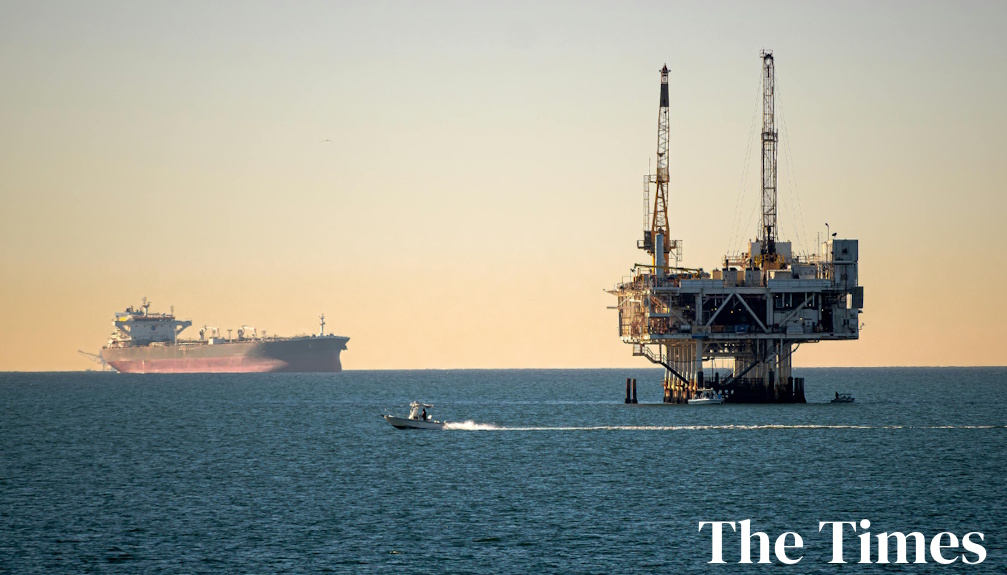
For decades, the Strait of Hormuz has been treated as the great vulnerability of the world's oil trade.
It is narrow. It sits beside Iran. Enormous quantities of oil and gas normally pass through it. And any serious interruption can rapidly become a problem for economies thousands of kilometres away.
The conventional answer has always been obvious: find another way around it.
Saudi Arabia can move oil west towards the Red Sea. The United Arab Emirates has developed export infrastructure on its eastern coast outside the Strait. Pipelines, alternative ports and strategic storage provide the Gulf states with at least some capacity to keep oil moving when Hormuz becomes dangerous.
But the latest escalation in the Middle East exposes a more troubling possibility.
What happens when the alternative routes become targets too?
Iran-aligned Houthi forces have attacked Saudi Arabia, striking civilian and economic sites across the country's south. Saudi authorities say 73 civilians were wounded in attacks affecting Abha, Khamis Mushait, Jazan and Najran.
More importantly for world energy markets, Saudi Arabia's energy ministry says operations at some energy facilities were halted after attacks caused fires and required emergency crews to respond.
This is no longer merely a threat to close a narrow stretch of water.
The oil war is spreading beyond Hormuz.
Saudi energy infrastructure comes under attack
The latest attacks have again focused attention on Jazan — sometimes rendered Jizan — on Saudi Arabia's Red Sea coast.
The location matters.
Saudi Aramco operates a major refinery there with capacity of around 400,000 barrels a day. The facility sits nowhere near the Strait of Hormuz.
That geographical distinction is crucial.
The world's energy-security calculations have traditionally assumed that if shipping through Hormuz becomes unreliable, at least some Gulf oil can be redirected through pipelines towards export facilities on the Red Sea or elsewhere outside the Strait.
That remains true.
But a bypass is useful only while the infrastructure at the other end remains secure.
The latest attacks demonstrate that the geographical limits of the conflict cannot be assumed.
Hormuz is already severely constrained
Meanwhile, the original problem has not disappeared.
Shipping through the Strait remains dramatically below normal levels.
Kpler vessel-tracking data cited by Reuters showed only seven commodity vessels crossing Hormuz on Monday, after eight the previous day.
That is not a theoretical closure.
Nor does Iran have to physically prevent every vessel from crossing to produce an enormous economic effect.
Commercial shipping depends upon much more than whether a channel remains navigable.
A shipowner must be prepared to send the vessel.
The crew must be prepared to sail.
The cargo owner must accept the risk.
An insurer must be prepared to underwrite it.
And someone ultimately has to pay the additional insurance, security and freight costs associated with entering a war zone.
That is why the distinction between an officially "open" Strait and a commercially functional Strait matters.
Hormuz can remain physically open while operating at a fraction of its normal economic capacity.
Middle Eastern oil exports have already fallen sharply
The scale of the disruption is becoming increasingly visible.
Reuters estimates that Middle Eastern crude shipments have fallen from around 18 million barrels a day before the disruption to roughly 11 million barrels a day.
Some four to five million barrels a day have recently continued to move through Hormuz, while Gulf producers are using pipelines and other methods to get additional oil into international markets.
It is an extraordinary adjustment by the global petroleum system.
And yet Brent crude has remained below US$100 a barrel.
That may seem surprising.
There are several reasons.
Oil is being produced elsewhere. The United States, Canada, Guyana and other producers provide supply that does not depend upon the Persian Gulf.
China holds substantial inventories.
Demand has also weakened in some markets.
And Gulf producers have proved remarkably inventive in finding alternative ways of getting at least some oil to customers.
Those factors have prevented a severe disruption from becoming an immediate global oil catastrophe.
But they should not be mistaken for evidence that the danger has passed.
Brent was trading around US$98 a barrel on Tuesday as markets absorbed the latest Saudi attacks.
The system is coping.
That is very different from saying the system is comfortable.
The bypass problem
Saudi Arabia possesses one of the world's most important pieces of energy-security infrastructure: the East-West pipeline system.
Its strategic purpose is straightforward.
Oil produced near the Persian Gulf can be moved across the Arabian Peninsula towards the Red Sea rather than loaded onto tankers that must sail through Hormuz.
It is effectively an escape route.
The UAE has pursued the same principle through infrastructure allowing crude to reach Fujairah, outside Hormuz.
These investments make an absolute Iranian closure of the Strait less powerful than a glance at a map might suggest.
But there is another map that now matters.
It includes the Red Sea, Yemen, Saudi Arabia's southern provinces, pipelines, refineries, ports, storage facilities and the Bab el-Mandeb entrance to the Red Sea.
Once conflict spreads across that map, the problem changes.
A chokepoint can be bypassed. An entire region at war cannot.
Tankers are part of the calculation
The same principle applies at sea.
A tanker does not simply transport oil from one point to another.
It is itself an extremely valuable asset, carrying an extremely valuable cargo, operated by a crew whose lives are at risk.
Repeated attacks change the commercial calculation even when most ships successfully complete their voyages.
Insurance premiums rise.
War-risk cover can become more difficult or expensive.
Owners may demand higher freight rates.
Some operators withdraw.
Others wait.
Cargoes are delayed or rerouted.
The result can resemble an economic blockade without anyone having successfully sealed the Strait.
We have already seen that effect in the dramatically reduced number of vessels willing to make the passage.
Now the risk is spreading to infrastructure intended to compensate for that disruption.
Why oil has not yet exploded above US$100
There is another lesson in the present crisis.
The global oil system has more resilience than is sometimes assumed.
Middle Eastern shipments can fall substantially without immediately producing the spectacular oil-price spike once associated with a Hormuz crisis.
Alternative producers matter.
Inventories matter.
Pipelines matter.
Demand matters.
And markets adapt remarkably quickly when enormous amounts of money are at stake.
But resilience is finite.
Every alternative route that becomes threatened removes another layer of redundancy.
Every refinery outage matters.
Every tanker withdrawn from a dangerous route matters.
Every additional insurance premium eventually becomes someone's cost.
The danger is therefore not necessarily a single dramatic moment in which Hormuz is declared closed.
The greater economic risk may be cumulative degradation.
Less oil moves through Hormuz.
More oil is redirected.
Alternative infrastructure comes under attack.
Freight and insurance costs increase.
Inventories are drawn down.
Refiners compete for available crude.
Diesel and other refined-product markets tighten.
Eventually those costs move through the international economy.
Australia is a long way from the war — but not from the price
Australia does not need a tanker bound for Sydney to be struck in the Persian Gulf before Australians feel the consequences.
Our exposure is largely transmitted through markets.
Australia participates in an Asian petroleum system in which crude, petrol, diesel and aviation fuel prices are influenced by international benchmarks and regional supply conditions.
If Middle Eastern crude becomes more expensive to transport, Asian refiners pay more.
If alternative crude supplies attract additional buyers, their prices can rise.
If shipping insurance and freight costs increase, those costs become part of the delivered price of fuel.
And if international diesel markets tighten, Australian businesses can feel the consequences quickly.
Diesel deserves particular attention.
It powers trucks, farms, mines, construction equipment and much of the machinery that moves goods through the Australian economy.
A sustained increase therefore does not stop at the service station.
It becomes a transport cost.
A farming cost.
A mining cost.
A construction cost.
And eventually, potentially, an inflation cost.
This is why events in Saudi Arabia matter here
The immediate physical damage from the latest attacks still needs to be assessed carefully.
There is no basis for claiming that Saudi Arabia has lost its ability to export oil or that its alternative routes have ceased functioning.
That would overstate what has happened.
But the strategic warning is unmistakable.
Infrastructure outside Hormuz is now demonstrably within the conflict's reach.
That changes the risk calculation.
The question is no longer simply:
Can oil get through the Strait of Hormuz?
It is becoming:
Can Middle Eastern energy continue moving reliably through the network of pipelines, refineries, ports and alternative sea routes built to keep it flowing when Hormuz fails?
For the world economy — and for Australia — that is a much larger question.
The Times View
Iran does not have to completely close the Strait of Hormuz to inflict economic damage.
That lesson is already apparent from the collapse in normal commercial traffic through the waterway.
The latest attacks on Saudi Arabia reveal the next vulnerability.
The Gulf states have spent decades creating alternatives to Hormuz. Pipelines can carry oil around the Strait. Red Sea terminals can place it onto ships thousands of kilometres from Iranian waters.
That redundancy is one reason oil remains below US$100 despite an extraordinary reduction in Middle Eastern crude shipments.
But redundancy works only when the alternatives remain safe.
The widening conflict now threatens to turn an argument about one maritime chokepoint into a much larger question about the security of the Middle East's entire energy-export system.
Australia cannot control that conflict.
It cannot control Hormuz.
It cannot protect Saudi pipelines or Red Sea refineries.
But it can recognise what these events repeatedly demonstrate.
Energy security is not simply possessing energy. It is maintaining the infrastructure, transport routes, refining capacity, inventories and alternatives necessary to deliver usable fuel when the normal system fails.
The Strait of Hormuz has already shown the world what happens when one route becomes unreliable.
The greater danger now is that the war begins attacking the alternatives.