Protecting businesses through the power of light
As Australia continues to grapple with an ongoing jobs crisis making sure all members are safe from disease and sick leave doesn’t overwhelm workflows.
According to a study conducted by Frost and Sullivan Sick leave is already costing the national economy as much as $24 billion a year1. The likelihood of increased rainfall and renewed flooding is bringing a range of new health issues such as rising damp and mould, on top of fourth wave of Covid that’s unlikely to peak by Christmas2, UV-C light technology could prove the difference in limiting the effects on workplaces.
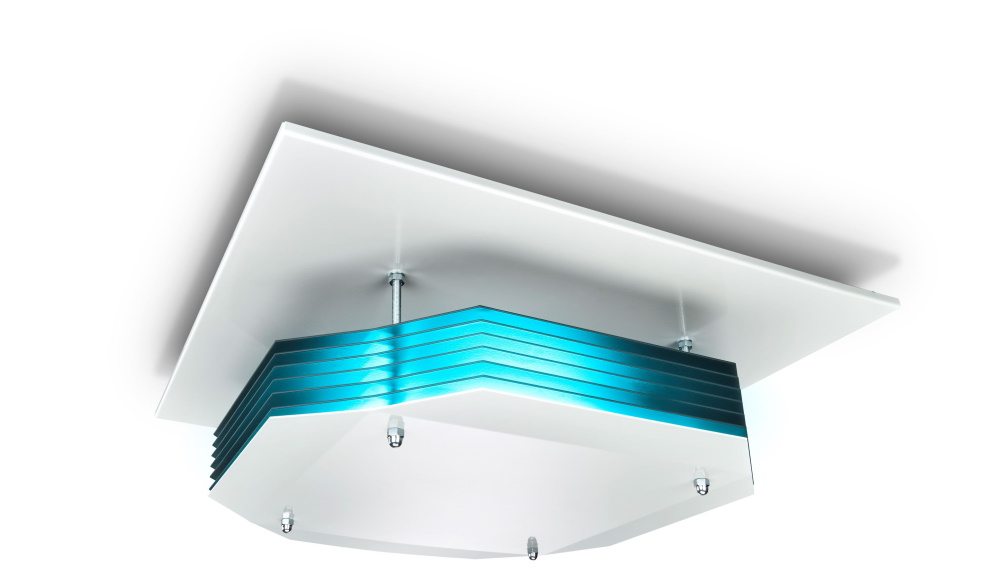
Research has revealed Philips UV-C disinfection upper air wall mount luminaires inactivated 99.99% of SARS-COV-2, the virus responsible for the COVID-19 disease, in the air of a room within 10 minutes2. At 20 minutes, the virus was below detectable levels3. Further, Multiple studies have confirmed that UV-C light is an established measure for disinfection. With wavelengths between 100-280 NM, it can prevent the spread of other contagious diseases too including tuberculosis and influenza. It’s a clear indication that UV-C light plays a valuable part in keeping Australians healthy and working.
According to Dunedin Hospital’s Infectious Disease Physician Dr Brendan Arnold, “Although it sounds technical, it’s really just a light that gets put up on the wall and any electrician can do that in a few hours; it doesn’t take that long.” This means they easily slide into any building. This is especially useful for businesses trying to retrofit technology into old buildings with ageing infrastructure
UV-C lights are mounted high on walls or ceilings to emit light into the upper zone of the room. It works because UV-C radiation doesn’t penetrate the earth’s outer atmosphere, so Bacteria and viruses have evolved without a defence against UV-C. Further, UV-C isn’t harmful to human health as there’s only minimal transmission to the skin’s epidermis. UV-C light does penetrate the cell wall of microorganisms and disrupts its DNA or RNA structure, essentially killing the virus. “As long as basic precautions are taken in the design, setup, commissioning and maintenance of these lights, it is a very safe technology,” Dr Arnold said.
Further, UV-C lights are completely silent and require minimal maintenance, just a light bulb change once a year. This makes the rollout of UV-C light technology is an affordable and effective tool for protecting workers and business from disease-inflicted disruptions. For over 70 years, UV-C radiation has been a known disinfectant for air, water and surfaces that can help mitigate the risk of acquiring an infection.
1. New report finds absenteeism costing country billions, https://www.news.com.au/finance/work/at-work/new-report-finds-absenteeism-costing-country-billions/news-story/cc853ec248676a7b6590b724d3eea64d
2. James Wood, UNSW, What can we expect from this latest COVID wave? And how long will it last? https://www.unsw.edu.au/news/2022/11/what-can-we-expect-from-this-latest-covid-wave--and-how-long-wil
3. According to results obtained from a laboratory test conducted by Innovative Bioanalysis, a CAP, CLIA, AABB Certified Safety Reference Laboratory, in a room with sufficient air circulation. For more information, please refer to the Innovative Bioanalysis report available as download in the link.
4. Nadia Storm et al., Rapid and complete inactivation of SARS-CoV-2 by ultraviolet-C irradiation, 2.020, https://www.nature.com/articles/s41598-020-79600-8.