Not Just a Sporting Event, but Also a Technological Test: Insights into the World's First Human-Robot Co-Run Marathon
BEIJING, CHINA - Media OutReach Newswire - 9 April 2025 - A scene even science fiction has yet to depict—humans and humanoid robots running side by side in a half-marathon — will become reality on April 13 in Beijing E-Town.
Every spring, marathons sprout across China like bamboo shoots after rain. In Beijing, the world's only "Dual Olympic City" and a global hub for science and innovation, the 2025 Beijing E-Town Half-Marathon and Humanoid Robot Half-Marathon, scheduled for April 13, will pioneer a "sports + technology" format. For the first time, humanoid robots will register alongside human runners, start simultaneously, and share the 21.0975-kilometer course in an unprecedented fusion of innovation.
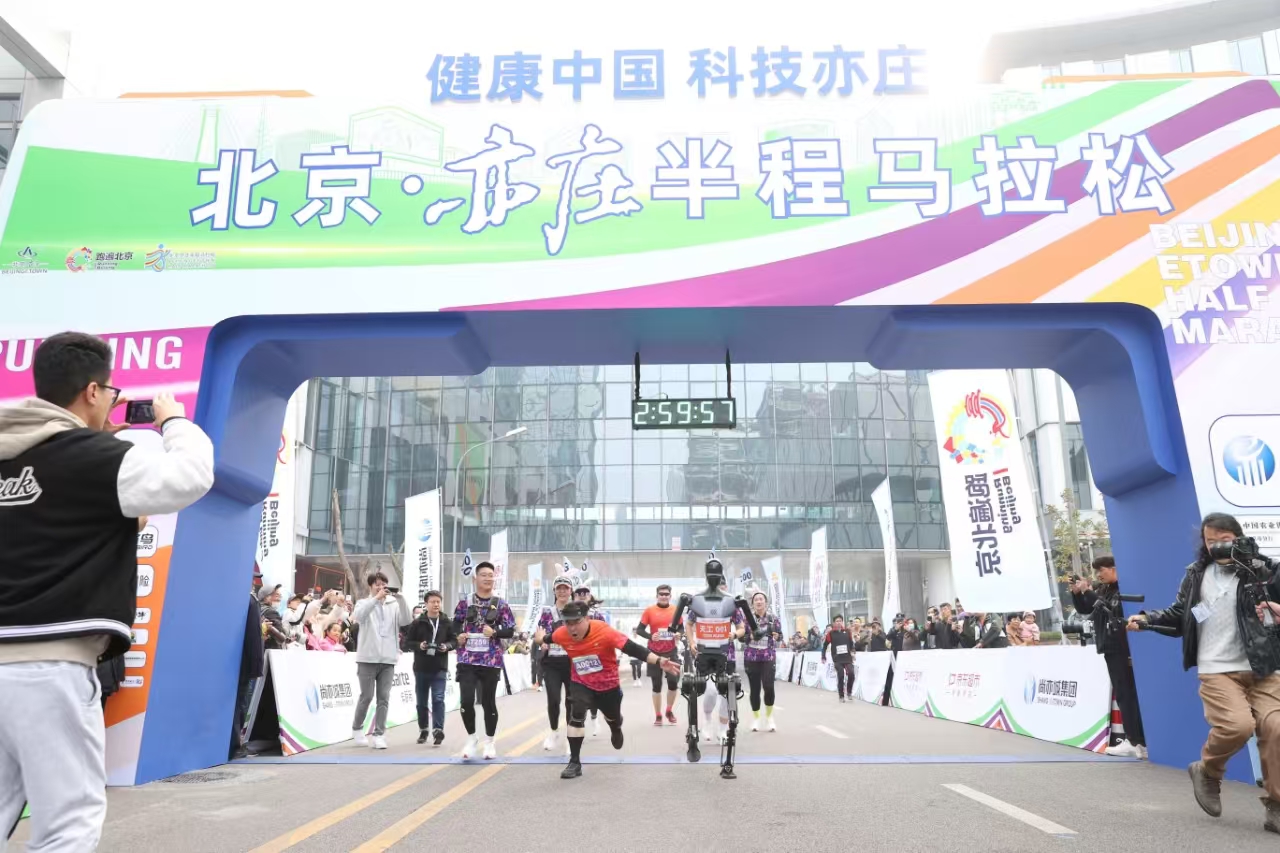
Li Quan, Member of the Party Working Committee and Deputy Director of the Administrative Committee of Beijing E-Town, revealed that the event has already attracted over 30,000 human applicants. On the robotics front, global humanoid robot companies, research institutes, robotics clubs, universities, and other innovators have shown immense enthusiasm, with registration numbers soaring.
Notably, to ensure safety, physical barriers will separate human and robot runners, with distinct race rules and completion time standards. Yet this groundbreaking human-robot collaboration undeniably signals a bold leap for "technology stepping into reality."
During a visit to training facilities, reporters observed teams racing against time to upgrade robotic components and intelligence levels, tackling technical challenges to enhance mobility. Some competing robots now reach a top speed of 12 km/h. To mitigate the physical strain of road running, some models have added shock-absorbing mechanisms, while others wear customized running shoes.
Liang Liang, Deputy Director of the Beijing E-Town Administrative Committee, explained that as the event is a global first with no prior experience or data to reference, both logistics and participants face significant hurdles. To support the robots, organizers have deployed dedicated support vehicles and robotic aid stations. Additionally, they are working closely with each team to refine technology, troubleshoot functions, and achieve developmental goals through pre-race collaboration.
At the 2024 Paris Olympics, artificial intelligence revolutionized real-time data monitoring, 3D motion capture, and referee decision-making—boosting athlete training efficiency and competitive fairness while showcasing how technology elevates life's value.
The upcoming human-robot "half-marathon" collaboration represents a new frontier where the humanoid robotics industry intersects with humanity, sports, and endurance challenges. Industry experts note that half-marathons strike an ideal balance between "challenge and accessibility": the event's low entry barrier contrasts with its rigorous test of physical stamina and mental resilience, culminating in profound personal achievement. By completing the same course, humanoid robots aim to validate industrial progress and refine human-centric technologies.
"This isn't just a sports competition—it's a stress test for technological breakthroughs and industrial growth," asserted Xiong Youjun, CEO of the Beijing Humanoid Robot Innovation Center.
A participating robotics executive stated that "marathon-running robots" could accelerate technical maturity, spur industry standards, and drive innovation. On one front, the effort pushes upgrades in high-torque motors, flexible joints, and wear-resistant materials. On another, running's demand for full-body coordination forces tighter integration of hardware-software systems and deeper partnerships between manufacturers and AI algorithm firms.
These advances promise to unlock transformative applications: deploying humanoid robots in disaster relief, long-range inspections, hazardous operations, smart manufacturing, and even elderly home care. As capabilities grow, such robots could also serve as AI training partners for elite athletes, "giving back" to sports development.
Industry experts emphasize that humanoid robots—comprising thousands of components—still face significant hurdles in maintaining stable, prolonged running.
Xiong Youjun explained, "Real-world road conditions differ vastly from lab environments." To complete the race, robots require high-density integrated joints and bodies capable of enduring long distances with efficient heat dissipation. Second, precise coordination of all joints is critical for running, positioning, and dynamic obstacle avoidance—a test of core algorithm development and adaptability. Third, the marathon's demands on stability, reliability, and battery life are immense, with slopes, turns, and uneven terrain pushing machine performance to its limits.
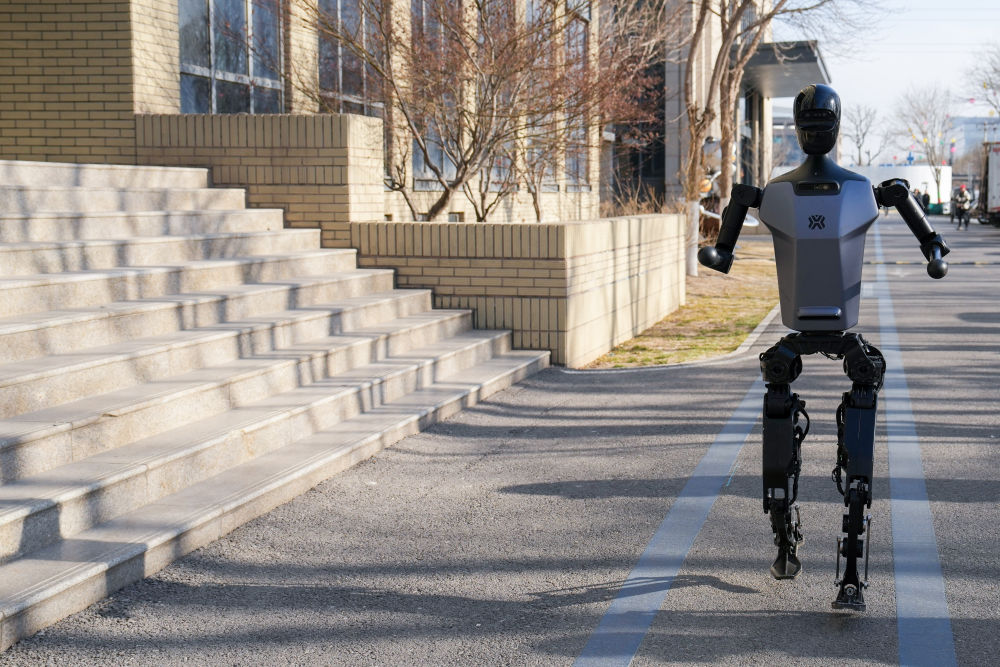
Given persistent technical challenges requiring breakthroughs in industrial development, alongside the disruptive impact of complex outdoor environments on robotic operations, current capabilities allow robots to run alongside humans but not truly compete with them. Thus, this event functions more as an industry dialogue and a robotic stress test than a traditional race.
For human participants and spectators, sharing the track with robots offers sensory thrills and intellectual expansion. These benefits are concrete: the "constructive interplay" between technology and society clarifies the boundaries of human-robot collaboration, reinforces the principle of "technology for humanity," and accelerates the shift from coexistence to co-prosperity.
"As the essence of this event, humanoid robots 'running marathons' symbolize humanity's imagination and dreams in motion—that's the ultimate highlight," said Li Quan. "Regardless of rankings or speed, the footprints left by these robots at the finish line hold greater value than any medal. The 21-kilometer course will end, but our quest for human-robot synergy never will."
Hashtag: #ShangE-Town
The issuer is solely responsible for the content of this announcement.