Glorious Program kindles rural prosperity after 30 years since its establishment with close to 1500 projects
BEIJING, CHINA - Media OutReach Newswire - 11 November 2024 - On April 23, 1994, ten private entrepreneurs issued a call to action: "Let's dedicate ourselves to the noble mission of poverty alleviation.
" This marked the official starting point of China's Guangcai (Glorious) Program initiative.
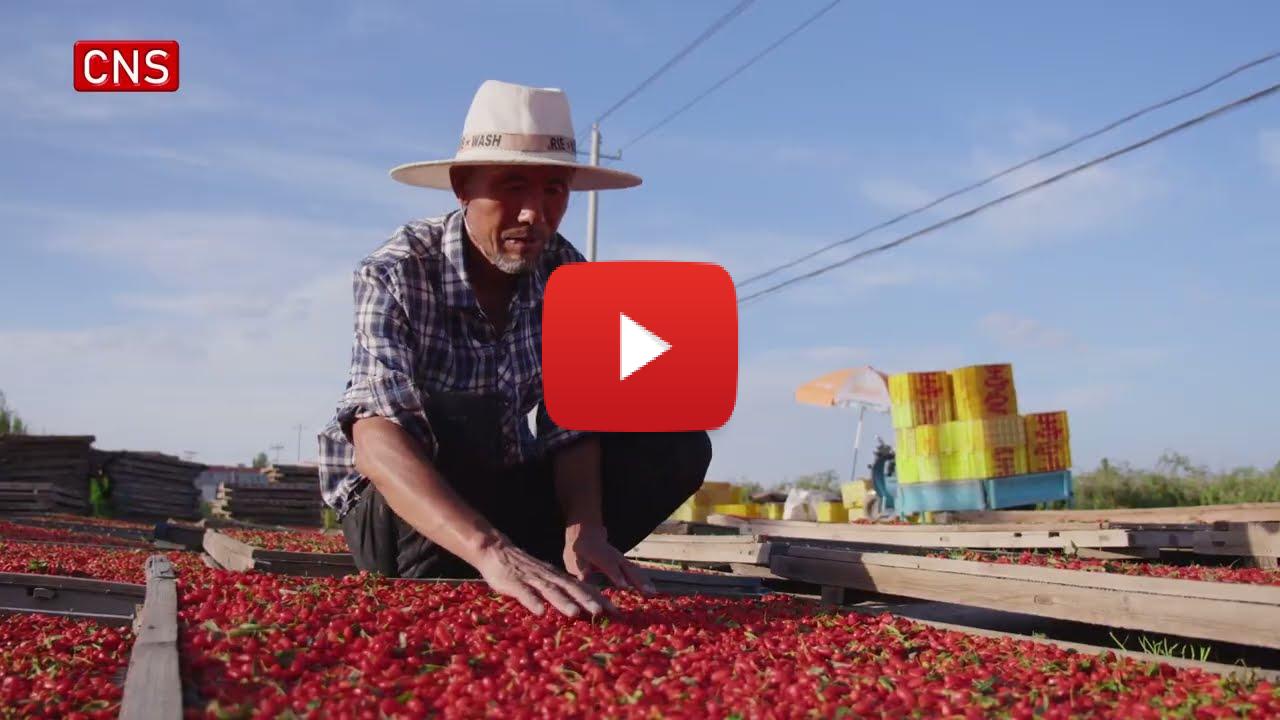
The Glorious Program called on Chinese private entrepreneurs to play a part in the development-driven poverty alleviation projects that focus on helping impoverished areas to develop resources, set up enterprises, organize training and develop trade, to help revitalize local economy and ensure that the basic needs of impoverished rural residents are met.
Liu Yonghao, chairman of New Hope Group, was one of the first private entrepreneurs after the reform and opening up (a crucial move which began in 1978 to make China what it is today) and is also one of the initiators of the Glorious Program. "Why is it called a 'Glorious Program?' The term carries a dual significance: first, private enterprises are glorious; second, engaging in poverty alleviation is a glorious endeavor. As some of the first to become better-off, we bear the responsibility and obligation to assist in the development of relatively impoverished regions and individuals, leading them towards a path of shared prosperity."
Xichang Hope (Feed) Company, invested by New Hope Group in Liangshan, southwest China's Sichuan Province, was the first factory established under the Glorious Program.
"Around October 1994, we launched our first initiative for the Glorious Program, known as the 'Glorious Program Liangshan.' Liangshan in Sichuan Province was quite impoverished back then, so we decided to establish a factory there." said Liu Yonghao, Chairman of New Hope Group
One employee of Xichang Hope (Feed) Company noted the dramatic change "Back in 1994, the surrounding area of our factory was nothing but a barren land. Thirty years later, skyscrapers have emerged from the ground."
Over the past three decades, the Glorious Program has attracted participation from private entrepreneurs totaling 12,800 times and facilitated the launch of nearly 1,500 projects. The enterprises carried out investment based on their specific conditions, and following the Glorious Program, their business soon spread to all over China.
Transfer Group, another of the first private enterprises taking part in the Glorious Program in 1994, has been devoted to public welfare and charitable undertakings such as poverty alleviation and disaster relief.
Xu Guanju, Chairman of Zhejiang Transfar Group and Vice Chairman of China Society for Promotion of the Glorious Program stated "Without the development of agriculture, prosperity in rural areas, and wealth for farmers, how can China's modernization be realized? Our survey revealed that illness is a major cause of poverty, or a cause that villagers slipped back into poverty. We focused on this issue and built health facilities. We have established medical clinics in 1,037 villages, providing healthcare access to 1.8 million villagers."
Throughout Chinese history, there is no other public welfare cause that has had such a robust centripetal force, uniting thousands of private enterprises. Over the past 30 years since the launching of the program, it has facilitated the rapid economic development of impoverished areas and boosted the self-development ability of the poverty-stricken population. It has changed from mainly relying on external support- like a blood transfusion -to a more sustained effort from self-motivation.
Fu Guangming, Chairman of Sunner Group and Vice Chairman of China Society for Promotion of the Glorious Program went on to say "This platform enables us to help more individuals, and in doing so, these individuals can contribute to the success of the enterprise. With the support of the community, our business is poised to reach new levels of success."
Liu Yonghao, Chairman of New Hope Group added "Our company is engaged in rural development. We helped local farmers modernize pig farming practices, and it has proved to be very successful. We aim to empower farmers through modern agricultural methods, equipping them with advanced skills. This is a crucial part of our Glorious Program."
"Private enterprises should actively engage in the Glorious Program, public welfare, and charitable causes, always remember their roots as they prosper, strike a balance between moral integrity and financial returns to conscientiously fulfill their social responsibilities," said Chinese President Xi Jinping when he participated in the joint group discussion with the members of the China Democratic National Construction Association and the All-China Federation of Industry and Commerce in March, 2016.
Over the past three decades, the Glorious Program has actively embraced the ancient Chinese philosophy of "balancing righteousness and profit, with an emphasis on righteousness," maintaining a dual focus on "industry + charity." The program has made significant contributions in relocation of people in the Three Gorges Reservoir area, afforestation and ecological restoration, revitalizing old industrial bases in Northeast China, building a new socialist rural area, and combating poverty.
The issuer is solely responsible for the content of this announcement.