Nearly 1,500 Nominations for the Fourth Season of the VinFuture Prize
HANOI, VIETNAM - Media OutReach Newswire - 2 May 2024 - The nomination portal for the 2024 VinFuture Prize officially concluded on April 17th with a total of 1,469 nominations for the fourth award season.
The number of nominating partners has increased nearly eightfold compared to the first-year Prize; and nearly 15% of this year's nominating partners are among the world's top 2% most-cited researchers.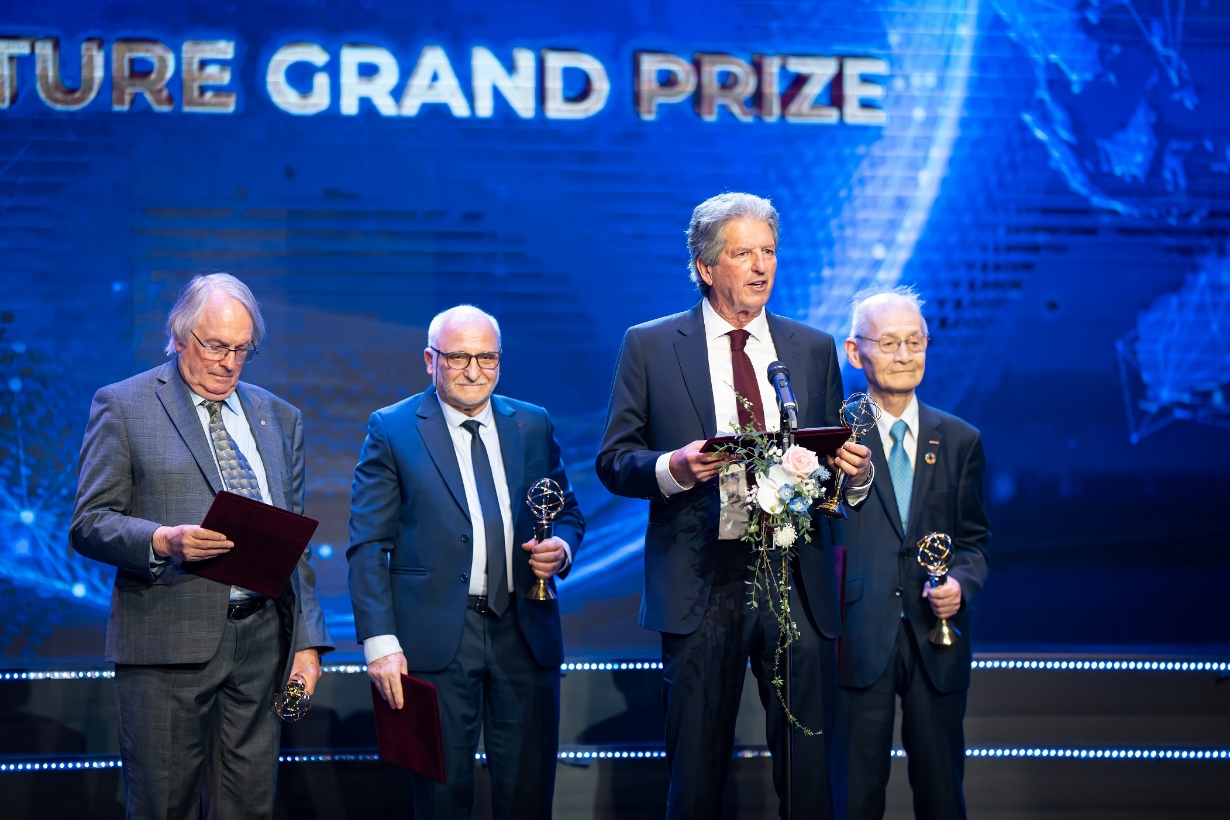
Second from the right: Prof. Martin Andrew Green (University of New South Wales, Australia, Laureate of the 2023 VinFuture Grand Prize) is one of three new members of the 2024 VinFuture Prize Council, along with Prof. Pamela Christine Ronald (University of California, Davis, United States, Laureate of the 2022 VinFuture Special Prize for Women Innovators) and Prof. Susan Solomon (Massachusetts Institute of Technology, United States, Laureate of the 2023 VinFuture Special Prize for Women Innovators).
In the 2024 season, nominations continue to cover a wide range of essential fields such as healthcare (36.3%), sustainable energy (24.6%), environment and climate change (15.2%), AI applications in multidisciplinary fields (13.8%), and agriculture (10.1%).
Within this context, numerous nominations encompass pioneering fields, including but not limited to the discovery and formulation of new drugs leveraging artificial intelligence; solutions with potential for effective climate change adaptation; new sources and utilization processes of sustainable energy; the development of resource-efficient smart agricultural systems; and research on new materials, equipment, and optimized processes applicable to essential daily life activities...
The number of international scientists becoming official nominators for the fourth season of the VinFuture Prize has also seen a significant increase, totaling 9,101 individuals. This marks a rise of over 70% compared to the 5,264 partners in the third season and nearly eight times the 1,200 partners in the inaugural season. Among these, the majority of nominating partners are from the Americas (comprising 31.4%), followed by Europe (28.3%), Asia (26.0%), Africa (7.3%), and Oceania (7.0%).
Notably, among the 9,101 nominators, 1,347 (14.8%) are scientists within the top 2% most highly cited researchers worldwide, and 5,989 experts hail from top universities and research institutes globally. Institutions on the list include Harvard University, Massachusetts Institute of Technology, Stanford University (USA), University of British Columbia (Canada), University of Cambridge, University of Oxford (UK), National University of Singapore (Singapore), University of Tokyo (Japan), Australian National University (Australia)... The participation of outstanding scientists and leading experts has enhanced the quality of the nominated works for consideration for the VinFuture Prize.
Dr. Thai-Ha Le, Managing Director of the VinFuture Foundation, remarked: "In the fourth season of the VinFuture Prize, the increase in both quantity and quality of the nominations demonstrates the affirmation of VinFuture Prize's vision and mission with comprehensive and practical criteria aimed at improving the quality of life for millions while ensuring sustainable development goals. The majority of the nominations are the results of cross-border and multidisciplinary collaborative projects, beyond conventional limitations. VinFuture hopes that by honoring worthy nominations, it will bring about positive impacts and contribute to promoting groundbreaking scientific innovations worldwide."
The 2024 VinFuture pre-screening round takes place from June 1st to August 31st and aims to enable the Committee to meticulously evaluate the most impactful and award-worthy nominations to proceed to the final round. To ensure scientific integrity, fairness, and transparency, the 10-member Pre-Screening Committee will assess the nominations according to a rigorous evaluation process based on the highest international standards and core criteria. These criteria include the degree of scientific or technological advancement, the level of impact on people's lives, as well as the project's scale and sustainability.
After nearly 4 years of operation, the VinFuture Prize, with its mission of "Science for Humanity," has progressively solidified its position in the international scientific community due to its visionary approach and comprehensive evaluation criteria. Many VinFuture Prize Laureates have continued to be honored with prestigious international awards and world-renowned rankings. For instance, Dr. Katalin Karikó and Prof. Drew Weissman, the 2021 VinFuture Grand Prize Laureates, were honored with the Nobel Prize in Physiology or Medicine in 2023. Most recently, the three Laureates of the 2023 VinFuture Special Prize, including Prof. Daniel Joshua Drucker (Canada), Prof. Joel Francis Habener, and Assoc. Prof. Svetlana Mojsov (USA), were named among Time magazine's 100 Most Influential People of 2024.Hashtag: #VinFuture
The issuer is solely responsible for the content of this announcement.
About the VinFuture Prize
The VinFuture Prize is the core activity of the VinFuture Foundation, a non-profit organization established on International Human Solidarity Day on December 20th, 2020, co-founded by billionaire Mr. Pham Nhat Vuong and his wife, Mrs. Pham Thu Huong. The VinFuture Prize aims to recognize transformative scientific and technological innovations capable of making significant positive changes in the lives of millions of people worldwide.