New Report from Sinergia Animal Reveals Financial Institution’s Lag in Animal Welfare and Food System Sustainability Policies
53% of banks worldwide don’t have commitments to protect animal welfare nor to promote plant-based alternatives. The average compliance rate in these areas remains at only 10%.
BANGKOK, THAILAND - Media OuReach Newswire - 24 April 2024 - International animal protection NGO Sinergia Animal has released a groundbreaking report titled “Beyond Profits: Global Review of Financial Institutions in Animal Welfare and Food Systems.” The study comprehensively analyses 80 financial institutions across 22 countries, exposing significant deficiencies in the financial sector’s commitment to animal welfare and sustainable food systems.
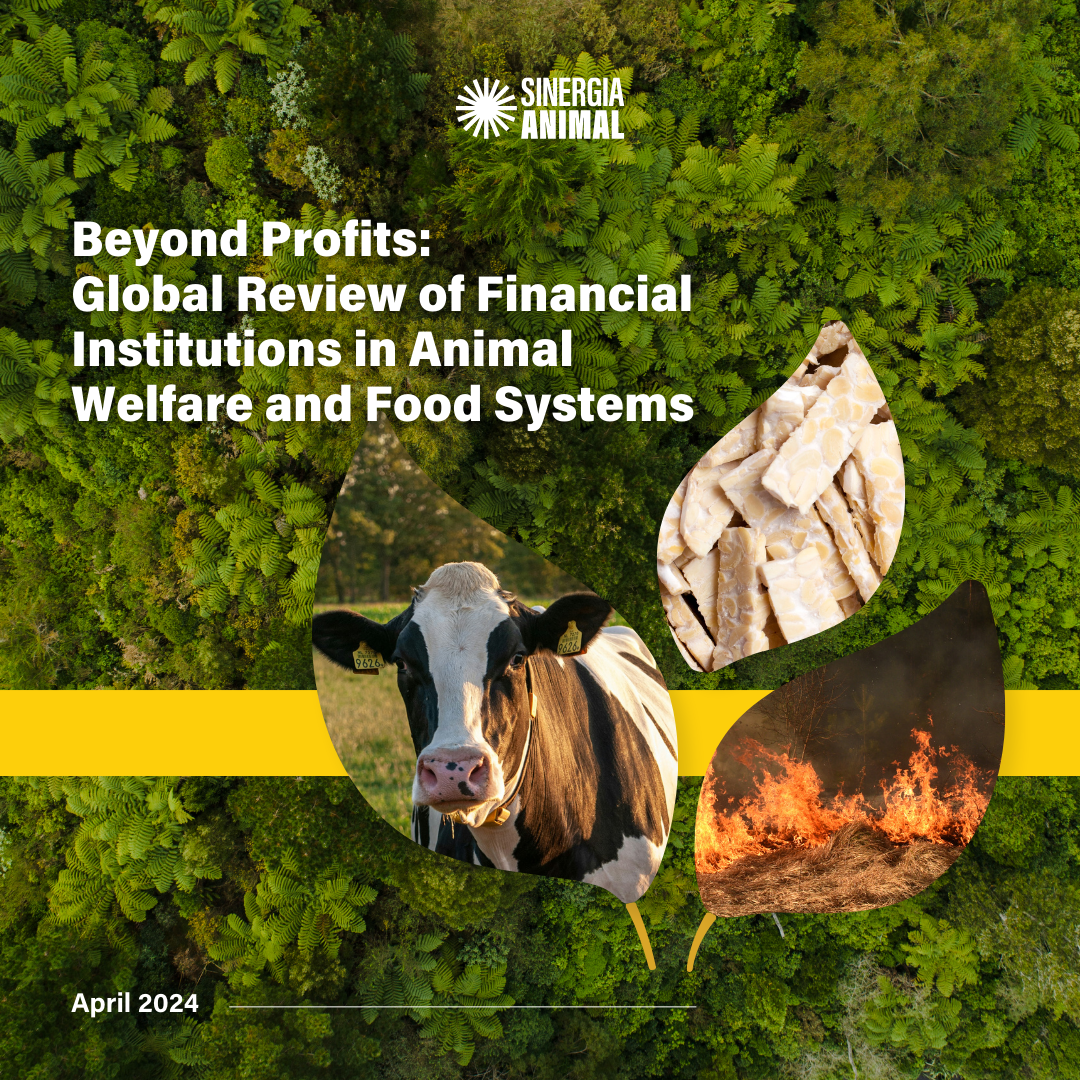
Key findings from the global assessment highlight a concerning trend: the compliance rate of the evaluated financial institutions in having policies to divest from animal cruelty practices and promote plant-based alternatives remains at only 10%, with over 53% scoring zero. Despite some progress, with eleven banks improving their policies since 2023, notable entities like Goldman Sachs and ICBC have regressed in their previous commitments.
A Wake-Up Call for Financial Institutions
“Our world faces unprecedented challenges: the unfolding climate crisis, public health risks, and increased food insecurity demand immediate action from all sectors. We’ve assessed banks’ performance in these areas using 21 criteria, including policies that prohibit the financing of the cruellest practices against farmed animals or other harmful activities like wildlife trade, non-medical and medical testing, and the indiscriminate use of antibiotics. Support for a transition to plant-based alternatives was also measured,” said Merel van der Mark, Head of the Animal Welfare and Finance Program at Sinergia Animal.
Krung Thai Bank scored only 2% of the points, while Kasikornbank and Siam Commercial Bank scored none. Meanwhile, the international banks Triodos, de Volksbank, Australian Ethical, Rabobank, and ABN Amro remain the top five assessed banks with the best animal welfare and sustainable food systems practices.
The report reveals that most financial institutions are lagging behind in alignment with global calls for animal protection and transformation of food systems, echoed in recent international statements. For instance, the United Nations Assembly urged greater ambition to strengthen animal health and welfare as a significant contributor to the Sustainable Development Goals. Additionally, COP28 issued a declaration prioritizing resilient food systems and climate action. The OECD has updated its guidelines to include provisions on animal welfare, and the World Health Organization called for healthier, diversified, and more plant-based diets.
“Banks have the power and responsibility to foster a future where animal welfare, climate action, and human health are integrated into the core of economic practices. This report is a wake-up call for the finance sector to prioritize long-term sustainability over short-term profits, prioritize animal welfare, and build more sustainable food systems,” says van der Mark.
Activism towards progress
This report also presents a case study of a campaign that asks the Dutch bank Rabobank to fully implement its animal welfare policies. The campaign requires that some of its clients, such as the international retailers Makro and Ahold Delhaze, stop sourcing eggs from hens confined in controversial battery cages in all their operations—including in lower-income countries like Argentina, Colombia, and Indonesia.
“With this campaign, we highlight the important role of financial institutions in facilitating positive change. Financing companies in the food industry that don’t change their supply chains to eliminate the cruellest practices against animals contradicts the positive policies that Rabobank has in place. Having a good policy is not enough—banks must also ensure they are implemented,” says van der Mark.
More details about other banks’ performance can be found in the full report, “Beyond Profits: Global Review of Financial Institutions in Animal Welfare and Food Systems,” available at www.banksforanimals.org. The website also allows consumers to message different institutions asking for improvements.
“We hope that banks see this as an opportunity for improvement and that better results will come as we continue to evaluate and give visibility to their policies,” concludes van der Mark.
Hashtag: #banksforanimals #sinergiaanimal #animalwelfare #สิทธิสัตว์
https://www.sinergiaanimalthailand.org/
https://www.linkedin.com/company/sinergia-animal/mycompany/
https://www.facebook.com/sinergiaanimalthailand
https://www.instagram.com/sinergiaanimalthai/
The issuer is solely responsible for the content of this announcement.
About Sinergia Animal
Sinergia Animal is an international animal protection organization that works in the Global South to reduce the suffering of animals raised for food and promote more compassionate food options. It is recognized as one of the most effective NGOs in the world by the Animal Charity Evaluators (ACE).