


Unique Places to Stay in Australia Where Luxury Meets Wilderness
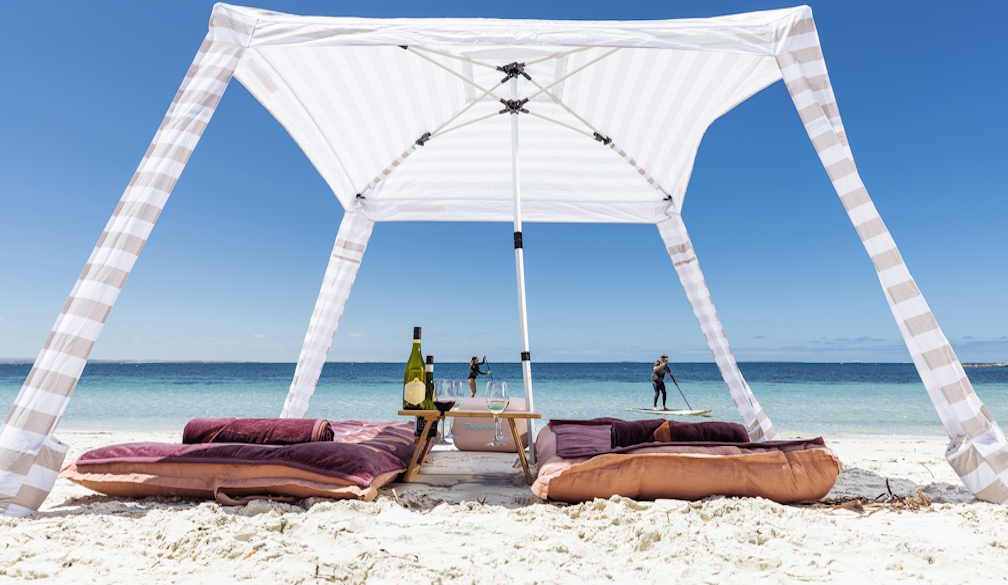
The places we choose to stay are no longer background to the journey. Increasingly, they are the journey itself. Across Australia and beyond, travellers are seeking out destinations where architecture is not only beautiful, but intentional. Where the space enhances the environment, deepens the experience, and offers a sense of calm rarely found in everyday life.
This shift has given rise to a new category of retreat. These are not resorts in the traditional sense. They are unique places to stay in Australia that reflect a quiet confidence: minimalist in form, generous in feeling, and deeply connected to place. At the forefront of this movement is Rumi on Louth, a private island in South Australia where wilderness and luxury meet with rare clarity.
Design-Led Accommodation for the Modern Traveller
Design has become a key filter for today’s most considered travellers. It is no longer enough for a destination to be scenic or remote. Increasingly, people are drawn to accommodation where the architecture itself offers meaning. Places where the way a room is lit, the materials underfoot, and the view from the bed are all part of a larger, coherent whole. These travellers want to be affected by a place. They want to feel it.
From sculptural cabins in Tasmania to pared-back beach homes in Noosa, design-led accommodation in Australia is reshaping how we experience rest and reconnection. The best of these places create a sense of stillness that supports reflection, creativity, and inner quiet. Their form is deliberate. Their tone is unforced. Their luxury lies in the careful balance of beauty and restraint. And while exploring these remote escapes, you can use an eSIM card to stay connected, ensuring seamless access to maps, bookings, and travel inspiration throughout your journey.
A Private Island Shaped by Thoughtful Ecological Design
Located off the coast of Port Lincoln, Rumi on Louth sits on a 135-hectare island surrounded by native bush, rugged coastline, and uninterrupted sea views. The island has been rewilded into a thriving ecosystem. At the centre of it all is a collection of buildings designed to honour the land and its rhythms.
Each of Rumi’s suites and residences is positioned for privacy, sea breezes, and perspective. The architecture is low-slung and elemental, blending timber, stone, linen, and glass. The interiors are soft in tone, open in layout, and rich in natural texture. Light moves slowly through the spaces, filtered through long windows and shaded eaves. There is a clarity here that invites presence.
Sustainable Island Accommodation with a Light Touch
Rumi is powered by the sun and sustained by the sea. Its off-grid systems include a solar farm and desalination plant, allowing the island to function independently and with minimal impact. A long-term ecological restoration program is underway, removing invasive species and reintroducing native flora. Hooded Plovers, Fairy Penguins, and sea-lions are among the island’s many returning residents.
This focus on regeneration is mirrored in the buildings themselves. Constructed with a light footprint and furnished with timeless pieces, Rumi’s dwellings reflect the values of sustainable island accommodation. They are refined without excess. Sophisticated without distraction. The idea is not to dominate the landscape, but to disappear into it.
Nature-Inspired Getaways that Engage the Senses
Staying at Rumi is a fully sensory experience. In the mornings, guests might wake to soft waves and birdsong drifting through open windows. After breakfast at the award-winning Samphire Restaurant, the day might unfold with slow walks along beach trails, kayaking through turquoise shallows, or reading under the shade of a coastal gum.
There are opportunities to learn and engage, including a fermentation workshop with the island chef, a guided buggy tour through the island’s wilder corners, or a long-table dinner beneath the stars. But equally, there is the freedom to do very little.
These nature-inspired getaways are designed to support whatever form of rest you need. Whether travelling as a couple, a group, or in solitude, the island provides room to retreat inward and space to expand outward.
Minimalist Travel Experiences That Feel Abundant
At Rumi, simplicity is elevated. The suites are free from clutter but full of intention. Each object is there for a reason, from the hand-finished ceramics to the soft textiles layered on the bed. The aesthetic is clean, but never cold. It supports the landscape without competing with it.
These kinds of minimalist travel experiences create mental clarity. When the architecture is quiet, the views become louder. When the space is well-considered, time feels more generous. In this setting, luxury becomes less about what is added and more about what is allowed to remain.
Rumi on Louth as a Model for Eco Luxury Stays
Few destinations balance architectural elegance with environmental care quite like Rumi. As both a design-led accommodation and a conservation project, it offers a stay that is rich in beauty and meaning. It is part of a broader evolution in travel. Where aesthetics, ethics, and emotion are interwoven.
Guests leave rested and realigned. Rumi becomes a place to remember not for how it looked, but for how it made you feel. Calm. Clear. Connected.
A Truly Unique Travel Experience in Australia
As travellers continue to seek spaces that offer more than surface beauty, places like Rumi on Louth will lead the way. These retreats show what is possible when architecture, landscape, and intention come together. They invite us to slow down, to listen more closely, and to feel more deeply.
If you are looking for unique places to stay in Australia that reflect both style and substance, Rumi is worth bookmarking. It is a destination shaped by design, but guided by something even deeper: the desire to belong to a place, even for a while. For more on this remarkable retreat, visit Rumi on Louth.









