Tokyo Olympics by the numbers
- Written by: Wes Mountain, Multimedia Editor
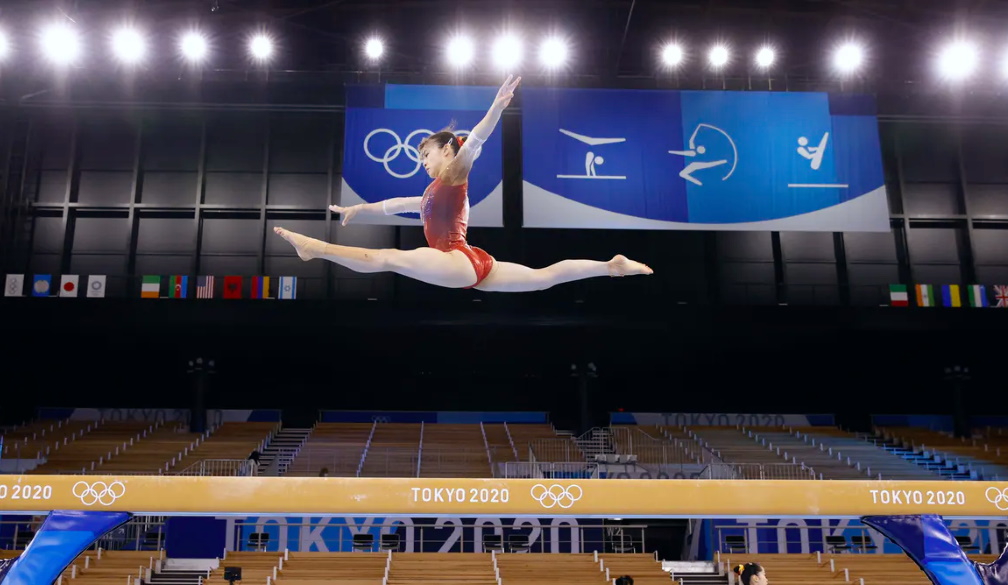
The Tokyo Olympics officially open on July 23 – one year later than originally planned and in an Olympic stadium that will be empty of spectators thanks to the COVID-19 pandemic.
While Tokyo is not the first Olympics to have been rescheduled or cancelled[1] – the Olympics did not run during either of the world wars, and the Antwerp Olympics in 1920[2] were a modest affair – it is the first to have been postponed just months out from the opening ceremony.
And postponing and rejigging such a large event is expensive.
The initial estimated cost was US$7.3 billion, which was revised up to $15.4 billion in December 2020, but some estimates now indicate it has blown out to US$25 billion[3].
But it’s not all bad news. Despite a lack of spectators, the Olympics will have about the same amount of competitors (and nations) that were expected[4] before the pandemic.
The games will also have the highest ratio of female competitors in the history of the Olympics.
While it’s not yet parity, this is a long way from the avowedly all-male[5] Athens Olympics in 1896.
With the introduction of several new sports[6], these games will also have the highest number of events in the history of the Olympics.
Focus on swimming
With 49 events, aquatics is the number one sports category in the Olympics.
And as a nation known for its beaches, swimming is also the sport where Australia has taken the most gold medals in the modern Olympics.
Australia is one of only four countries (the others are Greece, the UK and France) to officially compete in every modern Olympic Games. (Switzerland could also be included on this list. It boycotted the 1956 Melbourne Games, but had taken part in the equestrian events a year earlier in Sweden.)
Australia has been well-represented in both gold medal tallies and world records for swimming over that time.
Click through three of the major swimming events below to explore how times have come down since the first modern Olympics.
Higher, better, faster… longer?
While most swimming events focus on short to mid-length distances (from 50m to 1,500m) or relays, the marathon swimming event[7] puts competitors through their paces with a 10km open-water course.
The marathon swim debuted at the 2008 Beijing Olympics[8] and is somewhat unique in swimming events because it is held in open water, with the course and conditions changing for each Olympics.
This means it’s much harder to compare records over time, but it does make it interesting to compare with other famous long-distance swimming courses – many of which are much longer.
It’s going to be a hot one
Another major factor that sets Tokyo apart from other Olympics is how hot it will be. When Tokyo last hosted the games in 1964, they were held in October to avoid the city’s hot and humid summer[9].
The concern over the heat and its impact led the IOC to order the marathon and distance walking events to be moved 800km north to Sapporo[10].
References
- ^ rescheduled or cancelled (www.history.com)
- ^ the Antwerp Olympics in 1920 (theconversation.com)
- ^ US$25 billion (mainichi.jp)
- ^ that were expected (www.statista.com)
- ^ avowedly all-male (theconversation.com)
- ^ several new sports (theconversation.com)
- ^ marathon swimming event (olympics.com)
- ^ 2008 Beijing Olympics (olympics.com)
- ^ to avoid the city’s hot and humid summer (www.nytimes.com)
- ^ be moved 800km north to Sapporo (www.theguardian.com)