Australia's silence at violence against Indigenous women
- Written by: Bronwyn Carlson, Professor, Indigenous Studies, Macquarie University
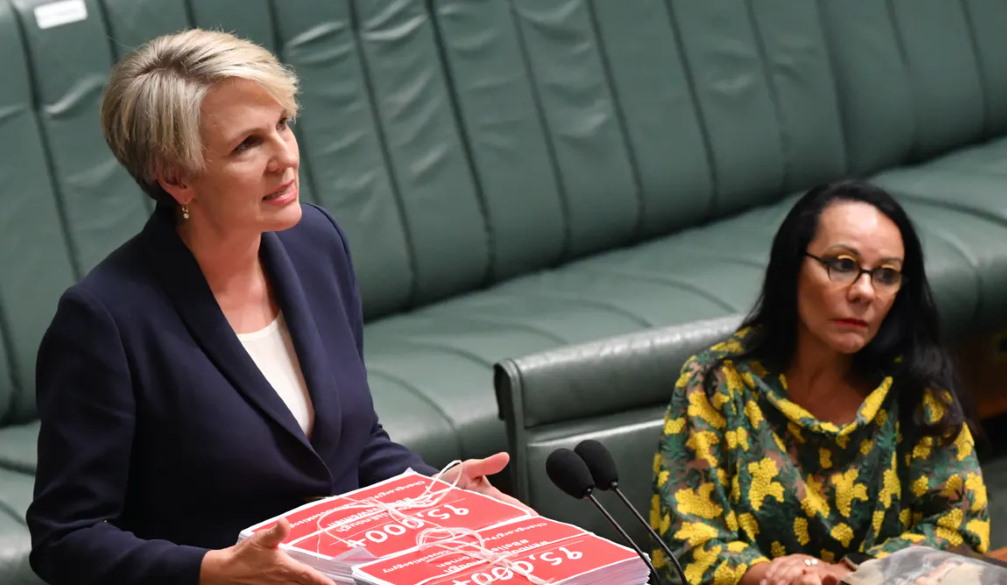
Recently, we have witnessed an uprising of thousands marching in the streets fuelled by outrage against the violence and sexual assault experienced by women.
Indigenous women and gender diverse people also marched and shared this outrage. They empathise with other women who have been subject to violence and sexual assault. Such empathy and outrage at the horrific statistics of violence against Indigenous women and our children, however, is rarely reciprocated.
The alleged rape of Brittany Higgins[1] and the violent deaths of Hannah Clark[2] and her children resulted in public anger from women across the nation. And we should be outraged at these horrific crimes.
But statistics tell us Indigenous women experience family violence at rates higher than other women in Australia[3].
And there is a noticeable silence in Australia when victims of violence are Indigenous. As Latoya Aroha Rule, an Aboriginal and Māori, Takatāpui person, tweeted[4]:
Imagine if white women surrounded Parliament calling for justice for dead Black women.
Violence is being normalised and rendered invisible.
Violence against Indigenous women is deeply ingrained in Australia’s colonial history, which condoned the murder, rape and sexual abuse of Indigenous women[5]. Wurundjeri woman Sue-Anne Hunter spoke about how Indigenous people have for 233 years suffered gendered violence at the hands of colonisers[6] stating,
Aboriginal women have fought against gendered violence perpetrated by white men since day one. The allegations, cover up and silence on gendered violence in federal parliament is part of the same system of abuse and the same lack of legal and political consequences.
According to Antoinette Braybrook[7], the Kuku Yalanji CEO of Djirra, an Indigenous-run organisation that helps women dealing with domestic violence, Indigenous women are 32 times more likely[8]to be hospitalised as a result of family violence. According to Better Health[9], Indigenous women are 5 times more likely to die from homicide than non-Indigenous women.
When Aboriginal and Torres Strait Islander women seek help from authorities, they are often met with negligence or further violence. Munanjahli-Yugambeh-South Sea Islander scholar Chelsea Watego draws attention to a multitude of examples where authorities have failed Indigenous women[10] or further subjected them to violence[11].
Violence against Indigenous women and their families is also extended to government-mandated acts, such as:
Violence against Indigenous women needs to be addressed
Instead of focusing on the perpetrators, the media often frame Indigenous women as somehow deserving of such violence. For example, Ms Daley bled to death in 2011 on a beach after being violently and sexually assaulted[12] by two non-Indigenous men. One headline[13] stated, “Wild sex” led to her death.
There was no public outrage. There were no vigils. Indigenous people, however, expressed their outrage and sorrow on social media. Yuin scholar Marlene Longbottom tweeted:
Aboriginal legal scholar Hannah McGlade, Longbottom and I recently published an open letter[14] on social media venting our frustration about the lack of public concern or response to the assault and killing of Indigenous women.
We called for increased attention to violence against Indigenous women and support for the United Nations recommendation[15] for a specific national action plan on violence against Indigenous women.
We are also calling for a national Aboriginal and Torres Strait Islander council on violence against Indigenous women, as we know the issues facing Indigenous women require our own leadership and direction.
As McGlade has stated[16],
as a member of the Human Rights Council […] it’s really time for Australia to take this issue seriously and take the blinkers off and start valuing the lives of Aboriginal women and girls of this country.
The government’s fourth action plan to reduce violence against women and their children 2010-2022[17] claims one of its priorities is to “support Aboriginal and Torres Strait Islander women and their children”.
Sadly, such prioritising has not led to real change.
Indigenous women are exhausted by the efforts required to ensure the safety of our communities. We need the support of our government and for the public to speak out against gendered violence, instead of leaving us out of the conversation.
References
- ^ Brittany Higgins (www.theguardian.com)
- ^ Hannah Clark (www.abc.net.au)
- ^ higher than other women in Australia (www.aihw.gov.au)
- ^ tweeted (www.theguardian.com)
- ^ which condoned the murder, rape and sexual abuse of Indigenous women (www.croakey.org)
- ^ gendered violence at the hands of colonisers (womensagenda.com.au)
- ^ Antoinette Braybrook (www.theguardian.com)
- ^ Indigenous women are 32 times more likely (www.dss.gov.au)
- ^ Better Health (www.betterhealth.vic.gov.au)
- ^ failed Indigenous women (www.theguardian.com)
- ^ subjected them to violence (www.sbs.com.au)
- ^ violently and sexually assaulted (www.abc.net.au)
- ^ headline (www.dailytelegraph.com.au)
- ^ open letter (www.croakey.org)
- ^ United Nations recommendation (www.un.org)
- ^ has stated (www.sbs.com.au)
- ^ fourth action plan to reduce violence against women and their children 2010-2022 (www.dss.gov.au)