

A money tree budget delivered during a pandemic of uncertainty
- Written by: The Conversation
Not many stories can compete with the run up to a federal budget, especially one with a deficit like none of us has ever seen, income tax cuts, and much else besides. But Donald Trump’s COVID infection certainly has done so in the last few days, especially given the official lying surrounding it and the antics of his “drive by” to rally supporters.
It’s impossible to know how Trump’s illness will play out. Or how disruptive the cases will be in the White House and among other political figures. Or the implications of what’s happening for the November presidential election.
But we do know it adds just another element of uncertainly – via ripple effects it might have for the world economy – to the multiple uncertainties surrounding Josh Frydenberg’s second budget.
Routinely on budget night many journalists and experts question the assumptions, forecasts and projections in the documents. In this budget, it goes without saying they are all rubbery. For months the government has been revising fiscal numbers repeatedly as it has battled to put a floor under the economy.
Among the unknowns is whether we’re over the worst of COVID. The indication is Victoria has got its cases under control although restrictions remain tight and the easing timetable uncertain. But will there be future serious outbreaks that could again transform the situation?
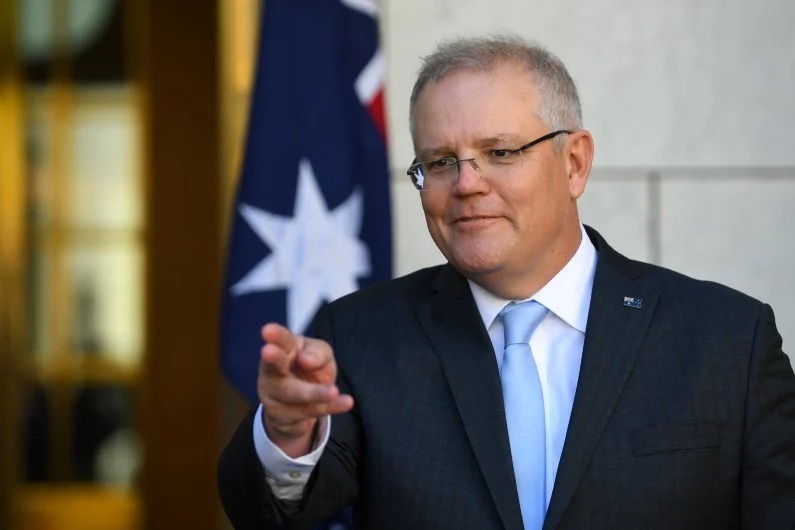
Scott Morrison anticipates Australia living with the virus as some sort of normal condition but this assumes a virus that behaves.
Morrison is also looking to a vaccine next year, as is the budget. He may be right, or not. And even if he is, there are questions about how effective such a vaccine would be and how quick its distribution. As all along in this crisis, health will play into economics – and affect whether the budget numbers will be vindicated.
The course of the pandemic abroad will determine when and how Australia can open its international border generally (it is starting to open to New Zealand).
Frydenberg told Sky said he expects net overseas migration to be negative or zero for a couple of years. Lack of migrants has already removed one of the important drivers of the economy.
While the budget numbers will be flaky, with a deficit of more than $200 billion precision hardly matters. It’s not like last year when the difference between reaching the forecast “back in black” and staying in red was supposed to be an estimated several billion dollars.
Though the budget can’t be precise in its figures and doesn’t have to be, it must meet some other criteria.
Primarily, by its individual measures and the sum of its parts, it has to inspire confidence, in consumers and in business. We can expect plenty of upbeat rhetoric, and the central promise of jobs, but will it sound believable?
It must maintain enough stimulus to prevent an economic fall off as JobKeeper and the Coronavirus supplement are phased back. It should make up for the uncertainty around numbers by indicating more will be done if needed.
It has to give business strong incentive to invest and employ, to take some risks.
It needs to be seen as fair, and to take account of the fact young people will be especially hard hit by this recession.
We know already central elements of the budget. There’ll be much spending on infrastructure. A wage subsidy for apprentices and trainees has already been announced, and more is anticipated. There is expected to be an investment allowance, and maybe more targeted assistance.
Part of the tax cuts already legislated – the tranche for middle income earners that was due to start in July 2022 – is set to be brought forward, with people benefiting from a backdating to July 1 this year.
Critics say tax cuts are not as good a stimulus measure as direct payments or increases to welfare benefits, because more of the tax cuts will be saved. On the other hand, the backdating would act as a windfall and thus may increase the likelihood of people opening their wallets.
There has been chatter about how the tax package could “wedge” Labor but the opposition can’t credibly complain about the acceleration of this tranche.
The government has been releasing various initiatives over the past few weeks ahead of the budget, ranging from energy policy to liberalised arrangements for credit. It remains to be seen whether there will be significant “reforms” in the budget that we haven’t heard of. But the important area of industrial relations is left until later. As is (on what the government has said) a decision on the level of the basic JobSeeker payment for the longer term.
Once he’s done with this budget Josh Frydenberg relatively soon will be turning his attention to the next one, in May 2021, some seven months away.
The election is due in early 2022 but could be held late in 2021, which would make next year’s budget a pre-election pitch, as well as one still dealing with the legacy of COVID. More big spending, you would think. The same would likely apply if the government squeezed another budget in before a 2022 election.
The question would be, if the Coalition won the next election, how quickly its thoughts would start switching back to fiscal repair.