Epson launches LifeStudio Series of smart mini projectors
- Written by: The Times

A major new chapter in smart home projection “designed for every moment”
Epson has announced one of its most significant projector launches to date with the introduction of the new LifeStudio Series of smart mini projectors, bringing the Epson LifeStudio Pop (EF-62B) and Epson LifeStudio Flex (EF-73) to Australian consumers.
Epson launches LifeStudio Series of smart mini projectors
Marking a major new chapter in smart home projection “designed for every moment”
Epson has announced one of its most significant projector launches to date with the introduction of the new LifeStudio Series of smart mini projectors, bringing the Epson LifeStudio Pop (EF-62B) and Epson LifeStudio Flex (EF-73) to Australian consumers.
Designed for modern living, the new range combines premium entertainment, sophisticated styling and intelligent projection in a way that reimagines what a projector can be in the home.
For Epson, the launch is significant not only because it expands the company’s lifestyle portfolio, but because it reflects a broader evolution of projection from a dedicated viewing device into a beautifully integrated part of everyday life.
As the world’s leading projector manufacturer and the global market leader in projectors*, Epson is uniquely placed to drive that shift, and the arrival of the LifeStudio Series in Australia underscores the scale of that ambition.
Built for consumers who want a premium big-screen experience without compromising on convenience, portability or interior design, the new LifeStudio Series is designed to fit naturally into contemporary homes and the rhythms of modern life. Whether it is streaming the latest series, enjoying a movie night with family, gaming with friends, listening to music or creating a more relaxed atmosphere in the home, the LifeStudio Series projectors are designed to adapt with ease.
Both models deliver 4K PRO-UHD projection, intelligent automatic setup and image sizes of up to 150 inches, making large-screen entertainment more accessible, flexible and enjoyable across a wide variety of spaces and uses.
The LifeStudio Pop (EF-62B) is the compact and highly portable model in the range, created for consumers who want premium entertainment that can move easily from one room to another. Powered by Epson’s latest Triple Core Engine, it produces 700 lumens of white and colour brightness and uses Epson’s acclaimed 3LCD technology to deliver bright, vibrant and natural-looking images without the rainbow effect often associated with single-chip projection systems.
Automatic focus, keystone correction, screen fit, obstacle avoidance and wall colour adjustment work together to create an instant and stress-free setup experience, allowing users to place the projector down and start watching within moments. With built-in Google TV and immersive Sound by Bose, the LifeStudio Pop is designed to deliver cinema-sized entertainment in the living room, bedroom or outdoor entertaining area without the complication of extra devices and speakers.
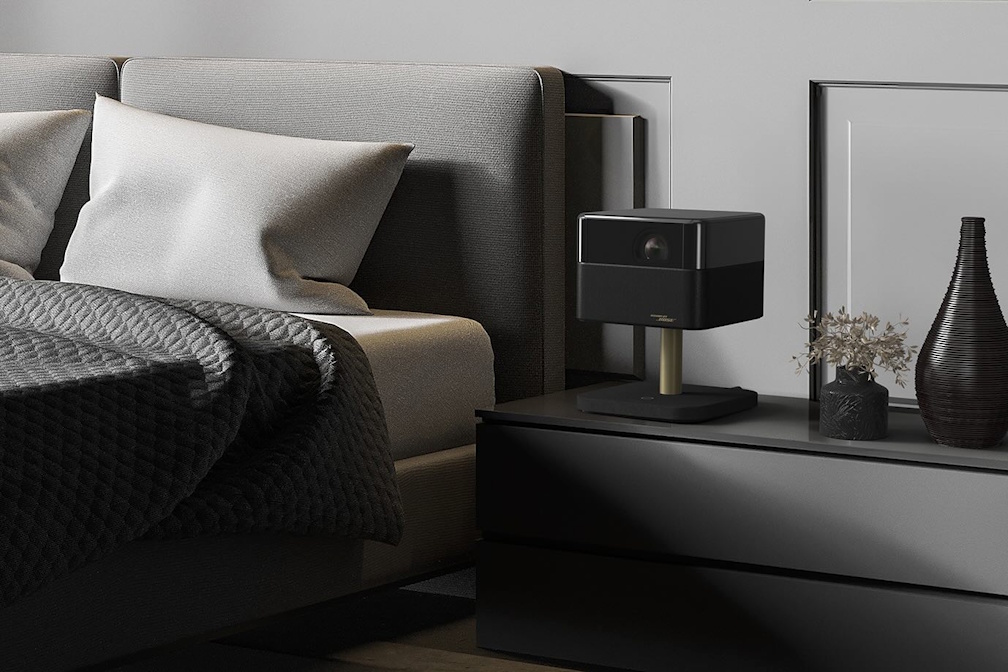
The LifeStudio Flex (EF-73) takes that same lifestyle concept and elevates it into a more refined and luxurious entertainment centrepiece. As the flagship model in the new range, it again combines Epson’s advanced 4K PRO-UHD projection with 1,000 lumens of white and colour brightness, Sound by Bose, built-in Google TV and Epson’s full suite of intelligent automatic image adjustment features but with even more features and benefits for the viewer.
What sets it apart is the way it has been designed to be much more than a projector. With elegant ambient lighting, a premium finish and a built-in gimbal, the LifeStudio Flex is intended to sit proudly within a room even when it is not in use for viewing.
The EF-73 also has an integrated wireless charging pad which, combined with all of its other features, makes it especially compelling for consumers who want technology that enhances their lifestyle visually as well as functionally.
A key reason the new LifeStudio Series stands out is Epson’s continued commitment to picture quality. Unlike conventional single-chip DLP projection systems, Epson’s 3LCD technology delivers equally high white and colour brightness, helping produce richer, more accurate and more natural images with impressive clarity and smooth motion.
Combined with 4K PRO-UHD enhancement, HDR support and Epson’s advanced image processing, the result is a viewing experience that feels immersive, detailed and cinematic across screen sizes up to 150 inches. For consumers, that translates into a more engaging way to enjoy everything from films and sport to streaming, games and everyday content, all without needing to dedicate a room to traditional home theatre equipment.
That simplicity is a major part of why the LifeStudio Series launch is so important. It opens the category to a broader group of consumers who want the scale and impact of projection, but in a form that feels effortless, stylish and practical in real homes.
For Epson, this launch represents more than the arrival of two new models. It is a clear statement about where home entertainment is heading and about Epson’s role in shaping that future. As a company that has led the global projector market for decades, Epson has built its reputation on innovation, reliability and the ability to bring high-performance projection to a wide variety of users and environments.
With the LifeStudio Series, it is now applying that leadership to a new generation of lifestyle-focused consumers who expect their entertainment technology to deliver performance, intelligence, portability and design in equal measure.
The Epson LifeStudio Pop (EF-62B RRP AUD$1,499) and Epson LifeStudio Flex (EF-73 RRP AUD$2,199) will be available through authorised Epson retailers across Australia from September 2026. With their combination of elegant design, smart functionality, premium sound and vivid large screen 4K entertainment, the new LifeStudio Series is set to enrich the way Australians watch, listen and live, while reinforcing Epson’s position at the forefront of the global projector market.
*FY2025 projector market share for models of 500 lumens or higher, excluding screenless TV products. (Source: Futuresource Consulting Ltd.)