Times Media Australia expands local publishing network with Broome.com.au and Cottesloe.com.au
- Written by: The Times
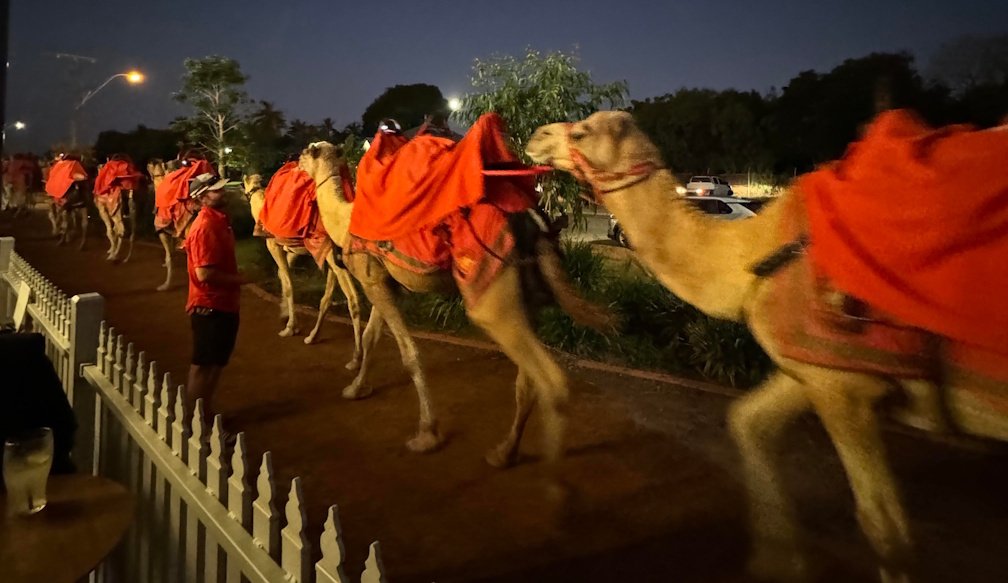
Times Media Australia has expanded its network of independent local and destination publications with the establishment of Broome.com.au and Cottesloe.com.au in Western Australia.
The two new publications join CairnsTimes.com.au, AirlieTimes.com.au, NoosaTimes.com and ByronBay.au, creating a six-site geographic publishing network stretching from Far North Queensland and the Whitsundays through Noosa and Byron Bay to Perth's Indian Ocean coastline and the Kimberley.
Each publication has its own identity.
Each serves a particular place.
Together they form an expanding publishing ecosystem built around a simple proposition:
Help people understand the places where they live — and the places they visit.
Six places, six identities
The network has not been designed around a single template imposed upon six different communities.
That would miss the point.
Broome is not Cottesloe.
Cottesloe is not Cairns.
Cairns is not Byron Bay.
Each has its own geography, history, economy, community and relationship with visitors.
Broome.com.au explores one of Australia's most distinctive destinations: a Kimberley town shaped by Yawuru country, pearling, migration, Asian influences, extraordinary tides, red earth and the Indian Ocean.
Cottesloe.com.au focuses on one of Western Australia's best-known coastal communities, where an internationally recognisable beach is also part of ordinary metropolitan Perth life.
CairnsTimes.com.au covers Cairns and its surrounding region — a tropical city positioned between the Great Barrier Reef, Wet Tropics rainforest, northern beaches and Atherton Tablelands.
AirlieTimes.com.au focuses on Airlie Beach and the Whitsundays, where a mainland community operates alongside one of Australia's great marine tourism regions.
NoosaTimes.com covers Noosa's beaches, river, national park, communities and hinterland, combining information for residents with resources for the millions of people interested in visiting the region.
And ByronBay.au explores Byron Bay and its surrounding Northern Rivers communities, landscape, culture, businesses and distinctive relationship between coast and hinterland.
The names are different because the places are different.
That individuality is intentional.
Publications for locals
Tourism destinations are sometimes written about as though nobody actually lives there.
We want to do something different.
Every one of these places is first a community.
People raise families there.
They operate businesses.
They attend schools.
They use local health and community services.
They buy and sell homes.
They deal with traffic, infrastructure, development, weather, employment and the ordinary practical questions of life.
Our publications therefore aim to produce useful local resources as well as destination journalism.
That can mean explaining local property markets, transport, aged-care options, development, businesses, environmental issues or changes affecting the community.
It can also mean something much simpler.
Why is this place interesting?
What makes people want to live here?
What has changed?
What should somebody who has recently arrived understand about their new community?
Local publishing should not merely tell residents what happened yesterday.
It should help them understand where they live.
Publications for visitors
Visitors approach the same places differently.
Someone planning a week in Cairns wants to understand the reef, rainforest, beaches and Tablelands.
A visitor to Airlie Beach may be deciding how to experience the Whitsundays.
Someone travelling to Noosa may want to understand the difference between Hastings Street, Noosaville, Tewantin, Sunshine Beach and the hinterland.
A first-time visitor to Broome may arrive because of Cable Beach and then discover that the town's pearling and multicultural history is equally fascinating.
Visitors to Cottesloe may initially come for the beach and Indian Ocean sunset.
Byron Bay visitors may discover that the surrounding hinterland is as important to understanding the region as the famous coastline.
Our objective is not simply to produce another collection of "10 things to do" articles.
Search engines already contain enormous quantities of that material.
We want to explain why a place is worth discovering.
Evergreen information has a place alongside news
The internet has encouraged publishers to concentrate heavily on what happened in the previous few hours.
News matters.
But useful information does not cease being valuable because it happened yesterday — or because it was never "news" in the first place.
Where should you go?
How does something work?
Why did this town develop here?
What makes one beach different from another?
What is the history behind a familiar landmark?
Where do locals actually spend their time?
What should someone know before moving to the area?
These are evergreen questions.
A good answer can remain useful to thousands of readers over months or years.
That is an important part of what we are building.
Search should introduce us to readers — not become the reason we write
Digital publishers inevitably depend upon search engines to help readers discover their work.
We do too.
But writing solely for search engines produces a particular kind of publication.
Articles become collections of keywords.
Places become lists.
Readers become traffic statistics.
Our objective is different.
We want our articles to be useful enough to be discovered through search, but interesting enough that a human being is pleased they found them.
That means explaining rather than merely listing.
It means providing context.
And sometimes it means asking a question about a familiar place that neither a resident nor a visitor has previously considered.
The local knowledge advantage
Local publications also become better when their readers participate.
Nobody understands every street, business, beach, walking track, historical story or community issue better than the combined knowledge of the people who live in a place.
That is why the network welcomes appropriate contributions, suggestions, photographs, corrections and story ideas relating specifically to each region.
Businesses are part of that community as well.
So are community organisations, tourism operators, residents, historians and people with specialist local knowledge.
A geographic publication should gradually become a repository of that collective knowledge.
One ecosystem, multiple audiences
The six publications sit alongside The Times within the broader Times Media Australia publishing ecosystem.
That creates opportunities unavailable to a completely isolated local website.
A national issue can have a local consequence.
An interest-rate decision can become a Noosa or Byron property story.
A change affecting aviation can matter particularly to Cairns, Airlie Beach or Broome.
Tourism trends can be examined across several destinations.
Weather, infrastructure, housing, business conditions and demographic change can be considered nationally and then explained locally.
The flow also works in reverse.
Something first observed in one community can reveal a larger Australian trend.
The individual publications therefore retain their identities while benefiting from belonging to a wider publishing network.
Why Broome and Cottesloe?
They extend that idea into Western Australia while adding two completely different kinds of places.
Cottesloe is part of a major capital city yet possesses an identity recognised well beyond Perth.
Broome is geographically remote and unmistakably Kimberley.
One sits within metropolitan Australia.
The other demonstrates just how enormous Australia is.
Both have powerful identities.
Both attract visitors.
Most importantly, both are communities before they are destinations.
That makes them natural additions to what we are building.
Six sites — and six continuing stories
The network now comprises:
CairnsTimes.com.au
AirlieTimes.com.au
NoosaTimes.com
ByronBay.au
Cottesloe.com.au
Broome.com.au
They are not intended to become six versions of the same publication.
Their value will come from becoming increasingly different as each accumulates its own reporting, resources, photographs, history and local knowledge.
That takes time.
A useful local publication is not launched fully formed.
It is built article by article.
Question by question.
Reader by reader.
The Times View
Times Media Australia began developing these publications because we believe there remains a place for digital publishing that treats a location as something more than a search term or tourism product.
A town is simultaneously a home and a destination.
The resident sees things the visitor misses.
The visitor sometimes notices things the resident has stopped seeing.
A good local publication should speak to both.
Our aim with these six sites is therefore straightforward.
For locals: explain the place you call home.
For visitors: help you understand the place you have come to experience.
Search may introduce readers to us.
Useful information may bring them back.
But ultimately each publication will succeed only if it develops something that cannot be manufactured through optimisation or algorithms alone.
A genuine identity belonging to the place whose name it carries.
Broome.com.au and Cottesloe.com.au are the newest additions to that project.
The six-site ecosystem is now established.
And we have considerably more to discover.