James Paterson on Andrew Hastie, Sussan Ley and himself
- Written by: Michelle Grattan, Professorial Fellow, University of Canberra
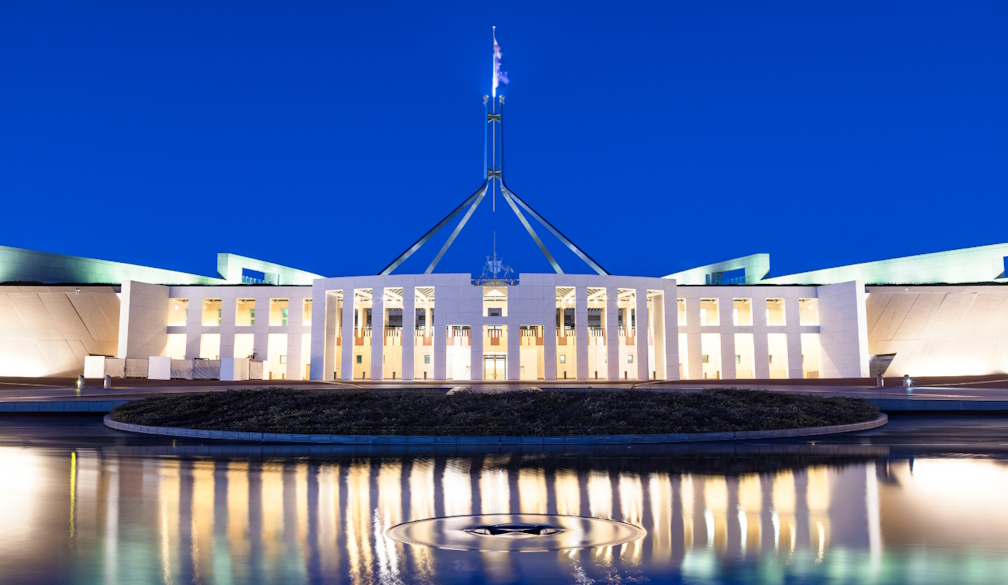
The federal opposition, embattled on many fronts, is trying to gain ground by establishing an alternative economic and fiscal narrative to that of the government.
Labor boasts that the just-released budget outcome for last financial year is better than earlier forecast, but the opposition was quick to criticise, saying with more savings a surplus could have been reached.
On this podcast episode, opposition finance spokesman James Paterson canvasses the economy and the budget, says the opposition needs to sort out its stance on net zero sooner rather than later, insists the Liberals are overwhelmingly behind Sussan Ley’s leadership, and reflects on the evolution of his own political positioning.
Paterson describes the budget outcome as a “Labor deficit of choice”.
[…] We know from the final budget outcome that the government could have delivered a surplus if they chose to, but instead they chose to deliver a deficit. Because the deficit was $10 billion, but the net effect of new spending in the last financial year was $22 billion. Had they offset that spending fully instead of engaging in new spending, they could have had a budget surplus of up to $12 billion. So this is a Labor deficit of choice.
On Sussan Ley’s recent speech attacking middle class welfare, Paterson says,
The principles that Sussan [was] talking about are ones which used to be widely understood and accepted in Australia, which is that governments should live within their means, that it is wrong to pass an intergenerational debt burden onto future generations. And that people who get assistance from the federal government must be people who genuinely need it.
No one is proposing to take away any of the core safety nets that Australians rely on or any of the essential services that Australians rely on.
On the debate within the opposition about net-zero, while Paterson keeps his view for the internal discussion, he flags he wants the issue dealt with as expeditiously as practicable:
We have to be able to answer the question about what we’re going to do on net zero before [people] hear our critique on the short and medium-term policies that Labor’s enacting now that are driving up costs and making our country less competitive. So I think timely resolution is an obvious thing, but we have to land it in the right place, and I’d rather get it right than rush it.
On how to make our tax system fairer, Paterson is open to examining ideas such as indexing income tax and taxing a family unit rather than individuals:
We’re certainly going to look at that [indexation] and other good ideas to return Australians’ hard-earned money to them. There are a couple of other suggestions out there as well, including taxing a family unit rather than taxing individuals to take the burden off families who are really struggling. I’m interested in looking at all of these ideas, examining them carefully.
I think none of these are easy or straightforward, but they’re worthy of examination, particularly because Australians are struggling and are paying more than they ever have before towards the upkeep of the federal government.
Asked about frontbencher Andrew Hastie’s recent public activism on policy issues, Paterson describes Hastie as a “close friend” but says the party strongly backs Sussan Ley’s leadership:
Andrew is one of my closest friends in public life. And we agree on many, many things, although not everything. And I understand why many colleagues after the worst election defeat of the Liberal Party in its 80 years of history, want to have a more open public debate about the future direction of the Liberal party. And I think that’s okay.
I think the key is making sure that they don’t continue forever.
My view is the overwhelming majority of the party room is behind Sussan as leader and want to give her the best chance to succeed. She won the ballot for the leadership fair and square. [The Liberal Party] respect the outcome of ballots and give leaders the opportunity to prove their worth.
On his own political positioning after serving a decade in parliament, Paterson says:
[…] I was certainly much more idealistic when I first joined the parliament about a decade ago, and probably would have been less willing to see the merits of compromise back then, as young, idealistic people often are. And I guess with parliamentary service, I’ve gained some wisdom and perspective that this is a shared enterprise and that we have to work together for it to work. […] I think my worldview is the same, but perhaps the way in which I approach parliamentary life has evolved as I’ve become more experienced.