What is the metaverse? 2 media and information experts explain
- Written by: Rabindra Ratan, Associate Professor of Media and Information, Michigan State University
The metaverse is a network of always-on virtual environments in which many people can interact with one another and digital objects while operating virtual representations – or avatars – of themselves. Think of a combination of immersive virtual reality[1], a massively multiplayer online role-playing game[2] and the web.
The metaverse is a concept from science fiction that many people in the technology industry envision as the successor to today’s internet. It’s only a vision at this point, but technology companies like Facebook are aiming to make it the setting for many online activities, including work, play, studying and shopping.
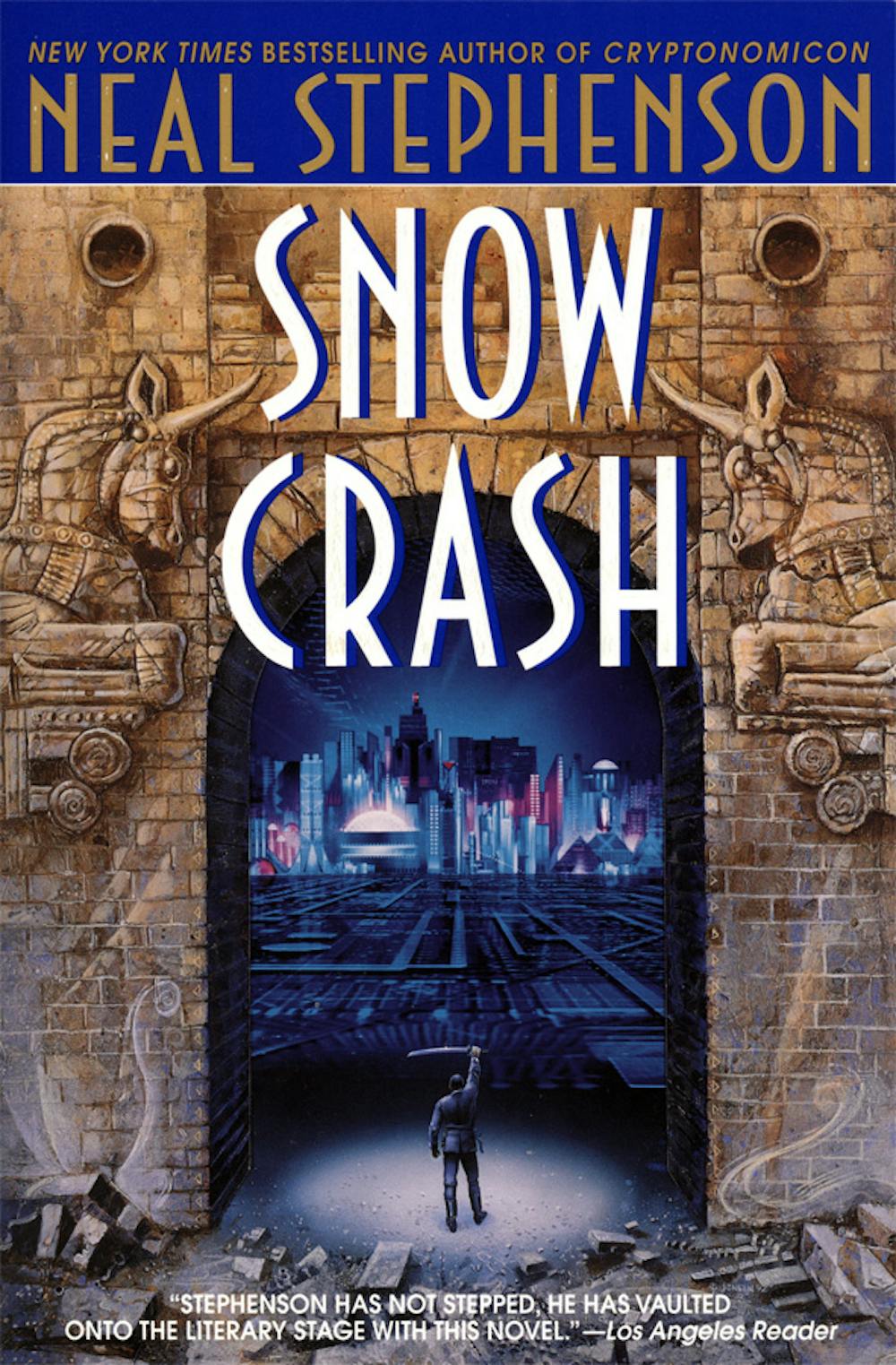 The best-selling science fiction novel ‘Snow Crash’ gave the world the word ‘metaverse.’
RA.AZ/Flickr, CC BY[3][4]
The best-selling science fiction novel ‘Snow Crash’ gave the world the word ‘metaverse.’
RA.AZ/Flickr, CC BY[3][4]
Metaverse is a portmanteau of meta, meaning transcendent, and verse, from universe. Sci-fi novelist Neal Stephenson coined the term in his 1992 novel “Snow Crash[5]” to describe the virtual world in which the protagonist, Hiro Protagonist, socializes, shops and vanquishes real-world enemies through his avatar. The concept predates “Snow Crash” and was popularized as “cyberspace” in William Gibson’s groundbreaking 1984 novel “Neuromancer[6].”
There are three key aspects of the metaverse: presence, interoperability and standardization.
Presence is the feeling of actually being in a virtual space, with virtual others. Decades of research[7] has shown that this sense of embodiment improves the quality of online interactions. This sense of presence is achieved through virtual reality technologies such as head-mounted displays.
Interoperability means being able to seamlessly travel between virtual spaces with the same virtual assets, such as avatars and digital items. ReadyPlayerMe[8] allows people to create an avatar that they can use in hundreds of different virtual worlds, including in Zoom meetings through apps like Animaze[9]. Meanwhile, blockchain[10] technologies such as cryptocurrencies[11] and nonfungible tokens[12] facilitate the transfer of digital goods across virtual borders.
Standardization is what enables interoperability of platforms and services across the metaverse. As with all mass-media technologies – from the printing press to texting – common technological standards are essential for widespread adoption. International organizations such as the Open Metaverse Interoperability Group[13] define these standards.
If the metaverse does become the successor to the internet, who builds it, and how, is extremely important to the future of the economy and society as a whole. Facebook is aiming to play a leading role in shaping the metaverse, in part by investing heavily in virtual reality[14]. Facebook CEO Mark Zuckerberg explained in an interview[15] his view that the metaverse spans non-immersive platforms like today’s social media as well as immersive 3D media technologies such as virtual reality, and that it will be for work[16] as well as play.
Hollywood has embraced the metaverse in movies like ‘Ready Player One.’The metaverse might one day resemble the flashy fictional Oasis of Ernest Cline’s “Ready Player One[17],” but until then you can turn to games like Fortnite[18] and Roblox[19], virtual reality social media platforms like VRChat[20] and AltspaceVR[21], and virtual work environments like Immersed[22] for a taste of the immersive and connected metaverse experience. As these siloed spaces converge and become increasingly interoperable, watch for a truly singular metaverse to emerge.
Read other short accessible explanations of newsworthy subjects written by academics in their areas of expertise for The Conversation U.S. here[23].
References
- ^ immersive virtual reality (www.wired.com)
- ^ massively multiplayer online role-playing game (www.lifewire.com)
- ^ RA.AZ/Flickr (www.flickr.com)
- ^ CC BY (creativecommons.org)
- ^ Snow Crash (www.penguinrandomhouse.com)
- ^ Neuromancer (www.penguinrandomhouse.com)
- ^ Decades of research (ispr.info)
- ^ ReadyPlayerMe (readyplayer.me)
- ^ Animaze (www.animaze.us)
- ^ blockchain (graphics.reuters.com)
- ^ cryptocurrencies (www.investopedia.com)
- ^ nonfungible tokens (theconversation.com)
- ^ Open Metaverse Interoperability Group (www.w3.org)
- ^ investing heavily in virtual reality (doi.org)
- ^ explained in an interview (www.theverge.com)
- ^ will be for work (www.theverge.com)
- ^ Ready Player One (www.penguinrandomhouse.com)
- ^ Fortnite (www.epicgames.com)
- ^ Roblox (www.roblox.com)
- ^ VRChat (hello.vrchat.com)
- ^ AltspaceVR (altvr.com)
- ^ Immersed (immersed.com)
- ^ here (theconversation.com)
Read more https://theconversation.com/what-is-the-metaverse-2-media-and-information-experts-explain-165731