


Tax cuts are coming, but not soon, in a cautious budget
- Written by: John Hawkins, Senior Lecturer, Canberra School of Politics, Economics and Society, University of Canberra
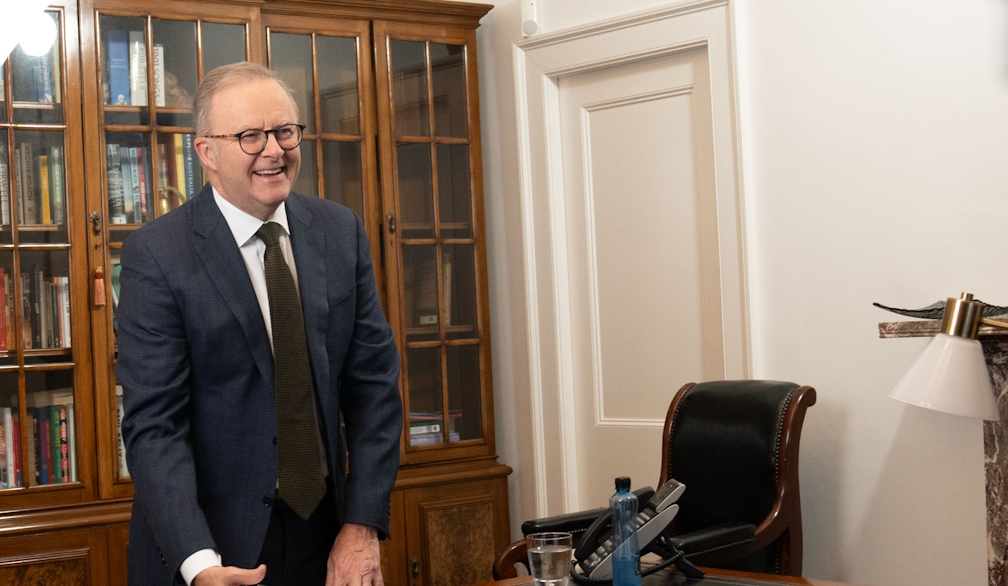
The budget is a cautious and responsible response to the cost-of-living pressures facing voters.
As noted[1] ahead of budget night, many of the major spending initiatives had already been announced.
But, in the only major surprise, there are income tax cuts for all income taxpayers. Even if we need to be patient. The new tax cuts only start in July 2026, with a second round in July 2027.
And as Treasurer Jim Chalmers himself said, they are “modest” cuts. A worker on average earnings will receive A$268 in the first year, rising to $536 in the second year.
Combined with the government’s first round of tax cuts in last year’s budget, this will add up to $2,190 per year in 2027.
The cost to the budget of the latest tax cuts in 2026-27 will be $3 billion, and over three years will be $17.1 billion. The cuts still need to pass parliament.
But calls[2] by economists such as Chris Richardson[3] and Ken Henry[4] for major tax reform have not been heeded. Major reforms inevitably create losers as well as winners. So, big changes were never likely just weeks before an election.
And there is still bracket creep (increases in tax revenues as taxpayers move into higher tax brackets) over the next decade. Total tax receipts are projected to rise from 25.3% of gross domestic product (GDP) in 2024-25 to 26.8% in 2035-36. This will do most of the work in the very gradual windback of the budget deficit.
Read more: The 2025 budget has few savings and surprises but it also ignores climate change[5]
How concerned should we be about the budget moving into deficit?
In the first back-to-back surpluses for almost 20 years, there were budget surpluses in 2022-23 and 2023-24. This year we are returning to deficit and further deficits are expected for about a decade. Should we be alarmed?
A balanced or surplus budget is not necessarily a good budget. What we want is a budget appropriate to current economic conditions and sustainable in the long run.
The Australian economy has only been growing modestly in recent years and is forecast to grow 1.5% in the current year. Inflation is near the target range in underlying terms. So, a modest deficit is not unreasonable.
The longer run projections show a very gradual return to balance. But this assumes no recession and no further income tax cuts, for a decade. It might be better to rebuild the fiscal position more quickly so as to be better placed to provide fiscal stimulus in the event of a global recession or another pandemic.
‘A new world of uncertainty’
As Chalmers said, we are in a “new world of uncertainty” with “the threat of a global trade war”. The volume of Australian exports is forecast to only expand by 2.5% in 2025-26 and 2026-27, but it could be lower.
In February, the Reserve Bank forecast[6] headline inflation would rebound above the 2% to 3% target range when the electricity rebates expired. The extension of the rebates in Tuesday’s budget as well as the reductions in the price of prescription medicines will help keep inflation below 3%. Headline inflation is forecast to improve to 2.5% in 2026-27.
In the December 2024 budget update, the unemployment rate was forecast to be around 4.5% in mid-2025 and stay around that level for the next couple of years. Given the unemployment rate was steady at 4.1% in February[7], the reduction to 4.25% seems plausible.
What will it mean for interest rates?
One reason the government went for a modest tax cut rather than a wild “cash splash” is it did not want to undermine the narrative there will be future interest rate cuts by stimulating household spending too much.
If households were given immediate cash to spend, this could drive up inflation.
The Reserve Bank is unlikely to change interest rates at its April 1 meeting. But it would be very unhelpful for the government’s electoral prospects if the minutes showed the central bank had become more concerned about inflation and less likely to cut interest rates at future meetings.
The Reserve Bank is unlikely to feel this budget contains enough government spending to boost economic activity in the near term and therefore change its view on the economic outlook.
So, a further interest rate cut remains possible at the bank’s following meeting on May 20.
And any further relief on interest rates would be welcomed by households – as well as whoever might be in government by then.
References
- ^ noted (theconversation.com)
- ^ calls (www.abc.net.au)
- ^ Chris Richardson (www.afr.com)
- ^ Ken Henry (www.abc.net.au)
- ^ The 2025 budget has few savings and surprises but it also ignores climate change (theconversation.com)
- ^ forecast (www.rba.gov.au)
- ^ 4.1% in February (www.abs.gov.au)
Read more https://theconversation.com/tax-cuts-are-coming-but-not-soon-in-a-cautious-budget-253027










