Albanese government crumples on misinformation bill and gambling advertising
- Written by: Michelle Grattan, Professorial Fellow, University of Canberra
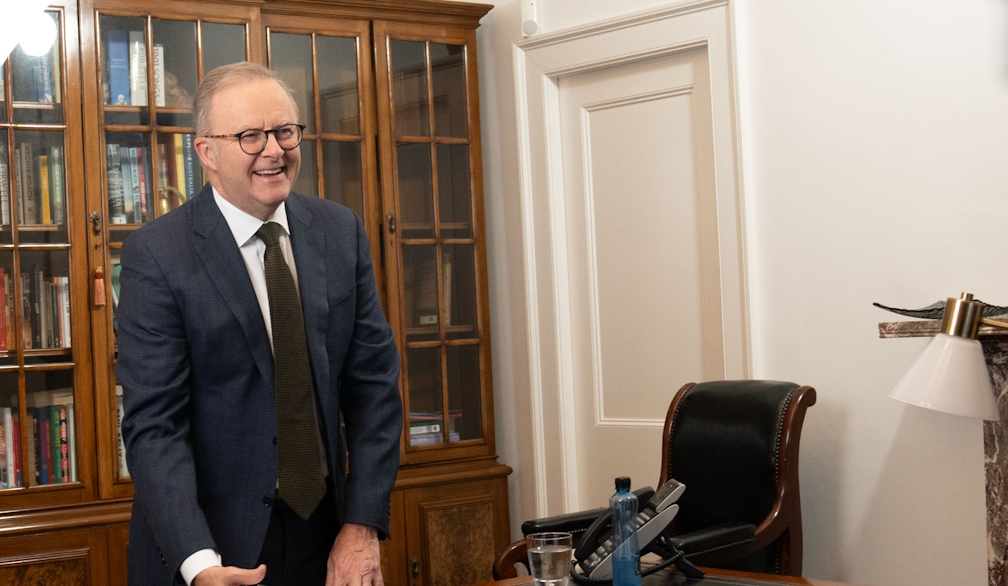
“Big Tech” is celebrating one victory over the Albanese government, but is set to lose on another front.
Ahead of the final parliamentary sitting week for 2024, the government has not just withdrawn its bill aimed at curbing misinformation and disinformation, but says it won’t attempt to bring it back if re-elected for a second term. The government calculates the Senate wouldn’t be any better for it on the bill post-election.
The bill had no chance of passing the Senate, with the Coalition, the Greens and other crossbenchers lining up against it. It has been widely criticised from both the right (on freedom-of-speech grounds) and the left (for being too weak), with an earlier attempt at revising it failing to overcome objections.
But the parliament is set to take on the tech platforms over young people’s access to social media.
Opposition support will guarantee the government’s bill to ban children under 16 from access – as well as the legislation for sweeping changes to electoral donations and spending – will get through this week.
There will be a Senate committee hearing on the social media bill on Monday, lasting only three hours. Those making submissions have been asked to keep them to one or two pages because of the brevity of the inquiry. The inquiry had received more than 4000 submissions by Friday.
Elon Musk posted on his social media site X about this legislation, “Seems like a backdoor way to control access to the Internet by all Australians”.
The battle with big tech has become even more complicated given Musk is to take on a senior position in the Trump administration.
Meanwhile, the gambling industry has had a significant win. The government has failed to produce a response in time for this sitting week to the parliamentary inquiry chaired by the late Peta Murphy.
That inquiry’s report advocated a total ban on gambling advertising. The government made it clear it would not go that far, but a response indicating advertising would be restricted has been anticipated for months.
Employment Minister Murray Watt said on Sunday: “This is a very difficult and complex piece of work that simply cannot be finalised in the remaining week that we have of parliament this year.” He said the government was still “consulting”.
A spokesman for Communications Minister Michelle Rowland said: “The government takes seriously our responsibility to protect Australians, particularly young people, from the harms of online gambling.
"We will continue to work through the 31 recommendations of the Murphy inquiry into online gambling, which requires a whole of government response. As we have seen in the past, bad policy design leads to bad outcomes which is why it’s important that we get these reforms right.”
In October Rowland said the government was “committed to responding in full to Peta Murphy’s inquiry, and to have a comprehensive response in this term”. But she dodged questions on whether the government would introduce legislation.
The continued failure to act is a victory for a range of vested interests, including the gambling industry and media companies.
It is a bitter blow to many advocates and caucus members who believed the pressure of the Murphy report would force the government’s hand.
Anti-gambling advocate Tim Costello said on Sunday he was “profoundly disappointed”. He said polls showed between 72% and 80% of people supported a ban.
In these circumstances, normally action would be taken, Costello said. The only explanation that it was not was the power of vested interests – the media companies, the sports betting industry and the AFL and NRL, he said.
Costello also pointed to the contradiction between the government supporting a ban on children accessing social media, which it could not enforce, and doing nothing on curbing gambling advertising, which it could enforce.
If gambling advertising has proved too risky for the government to tackle, it reckons it is on safe territory in relation to bullying.
It has announced it will fund a short expert-led review to examine current school procedures and best practice methods to address bullying behaviours.
The review will report to Education Ministers Jason Clare with a view to developing a national standard. Clare has written to his state counterparts.
Albanese said the government was acting “online and offline to give young Australians the best start in life”.
Clare said: “Bullying doesn’t just happen in our schools. It’s everywhere. But schools are places where children come together and where we can make a difference if we get this right.”
“Just like we are taking action to help stop bullying on social media, we also can do more where children are face-to-face. This will be a help for parents and support happier and healthier children.”