


Donald Trump fancies himself a skilled dealmaker, but Middle East peace might be beyond him
- Written by: Amin Saikal, Emeritus Professor of Middle Eastern and Central Asian Studies, Australian National University
Donald Trump’s re-election as the US president last week comes at a time of extreme volatility in the Middle East.
The president-elect has promised to end all wars. In his usual impulsive and unpredictable manner, he has pledged to resolve[1] the Ukraine war within 24 hours of taking office and help Israel finish[2] its Gaza and Lebanon operations quickly.
Yet the Middle East is a complex place. Trump will have much difficulty balancing his ardent support of Israel and his other ambitions in the region, especially given the changing dynamics between Iran and its rival, Saudi Arabia.
Here’s what Trump can expect when he takes office in a few months.
Collapse of talks between Israel and Hamas
Overshadowed by the US election was Qatar’s announcement that it has paused[3] its role as a ceasefire mediator between Israel and Hamas.
The tiny, oil-rich emirate has worked hard over the past year to try to reach a deal to end the war. In the process, it made good use of its close relations with the United States, which has its largest Middle East military base in Qatar, and with Hamas, whose political leadership and office have been based in Doha. This, Qatar believed, would help it gain the confidence of the warring parties.
However, its efforts did not produce anything more than a brief ceasefire[4] last year, which resulted in the release of more than 100 Israeli hostages in exchange for 240 Palestinian prisoners.
There are several reasons for this.
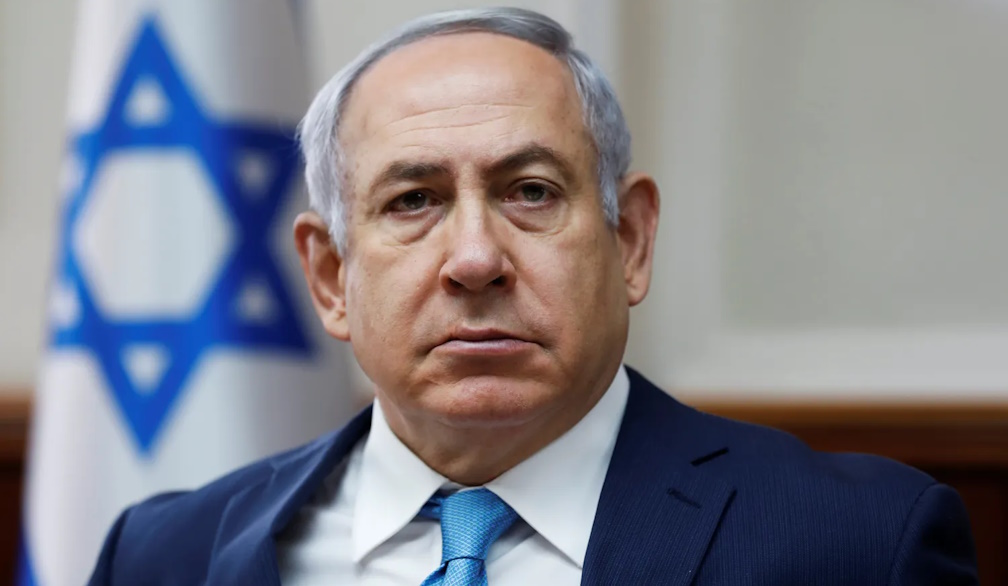
For one, the two sides cannot get past a couple of main sticking points. Israeli Prime Minister Benjamin Netanyahu has resolved to eliminate Hamas completely, ruling out a temporary truce[5]. Hamas is demanding a complete end to the fighting and total Israeli military withdrawal from Gaza.
Meanwhile, Washington has failed to play a meaningful role in the talks. While repeatedly emphasising its desire for a ceasefire, the Biden administration did not at any point put tangible pressure on Israel beyond diplomatic rhetoric.
It has also refused to cut off military aid to Israel. Instead, it approved a US$20 billion[6] (A$30 billion) arms sale to Israel in August. This means Netanyahu has had no compelling reason to divert from his mission.
A possible ceasefire in Lebanon
As the chances of a Gaza ceasefire have faded, hopes have been raised about a Lebanon ceasefire.
Washington has reportedly engaged[7] in intensive diplomatic efforts to get Israel and Hezbollah to reach a common ground to end the fighting there.
Israel wants Hezbollah to be disarmed and pushed back at least beyond the Litani River in southern Lebanon – about 30km north of the Israeli border – with a security zone to be established between the two. Israel wants to maintain[8] the right to strike Hezbollah if necessary, which Lebanese authorities are likely to reject.
Israel has considerably weakened Hezbollah in its bombing and ground invasion of southern Lebanon at the expense of massive civilian casualties[9].
However, just as Israel has not been able to wipe out Hamas, it has so far not succeeded in crippling Hezbollah[10] to the extent it would be forced to accept a ceasefire on Israel’s terms. The militant group continues to possess sufficient political and military prowess to remain resilient.
Changing regional dynamics
Now, Trump re-enters the scene.
His electoral triumph has comforted Netanyahu’s government to the extent that his finance minister, Bezalel Smotrich, has asked[11] the relevant authorities to prepare for the formal annexation of Jewish settlements in the West Bank.
Trump has been a committed supporter of Israel for a long time. During his first presidency he recognised[12] Jerusalem as the capital of Israel and ordered the US embassy to move there. He also recognised[13] Israeli sovereignty over the Golan Heights, which Israel seized from Syria in 1967.
He castigated Iran as the real villain in the region and withdrew[14] the US from the multilateral Iran nuclear agreement. He also instigated the Abraham Accords[15], in which several Arab states normalised relations with Israel.
However, the Gaza and Lebanon wars, as well as the direct military exchanges between Israel and Iran over the past year, have changed the regional texture.
Trump has voiced unwavering backing of Israel against Hamas and Hezbollah, and is likely to resuscitate his “maximum pressure[16]” campaign against Iran. This could involve strangling Tehran with stringent sanctions and blocking its oil exports, while seeking to isolate it internationally.
Meanwhile, as a transactional leader, Trump also wants to strengthen America’s lucrative economic and trade ties with the Arab governments of the region.
However, these countries have been shaken by the scale of Israel’s Gaza and Lebanon operations. Their populations are boiling over with frustration at their leaders’ inability to counter Israel’s actions. This is nowhere more evident than in Jordan[17].
As a result, Saudi Arabia – America’s richest and most consequential Arab ally in the region – has lately taken the lead[18] in voicing strong opposition to Israel. Saudi Arabia’s de facto ruler, Crown Prince Mohammed bin Salman, has also made a path toward an independent Palestinian state a condition[19] of normalising relations with Israel.
Further, Riyadh is strengthening its more than year-long rapprochement with its arch rival, Iran. The two countries’ defence ministers met[20] last weekend, following a joint military exercise[21] involving their navies.
In addition, Bin Salman has just convened[22] a meeting of Arab and Muslim leaders in Riyadh to forge a consensual position in dealing with Israel and the incoming Trump administration.
Where is it all heading?
Trump will need to find a balance between his commitment to Israel and upholding America’s close relations with its traditional Arab allies. This will be crucial to ending the Middle East wars and rebuffing Iran.
Tehran is no longer as vulnerable to Trump’s venom as it may have been in the past. It is more powerful militarily and enjoys strong strategic relations with Russia, China and North Korea, as well as improved relations with regional Arab states.
Given the absence of a Gaza ceasefire, the thin hope of a halt to the Lebanon fighting, Netanyahu’s intransigence and Trump’s pursuance of an “Israel first” policy, the Middle East’s volatility is likely to persist.
It may prove to be as much of a headache for Trump as it was for Joe Biden in a very polarised and unpredictable world.
References
- ^ resolve (apnews.com)
- ^ finish (apnews.com)
- ^ paused (edition.cnn.com)
- ^ brief ceasefire (edition.cnn.com)
- ^ temporary truce (apnews.com)
- ^ approved a US$20 billion (apnews.com)
- ^ engaged (www.bbc.com)
- ^ wants to maintain (www.bbc.com)
- ^ massive civilian casualties (apnews.com)
- ^ not succeeded in crippling Hezbollah (www.foreignaffairs.com)
- ^ asked (www.timesofisrael.com)
- ^ recognised (www.nytimes.com)
- ^ recognised (www.bbc.com)
- ^ withdrew (trumpwhitehouse.archives.gov)
- ^ Abraham Accords (www.state.gov)
- ^ maximum pressure (www.politico.com)
- ^ Jordan (www.barrons.com)
- ^ taken the lead (www.aljazeera.com)
- ^ condition (www.middleeasteye.net)
- ^ met (www.reuters.com)
- ^ joint military exercise (www.timesofisrael.com)
- ^ convened (edition.cnn.com)










