With northern Gaza desperate and hungry, Israel’s actions are shaking the world order to its core
- Written by: Tristan Dunning, Sessional Academic, School of Social Sciences, Macquarie University
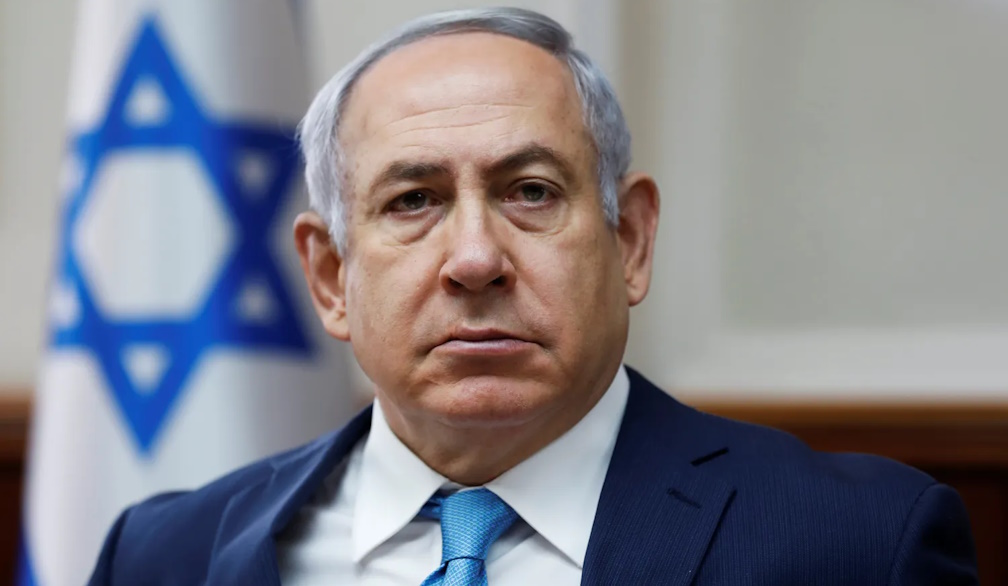
While the killing of Hamas leader Yahya Sinwar could have provided an off-ramp for the conflict in Gaza, Israeli Prime Minister Benjamin Netanyahu’s ongoing vows of “total victory[1]” make this seem unlikely[2].
The concept of “total victory”, however, is extremely problematic. Every time Israel declares an area cleared of Hamas and then withdraws, Hamas, which carried out the horrific attack on southern Israel on October 7 2023, has quickly returned to reestablish control[3].
As a result, there has been a marked Israeli escalation in northern Gaza in recent days, and much discussion about a so-called “general’s plan[4]” being pushed[5] by some right-wing members of Netanyahu’s government.
Concocted by a former Israeli general, Giora Eiland[6], the plan is, in essence, to forego negotiations, bisect the enclave and give northern Gaza’s 400,000 inhabitants the bleak choice between leaving and dying[7].
We don’t know whether Netanyahu will officially endorse the plan. Israeli leaders reportedly told[8] US Secretary of State Antony Blinken this week they are not implementing it. However, it nonetheless has broad support[9] among Israel’s political and military elite.
The Israeli military has already issued expulsion orders[10] to the people of northern Gaza. The government has said anyone who remains would be considered a military target and will be deprived of food and water[11].
While Israel denies[12] obstructing humanitarian aid, the World Food Program said no food aid[13] entered northern Gaza for two weeks in early October. While some aid has been entering since then, thousands are still at risk of starvation[14] and outbreaks of preventable diseases.
Moreover, many Palestinians, including the sick, elderly and wounded, are unable to move and have nowhere to go. The prospect of the overcrowded and unprotected tent cities of the south is hardly enticing.
Israeli human rights groups say the military had been deliberately blocking aid[15] to give the population no choice but to leave northern Gaza. Israel may now be backtracking under pressure from the United States, which has given Netanyahu’s government a 30-day deadline[16] to increase the amount of aid it allows into Gaza or risk losing US weapons funding.
Undermining international norms and rules
Israel’s war against Gaza, and now Lebanon, has repeatedly challenged the foundations of the liberal international rules-based order[17] set up after the second world war, as well as the tenets of international law, multilateral diplomacy, democracy and humanitarianism.
The norms of the liberal world order are expressed in various institutions, such as:
- the UN Charter
- the UN Security Council, with its notionally legally binding resolutions
- the International Court of Justice (ICJ) in The Hague
- the Geneva Conventions governing the rules of war
- the Universal Declaration of Human Rights
- and the Rome Statute of the International Criminal Court (ICC), among many others.
Recently, the ICJ ruled Israel’s occupation of the West Bank, Gaza Strip and East Jerusalem is illegal[18] and ordered it to withdraw. In response, Netanyahu said[19] the court had made a “decision of lies”.
In a separate case, South Africa brought a charge[20] to the ICJ, alleging Israel has committed genocide against the Palestinian people over the past year. The world’s top court has preliminarily ruled there is a “plausible[21]” case for a finding of genocide, and said Israel must take measures to ensure[22] its prevention.
At this juncture, however, human rights groups[23] and others[24] have argued[25] that Israel has failed to comply with this order, thereby undermining one of the key institutions of the liberal world order.
This is compounded by the fact that few major democratic states have been willing to strongly condemn Israel’s failure to comply with international law in Gaza – or have done so belatedly – let alone intervened in any concrete fashion.
In addition, the UN Security Council has failed – primarily due to the veto power exercised by the US – to take any tangible measures to enforce its own resolutions against Israel, as well as the rulings of the ICJ.
This is fuelling widespread perceptions of hypocrisy[26] in relation to the accountability of notionally democratic states for alleged violations of humanitarian law, compared with other nations that don’t have great power patrons.
In the early 1990s, for instance, the UN Security Council unanimously passed several resolutions against Iraq’s invasion of Kuwait[27], followed a decade later by resolutions demanding Saddam Hussein’s regime comply with weapons inspection mandates. The US and its allies used these resolutions as the legal justification for their invasion of Iraq[28]. Ultimately, no weapons of mass destruction were found. Then UN Secretary General Kofi Annan later said[29] the invasion of Iraq was illegal and contrary to the UN Charter.
However, dozens of UN Security Council resolutions[30] concerning Israel have been passed and not enforced. Many others have been vetoed by the US.
The prosecutors of the ICC have also requested arrest warrants[31] for Netanyahu and Defence Minister Yoav Gallant for alleged crimes against humanity (in addition to several Hamas leaders, now dead). The warrants for Netanyahu and Gallant were met with indignation[32] by some Western politicians. Yet, the West broadly praised[33] the ICC’s arrest warrant against Russian President Vladimir Putin.
Furthermore, the US Congress attempted to sanction the court[34] over the Netanyahu arrest warrant, once again underscoring the often selective way in which international law is applied by nation states.
A crisis of legitimacy for the world order
Democratic states like to present themselves as the protectors, and sometimes enforcers, of the liberal world order, ensuring continued international peace and security.
Indeed, Israel and its supporters[35] often characterise its military actions as the forward defence of the democratic world against tyrannical larger powers, as a means of protecting itself from adversaries that want to destroy it. The problem is Israel’s actions often directly contradict the liberal world order it purports to defend, thereby undermining its legitimacy.
Failure to rein in Israel’s actions has led to accusations of “double standards[36]” regarding international law. The US and Germany provide Israel with 99% of its arm imports[37] and diplomatic cover. Although Germany has stopped approving[38] new weapons exports to Israel, both countries certainly have more leverage to stop the carnage in Gaza if they wish.
The West’s self-abrogated moral superiority is arguably in tatters as it continues to undermine the principles of the liberal world order. The question is: if this world order falls, what will the new world order look like?
References
- ^ total victory (apnews.com)
- ^ unlikely (theconversation.com)
- ^ reestablish control (www.timesofisrael.com)
- ^ general’s plan (www.middleeasteye.net)
- ^ pushed (www.washingtonpost.com)
- ^ Giora Eiland (www.nbcnews.com)
- ^ leaving and dying (www.middleeasteye.net)
- ^ reportedly told (www.timesofisrael.com)
- ^ broad support (www.nbcnews.com)
- ^ expulsion orders (www.lemonde.fr)
- ^ deprived of food and water (apnews.com)
- ^ denies (www.bbc.com)
- ^ no food aid (www.washingtonpost.com)
- ^ at risk of starvation (www.ipcinfo.org)
- ^ deliberately blocking aid (www.npr.org)
- ^ 30-day deadline (www.cbsnews.com)
- ^ liberal international rules-based order (education.cfr.org)
- ^ illegal (www.ohchr.org)
- ^ said (www.bbc.com)
- ^ brought a charge (www.bbc.com)
- ^ plausible (www.newyorker.com)
- ^ Israel must take measures to ensure (www.hrw.org)
- ^ human rights groups (www.amnesty.org)
- ^ others (theconversation.com)
- ^ argued (www.hrw.org)
- ^ hypocrisy (www.smh.com.au)
- ^ Iraq’s invasion of Kuwait (www.democracynow.org)
- ^ their invasion of Iraq (academic.oup.com)
- ^ later said (www.theguardian.com)
- ^ dozens of UN Security Council resolutions (en.wikipedia.org)
- ^ arrest warrants (www.icc-cpi.int)
- ^ indignation (www.theguardian.com)
- ^ praised (www.bbc.com)
- ^ attempted to sanction the court (edition.cnn.com)
- ^ its supporters (www.jns.org)
- ^ double standards (www.internationalaffairs.org.au)
- ^ 99% of its arm imports (www.washingtonpost.com)
- ^ stopped approving (www.reuters.com)