What Donald Trump’s fiery reaction to his conviction says about this moment in US politics
- Written by: Emma Shortis, Adjunct Senior Fellow, School of Global, Urban and Social Studies, RMIT University
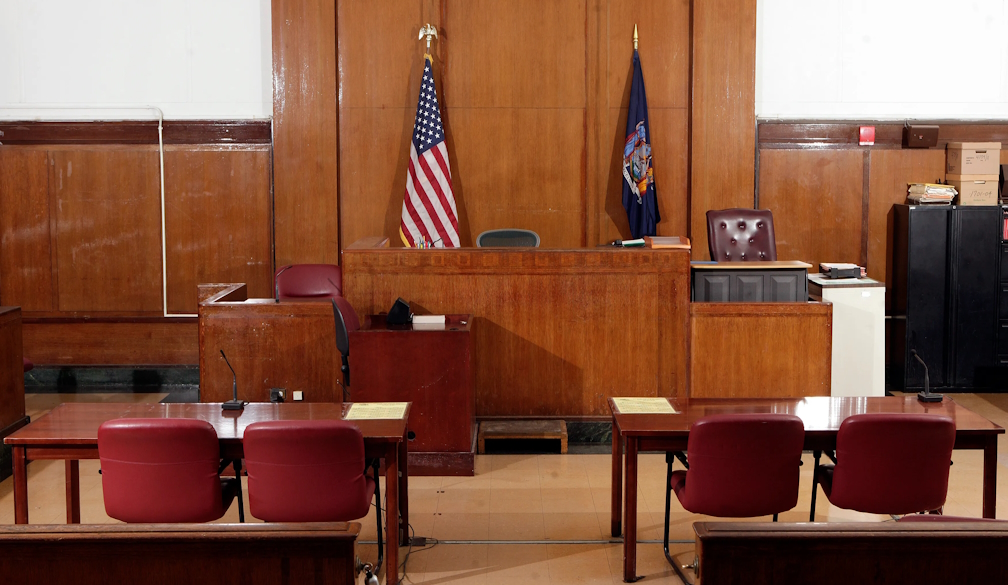
In the week leading up to the conviction delivered in a Manhattan courtroom on Friday, right-wing media was focused on Donald Trump’s innocence. Hosts of the popular podcast “Timcast IRL”, which scored an exclusive, 17-minute interview[1] with the former president before his speech at the Libertarian National Convention[2], discussed the case at length.
Their guest, Kash Patel, a former Trump administration official, argued that he had watched Michael Cohen – Trump’s former lawyer and the star witness in the criminal case against the former president – “implode the prosecution’s case”. Host Tim Pool agreed that “there is nothing here” and the case was “absurdity and insanity”.
The three hosts and their guest had all been watching the case very closely; they were deep in the weeds. And they were utterly convinced it was bogus, that only a “rigged system” would find him guilty.
On Friday, a jury of his peers did find Trump guilty of falsifying business records in relation to hush money payments intended to cover up his affair with an adult movie star. Trump, who was found guilty on all 34 felony counts he faced, is now the first president in American history to be convicted of a crime.
Much about Trump is unprecedented. This moment is history-making.
Is America more polarised than ever?
Many Trump supporters, like Pool and his friends, had suspected this was coming. The guilty verdict only reinforced their certainty that the system is “rigged” against Trump – and by extension, anyone who supports him or even just some of his politics.
In the right-wing media universe, that is the only logical conclusion.
Trump has successfully deployed this narrative in the right-wing media for years now, and it has stuck. A day after the verdict was handed down, Trump told his supporters[3] – as he has many times before – that “if they can do this to me, they can do this to anyone.”
Outside of the right-wing media universe, however, comments like these are reported on with a mixture of incredulity and concern. Mainstream media outlets note the significant threat this kind of rhetoric – and the increasing normalisation of political violence[4] – pose to the institutions of American democracy.
This increasing divide in American politics, culture and society is often described as “polarisation” – a phenomenon where two entirely separate political universes (one right-wing, the other left) move further away from each other and into the extreme.
But the notion that polarisation is getting worse or is the biggest problem in American politics today suggests there was, at some point, a golden age of political consensus in the US. It also assumes there is a constant political centre to return to, and that there is a similar level of extremism on both sides of the political divide.
This plays into a very Trumpian framing that labels US President Joe Biden and the Democratic Party as extremists – or, in Trump’s words, “socialists” and “Marxists” – when they are nothing of the sort[5].
The reality of American politics today is not a simple question of polarisation that can somehow be reversed. Rather, the stark division between the two camps – and their world views – is, for the moment at least, irreconcilable.
That division has a long history. The wildly different reactions to the conviction are emblematic of a fundamental truth: the United States has never been one country. Trump did not create that situation, but he is better than anyone at exploiting it. He is already turning a criminal conviction into a winning campaign strategy[6].
Read more: 1968 was an inflection point for the US. Is another one coming in 2024?[7]
The new normal
Those with enduring faith in the strength of American democracy and its institutions will argue this division is not necessarily all-encompassing. They might point to polling which has fairly consistently shown that Trump supporters outside of his core base might be shifted by a criminal conviction. This is particularly true[8] of Democrats and independents who had previously voted for Trump – the voters Biden was able to attract back into the fold in the 2020 presidential election and needs to keep onside come November.
But even that is changing; recent polling suggests[9] it might be prison time over a criminal conviction that would be decisive for voters - an unlikely outcome. Some polling suggests a criminal conviction may not matter at all[10].
Trump is masterful at shifting the political ground. And voters have known who he is[11] for a long time. His ability to avoid accountability – to defy the “rigged” system – is something many of them admire.
Many things about his presidency and his political career are unprecedented. It is now entirely possible Trump will be the first former president to win an election despite – or perhaps even because of – multiple criminal convictions.
References
- ^ 17-minute interview (www.youtube.com)
- ^ Libertarian National Convention (www.politico.com)
- ^ told his supporters (www.c-span.org)
- ^ normalisation of political violence (www.theguardian.com)
- ^ nothing of the sort (apnews.com)
- ^ winning campaign strategy (www.reuters.com)
- ^ 1968 was an inflection point for the US. Is another one coming in 2024? (theconversation.com)
- ^ particularly true (www.axios.com)
- ^ recent polling suggests (www.axios.com)
- ^ may not matter at all (www.axios.com)
- ^ known who he is (theconversation.com)