I can’t afford olive oil. What else can I use?
- Written by: Lauren Ball, Professor of Community Health and Wellbeing, The University of Queensland

If you buy your olive oil in bulk, you’ve likely been in for a shock in recent weeks. Major supermarkets have been selling olive oil for up to A$65 for a four-litre tin, and up to $26 for a 750 millilitre bottle.
We’ve been hearing about the health benefits of olive oil for years. And many of us are adding it to salads, or baking and frying with it.
But during a cost-of-living crisis, these high prices can put olive oil out of reach.
Let’s take a look at why olive oil is in demand, why it’s so expensive right now, and what to do until prices come down.
Remind me, why is olive oil so good for you?
Including olive oil in your diet can reduce your risk of developing type 2 diabetes and improve heart health through more favourable blood pressure[1], inflammation[2] and cholesterol levels[3].
This is largely because olive oil is high in monounsaturated fatty acids[4] and polyphenols[5] (antioxidants).
Some researchers have suggested you can get these benefits from consuming up to 20 grams a day[6]. That’s equivalent to about five teaspoons of olive oil.
Why is olive oil so expensive right now?
A European heatwave and drought have limited[7] Spanish and Italian producers’ ability to supply olive oil to international markets, including Australia.
This has been coupled with an unusually cold and short growing season for Australian olive oil suppliers[8].
The lower-than-usual production and supply of olive oil, together with heightened demand from shoppers, means prices have gone up.

How can I make my olive oil go further?
Many households buy olive oil in large quantities because it is cheaper per litre. So, if you have some still in stock, you can make it go further by:
storing it correctly – make sure the lid is on tightly and it’s kept in a cool, dark place, such as a pantry or cabinet. If stored this way, olive oil can typically last 12–18 months[10]
using a spray – sprays distribute oil more evenly than pourers, using less olive oil overall. You could buy a spray bottle to fill from a large tin, as needed
straining or freezing it – if you have leftover olive oil after frying, strain it and reuse it for other fried dishes. You could also freeze this used oil in an airtight container, then thaw and fry with it later, without affecting the oil’s taste and other characteristics[11]. But for dressings, only use fresh oil.
I’ve run out of olive oil. What else can I use?
Here are some healthy and cheaper alternatives to olive oil:
canola oil is a good alternative for frying. It’s relatively low[12] in saturated fat so is generally considered healthy. Like olive oil, it is high in healthy monounsaturated fats[13]. Cost? Up to $6 for a 750mL bottle (home brand is about half the price)
sunflower oil is a great alternative to use on salads or for frying. It has a mild flavour that does not overwhelm other ingredients. Some studies[14] suggest using sunflower oil may help reduce your risk of heart disease by lowering LDL (bad) cholesterol and raising HDL (good) cholesterol. Cost? Up to $6.50 for a 750mL bottle (again, home brand is about half the price)
sesame oil has a nutty flavour. It’s good for Asian dressings, and frying. Light sesame oil is typically used as a neutral cooking oil, while the toasted type is used to flavour sauces. Sesame oil is high in[15] antioxidants and has some anti-inflammatory properties. Sesame oil is generally sold in smaller bottles than canola or sunflower oil. Cost? Up to $5 for a 150mL bottle.
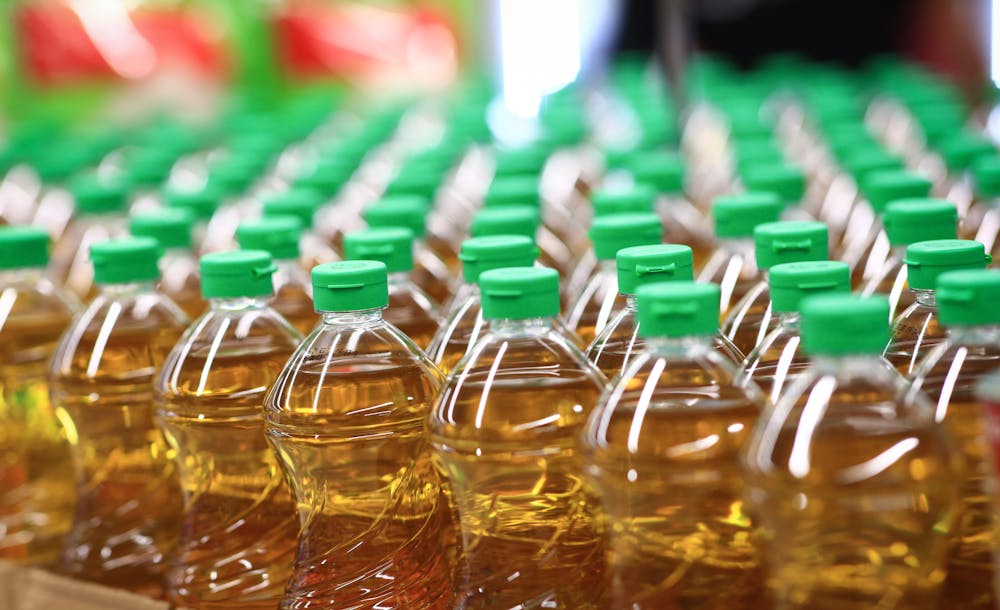 There are plenty of alternative oils you can use in salads or for frying.
narai chal/Shutterstock[16]
There are plenty of alternative oils you can use in salads or for frying.
narai chal/Shutterstock[16]
How can I use less oil, generally?
Using less oil in your cooking could keep your meals healthy. Here are some alternatives and cooking techniques:
use alternatives for baking – unless you are making an olive oil cake, if your recipe calls for a large quantity of oil, try using an alternative such as apple sauce, Greek yoghurt or mashed banana
use non-stick cookware – using high-quality, non-stick pots and pans reduces the need for oil when cooking, or means you don’t need oil at all
steam instead – steam vegetables, fish and poultry to retain nutrients and moisture without adding oil
bake or roast – potatoes, vegetables or chicken can be baked or roasted rather than fried. You can still achieve crispy textures without needing excessive oil
grill – the natural fats in meat and vegetables can help keep ingredients moist, without using oil
use stock – instead of sautéing vegetables in oil, try using vegetable broth or stock to add flavour
try vinegar or citrus – use vinegar or citrus juice (such as lemon or lime) to add flavour to salads, marinades and sauces without relying on oil
use natural moisture – use the natural moisture in ingredients such as tomatoes, onions and mushrooms to cook dishes without adding extra oil. They release moisture as they cook, helping to prevent sticking.
References
- ^ blood pressure (www.mdpi.com)
- ^ inflammation (www.mdpi.com)
- ^ cholesterol levels (www.sciencedirect.com)
- ^ monounsaturated fatty acids (www.mdpi.com)
- ^ polyphenols (www.ncbi.nlm.nih.gov)
- ^ 20 grams a day (www.frontiersin.org)
- ^ limited (www.abc.net.au)
- ^ olive oil suppliers (www.abc.net.au)
- ^ KaMay/Shutterstock (www.shutterstock.com)
- ^ 12–18 months (www.ncbi.nlm.nih.gov)
- ^ taste and other characteristics (link.springer.com)
- ^ low (www.sciencedirect.com)
- ^ healthy monounsaturated fats (pubmed.ncbi.nlm.nih.gov)
- ^ studies (www.cambridge.org)
- ^ high in (onlinelibrary.wiley.com)
- ^ narai chal/Shutterstock (www.shutterstock.com)
Read more https://theconversation.com/i-cant-afford-olive-oil-what-else-can-i-use-228788