Can playing Tetris help prevent PTSD if you’ve witnessed something traumatic?
- Written by: Daniel Bressington, Professor in Mental Health, Charles Darwin University
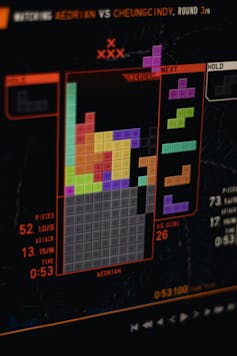
In the wake of witnessing tragic events, many people turn to online communities such as Reddit to discuss and process their experiences. A common bit of advice users give each other[1] is to play Tetris to help combat traumatic memories.
Where does this idea come from, and can this iconic computer game really help in the treatment of conditions like post-traumatic stress disorder?
The answer is a partial “yes”, but with caveats. It depends on several factors, such as the specific symptoms, the timing of the event and also receiving other types of psychological treatment.
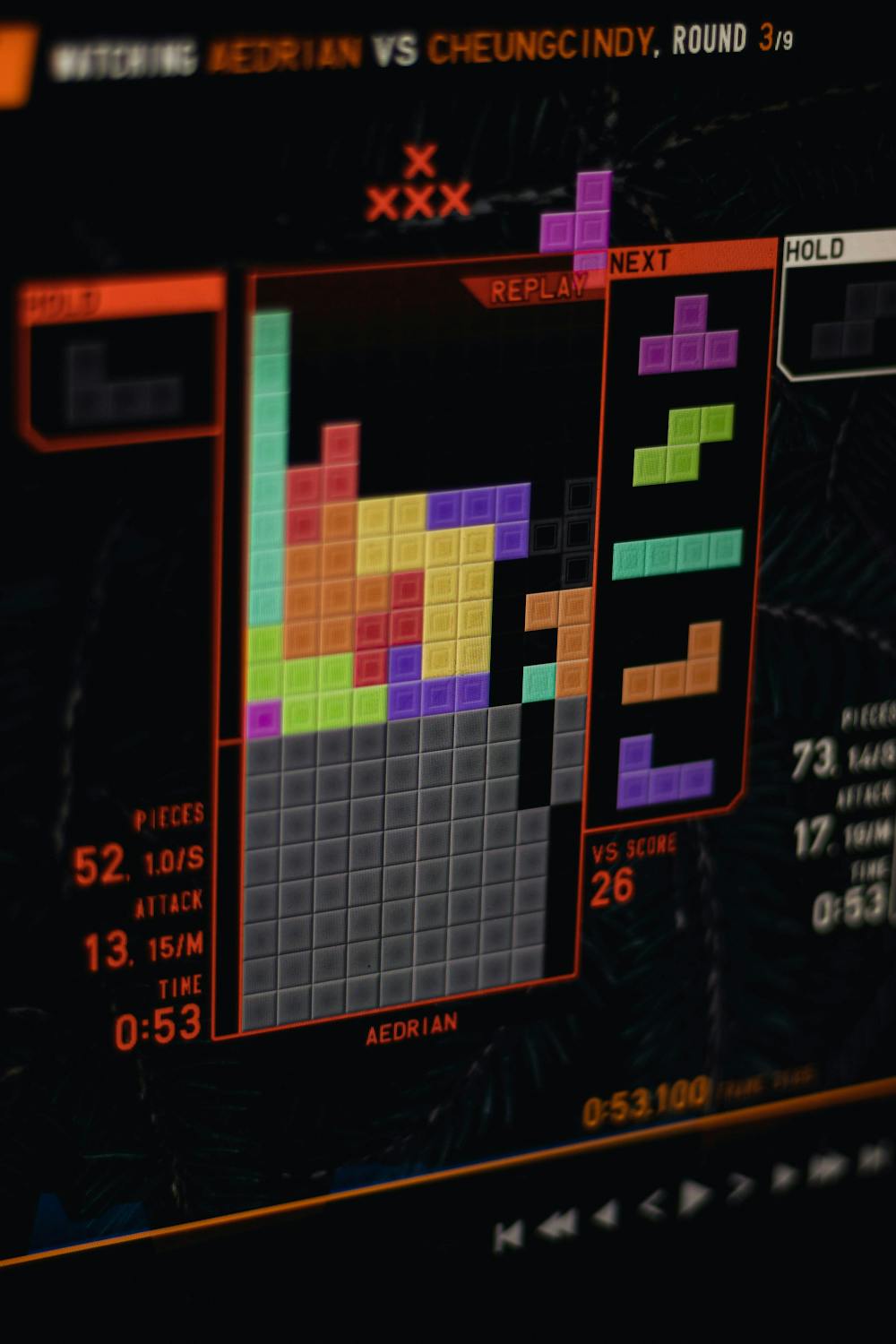
Firstly, what is Tetris?
A deceptively simple computer game, Tetris first appeared in 1985[3]. Today, it remains one of the most popular games in history, available for free online and on numerous gaming platforms.
The puzzle game involves a simple visuospatial task (that is, relating visual information to physical space). A series of randomly generated block shapes float down from the top of the screen, and the player’s goal is to create “lines” with the shapes by rotating and moving them. A completed line is cleared from the screen, reducing a potential pile-up of shapes.
The longer you can keep going, the higher the score. The simplicity of this puzzle format is both mindful and engaging.
Read more: From besting Tetris AI to epic speedruns – inside gaming’s most thrilling feats[4]
What is PTSD?
While most people who witness a traumatic event won’t require treatment[5], the psychological harm of a powerfully distressing event can have lasting effects in some.
One of the most studied trauma conditions is post-traumatic stress disorder[6], commonly referred to as PTSD.
In PTSD, a single traumatic event or series of traumas create a collection of distressing symptoms. This can include reliving the event through nightmares and flashbacks, a sense of the world being a darker, more complicated place, as well as hypervigilance and fear. The brain is seemingly inoculated by the trauma and sensitised to anticipate further trauma.
How might playing Tetris help PTSD?
The human brain has limited capacity to process or recall memories of events. In 2009[7], researchers at the University of Oxford proposed that playing Tetris when the brain is trying to store visual memories would overload its capacity and “distract” the visual memory circuits.
Therefore, playing Tetris shortly after a distressing event could interrupt these processing centres within the brain. In turn, this would reduce the recurrence of unwanted visual memories – intrusions – associated with the trauma.
It has also been proposed[8] Tetris may be helpful when reactivating memories of historical trauma during treatment with a psychologist.
Essentially, Tetris is thought to work as a “cognitive vaccine” for intrusive visual memories of trauma.
Read more: 'Psychological debriefing' right after an accident or trauma can do more harm than good – here's why[9]
So, does it work?
Research on the effects of Tetris on PTSD is still evolving.
The initial study in 2009[10] successfully resulted in three times fewer intrusions than the non-Tetris group. However, this work was conducted in laboratories by showing participants films of traumatic events, playing Tetris for ten minutes shortly after watching the videos, and measuring the number of intrusions experienced over the following week.
Although encouraging, this initial research was done in a highly controlled setting and may not apply in the real world.
However, several clinical studies have been conducted since 2017, and summarised in a recent literature review[11]. These relatively small studies showed that playing Tetris reduced the number of intrusions in women experiencing birth trauma, people involved in vehicle accidents, war refugees and war veterans.
Although most studies involved participants playing Tetris for 10–40 minutes shortly after a traumatic event (between 30 minutes and 72 hours), recent research[12] shows there may be benefits up to seven years after childbirth-related trauma – by reactivating the intrusive visual memory and playing Tetris for 20 minutes.
While these results are encouraging, we need more robust research with larger groups of participants to be more certain of the effects of Tetris, particularly in the real world.
All earlier studies involved playing the game with professional guidance, so we don’t know how it works without this support.
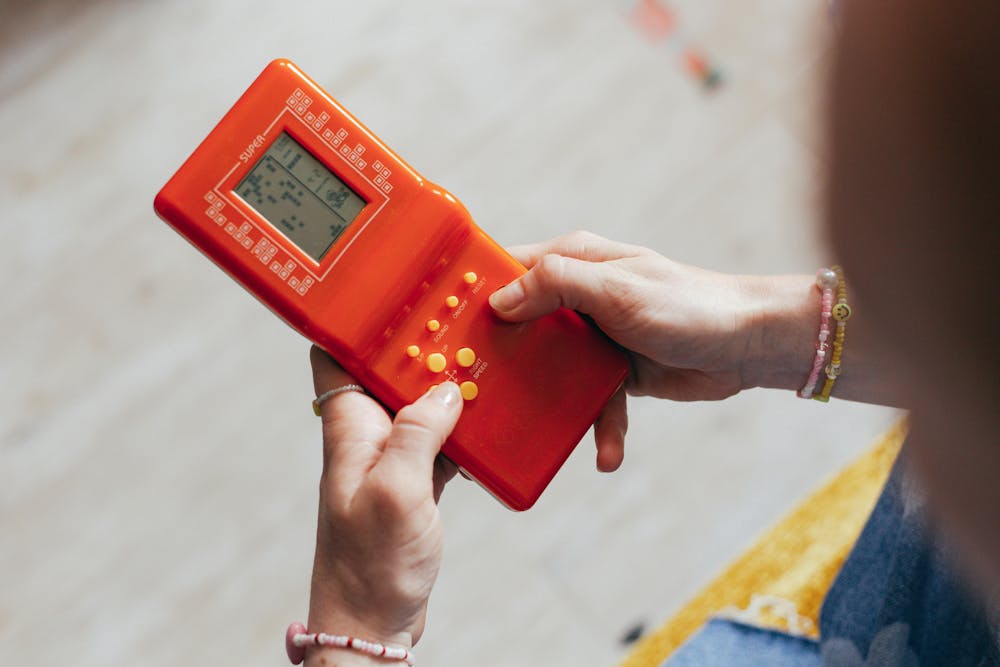 Using Tetris to help with intrusive memories stems from the idea our brains can only process a limited amount at once.
cottonbro studio/Pexels[13]
Using Tetris to help with intrusive memories stems from the idea our brains can only process a limited amount at once.
cottonbro studio/Pexels[13]
Would other visuospatial games be helpful?
Any game with a focus on visuospatial tasks may possibly help. Limited studies directly compare Tetris with other games. However, a study[14] involving 54 volunteers compared the effects of playing Tetris versus word games versus no games.
Both the Tetris and the word gaming groups reported relatively fewer intrusive memories than the non-gaming group.
So, should I play Tetris if I experience a traumatic event?
The current evidence of Tetris’ efficacy is limited to studies where people were supported by professionals. This evidence indicates that:
- playing Tetris (or perhaps a similar game) for around 20 minutes in the hours after experiencing a traumatic event may help to reduce subsequent intrusive memories
- playing Tetris at the point of recalling a previous traumatic experience may also reduce intrusions and distress
- Tetris may be used as part of a treatment strategy by a healthcare professional.
Remember, Tetris is not a panacea for trauma. Intrusive memories are not completely eradicated by playing the game and PTSD includes several symptoms that won’t improve via gameplaying. If someone experiences PTSD-type symptoms, they likely need professional help.
Read more: A TikTok 'expert' says you have post-traumatic stress disorder − but do you? A trauma psychiatrist explains what PTSD really is and how to seek help[15]
References
- ^ users give each other (www.reddit.com)
- ^ Aedrian/Unsplash (unsplash.com)
- ^ Tetris first appeared in 1985 (www.britannica.com)
- ^ From besting Tetris AI to epic speedruns – inside gaming’s most thrilling feats (theconversation.com)
- ^ won’t require treatment (psychology.org.au)
- ^ post-traumatic stress disorder (theconversation.com)
- ^ In 2009 (www.ox.ac.uk)
- ^ has also been proposed (doi.org)
- ^ 'Psychological debriefing' right after an accident or trauma can do more harm than good – here's why (theconversation.com)
- ^ The initial study in 2009 (doi.org)
- ^ literature review (fidesetratio.com.pl)
- ^ recent research (pubmed.ncbi.nlm.nih.gov)
- ^ cottonbro studio/Pexels (www.pexels.com)
- ^ a study (www.ncbi.nlm.nih.gov)
- ^ A TikTok 'expert' says you have post-traumatic stress disorder − but do you? A trauma psychiatrist explains what PTSD really is and how to seek help (theconversation.com)