Why is toddler milk so popular? Follow the money
- Written by: Jennifer McCann, Lecturer Nutrition Sciences, Institute for Physical Activity and Nutrition, Deakin University

Toddler milk is popular and becoming more so. Just over a third of Australian toddlers[1] drink it. Parents spend[2] hundreds of millions of dollars on it globally. Around the world, toddler milk makes up nearly half of total formula milk sales[3], with a 200% growth since 2005. Growth is expected to continue.
We’re concerned about the growing popularity of toddler milk – about its nutritional content, cost, how it’s marketed, and about the impact on the health and feeding of young children. Some of us voiced our concerns on the ABC’s 7.30 program recently[4].
But what’s in toddler milk? How does it compare to cow’s milk? How did it become so popular?
We shared our concerns about toddler milk and what this means for parents and children.Read more: Misleading food labels contribute to babies and toddlers eating too much sugar. 3 things parents can do[5]
What is toddler milk? Is it healthy?
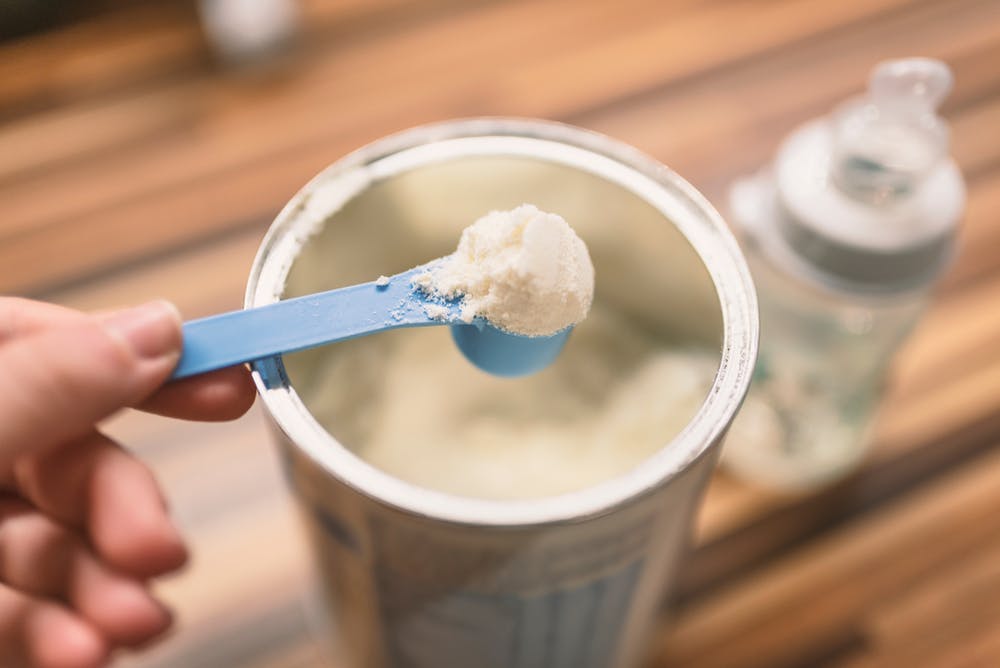
Toddler milk is marketed as appropriate for children aged one to three years. This ultra-processed food[6] contains[7]:
skim milk powder (cow, soy or goat)
vegetable oil
sugars (including added sugars)
emulsifiers (to help bind the ingredients and improve the texture)
added vitamins and minerals.
Toddler milk is usually[8] lower in calcium and protein, and higher in sugar and calories than regular cow’s milk. Depending on the brand, a serve of toddler milk can contain as much sugar as a soft drink[9].
Even though toddler milks have added vitamins and minerals[10], these are found in and better absorbed[11] from regular foods and breastmilk[12]. Toddlers do not need the level of nutrients found in these products if they are eating a varied diet.
Global health authorities, including the World Health Organization[13] (WHO), and Australia’s National Health and Medical Research Council[14], do not recommend toddler milk for healthy toddlers.
Some children with specific metabolic or dietary medical problems might need tailored alternatives to cow’s milk. However, these products generally are not toddler milks and would be a specific product prescribed by a health-care provider.
Toddler milk[15] is also up to four to five times[16] more expensive than regular cow’s milk. “Premium” toddler milk (the same product, with higher levels of vitamins and minerals) is more expensive.
With the cost-of-living crisis[17], this means families might choose to go without other essentials to afford toddler milk.
Read more: 8 everyday foods you might not realise are ultra processed – and how to spot them[19]
How toddler milk was invented
Toddler milk was created so infant formula companies could get around rules[20] preventing them from advertising their infant formula.
When manufacturers claim benefits[21] of their toddler milk, many parents assume these claimed benefits apply to infant formula (known as cross-promotion[22]). In other words, marketing toddler milks also boosts interest in their infant formula.
Manufacturers also create brand loyalty and recognition by making the labels of their toddler milk look similar to their infant formula. For parents who used infant formula, toddler milk is positioned as the next stage in feeding.
Read more: If you're feeding with formula, here's what you can do to promote your baby's healthy growth[23]
How toddler milk became so popular
Toddler milk is heavily marketed[24]. Parents are told[25] toddler milk is healthy and provides extra nutrition. Marketing tells parents[26] it will benefit their child’s growth and development, their brain function and their immune system.
Toddler milk is also presented as a solution[27] to fussy eating, which is common in toddlers.
However, regularly drinking toddler milk could increase the risk of fussiness[28] as it reduces opportunities for toddlers to try new foods. It’s also sweet, needs no chewing, and essentially displaces energy and nutrients that whole foods provide.
 Toddler milk is said to help fussy eating, but it may make things worse.
zlikovec/Shutterstock[29]
Toddler milk is said to help fussy eating, but it may make things worse.
zlikovec/Shutterstock[29]
Read more: How to tell if your kid's 'fussy eating' phase is normal[30]
Growing concern
The WHO[31], along with public health academics, has been raising concerns about the marketing of toddler milk for years.
In Australia, moves to curb how toddler milk is promoted have gone nowhere. Toddler milk is in a category of foods that are allowed to be fortified[32] (to have vitamins and minerals added), with no marketing restrictions. The Australian Competition & Consumer Commission also has concerns[33] about the rise of toddler milk marketing. Despite this, there is no change in how it’s regulated.
This is in contrast to voluntary marketing restrictions[34] in Australia for infant formula.
What needs to happen?
There is enough evidence[35] to show the marketing of commercial milk formula, including toddler milk, influences parents and undermines child health.
So governments need to act to protect parents from this marketing, and to put child health over profits[36].
Public health authorities and advocates, including us, are calling for the restriction of marketing (not selling) of all formula products for infants and toddlers from birth through to age three years.
Ideally, this would be mandatory, government-enforced marketing restrictions as opposed to industry self-regulation[37] in place currently for infant formulas.
Read more: Essays on health: how food companies can sneak bias into scientific research[38]
We musn’t blame parents
Toddlers are eating more processed foods[39] (including toddler milk) than ever because time-poor parents are seeking a convenient option to ensure their child is getting adequate nutrition.
Formula manufacturers have used this information, and created a demand for an unnecessary product.
Parents want to do the best for their toddlers, but they need to know the marketing behind toddler milks is misleading.
Toddler milk is an unnecessary, unhealthy, expensive product. Toddlers just need whole foods and breastmilk, and/or cow’s milk or a non-dairy, milk alternative.
If parents are worried about their child’s eating[40], they should see a health-care professional.
Anthea Rhodes, a paediatrician from Royal Children’s Hospital Melbourne and a lecturer at the University of Melbourne, co-authored this article.
References
- ^ third of Australian toddlers (onlinelibrary.wiley.com)
- ^ spend (www.thelancet.com)
- ^ total formula milk sales (onlinelibrary.wiley.com)
- ^ ABC’s 7.30 program recently (www.abc.net.au)
- ^ Misleading food labels contribute to babies and toddlers eating too much sugar. 3 things parents can do (theconversation.com)
- ^ ultra-processed food (www.ncbi.nlm.nih.gov)
- ^ contains (www.cambridge.org)
- ^ is usually (www.cambridge.org)
- ^ soft drink (www.cambridge.org)
- ^ added vitamins and minerals (link.springer.com)
- ^ found in and better absorbed (iris.who.int)
- ^ regular foods and breastmilk (www.healthline.com)
- ^ World Health Organization (iris.who.int)
- ^ National Health and Medical Research Council (www.eatforhealth.gov.au)
- ^ Toddler milk (www.choice.com.au)
- ^ four to five times (nutritionj.biomedcentral.com)
- ^ cost-of-living crisis (theconversation.com)
- ^ Dragana Gordic/Shutterstock (www.shutterstock.com)
- ^ 8 everyday foods you might not realise are ultra processed – and how to spot them (theconversation.com)
- ^ get around rules (www.who.int)
- ^ claim benefits (www.jandonline.org)
- ^ cross-promotion (www.who.int)
- ^ If you're feeding with formula, here's what you can do to promote your baby's healthy growth (theconversation.com)
- ^ heavily marketed (academic.oup.com)
- ^ are told (pubmed.ncbi.nlm.nih.gov)
- ^ tells parents (uconnruddcenter.org)
- ^ solution (uconnruddcenter.org)
- ^ fussiness (www.researchgate.net)
- ^ zlikovec/Shutterstock (www.shutterstock.com)
- ^ How to tell if your kid's 'fussy eating' phase is normal (theconversation.com)
- ^ WHO (www.who.int)
- ^ allowed to be fortified (www.legislation.gov.au)
- ^ has concerns (www.accc.gov.au)
- ^ voluntary marketing restrictions (www.health.gov.au)
- ^ enough evidence (www.thelancet.com)
- ^ child health over profits (www.thelancet.com)
- ^ industry self-regulation (www.health.gov.au)
- ^ Essays on health: how food companies can sneak bias into scientific research (theconversation.com)
- ^ more processed foods (onlinelibrary.wiley.com)
- ^ child’s eating (raisingchildren.net.au)
Read more https://theconversation.com/why-is-toddler-milk-so-popular-follow-the-money-225668