The government’s Help to Buy scheme will help but it won’t solve the housing crisis
- Written by: Brendan Coates, Program Director, Economic Policy, Grattan Institute
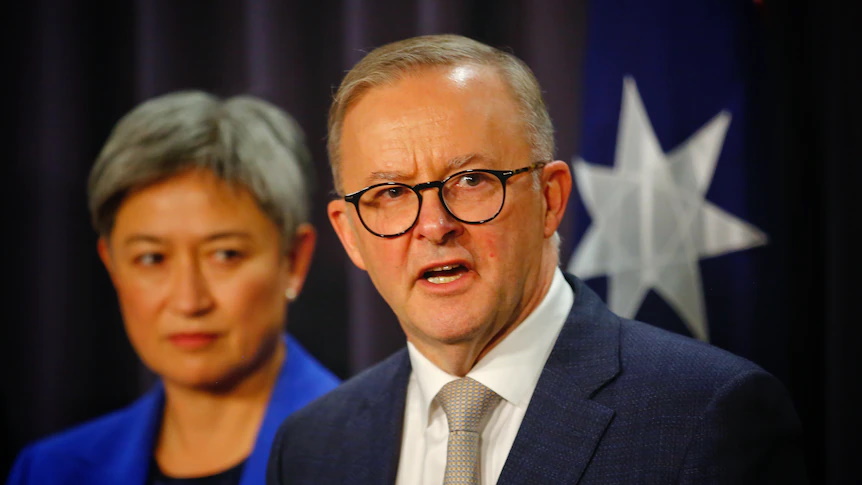
The federal government’s Help to Buy scheme is before the parliament. Both the Coalition and the Greens are opposed to it[2].
If the bill is passed, the government will provide an equity contribution of up to 40% of the purchase price of a new home, and up to 30% for an existing dwelling, with buyers needing a minimum deposit of 2%.
Participants will be restricted to buying cheaper-than-average homes[3] – no more than A$900,000 in Sydney and $800,000 in Melbourne, with lower caps in other capital cities and the regions.
It’s a limited scheme: 10,000 places will be offered each year.
Here’s why it is a good idea.
Help to Buy is a piece of the housing puzzle
The Help to Buy scheme is similar to a scheme Grattan Institute recommended[4] in 2022.
Help to Buy would help level the playing field when it comes to buying a home, which is slipping out of reach for many Australians, largely because it takes much longer these days to save for a deposit.
In the early 1990s it took the average Australian about seven years to save a 20% deposit for a typical dwelling. Now it takes almost 12 years[5]. Unsurprisingly, a growing proportion of Australians now rely on the “Bank of Mum and Dad[6]” to buy a home.
Help to Buy could be particularly helpful for older renters who do have a deposit but who won’t be in the workforce long enough to pay off a home by the time they retire.
Read more: Urbanisation and tax have driven the housing crisis. It's hard to see a way back but COVID provides an important lesson[7]
Many older Australians were never able to break into the market as prices far outstripped incomes. Others have found it too hard to get back in after losing the home after a separation. Less than half[8] of women who separate from their partner and lose the house manage to purchase another within 10 years.
Today’s older renters risk joining tomorrow’s renting retirees, nearly half of whom already live in poverty[9]. Help to Buy offers them a pathway back to home ownership and a more secure retirement.
Even if federal and state governments adopt much-needed reforms[10] to boost housing supply and reduce demand, house prices are likely to remain high, relative to incomes.
But Rent to Buy can be improved
Beyond these benefits, there are drawbacks to the government’s plan.
The income thresholds for the scheme – $90,000 for singles and $120,000 for couples – are too high. About 75% of working-age singles earn less than $90,000, and 39% of couples earn less than $120,000.
It’s hard to argue for offering the scheme to people earning above-average incomes[11], because they have a good chance of buying a home anyway.
Also, requiring borrowers have just a 2% deposit, rather than a minimum of 5% as we proposed, increases the risk of them falling into negative equity if house prices fall.
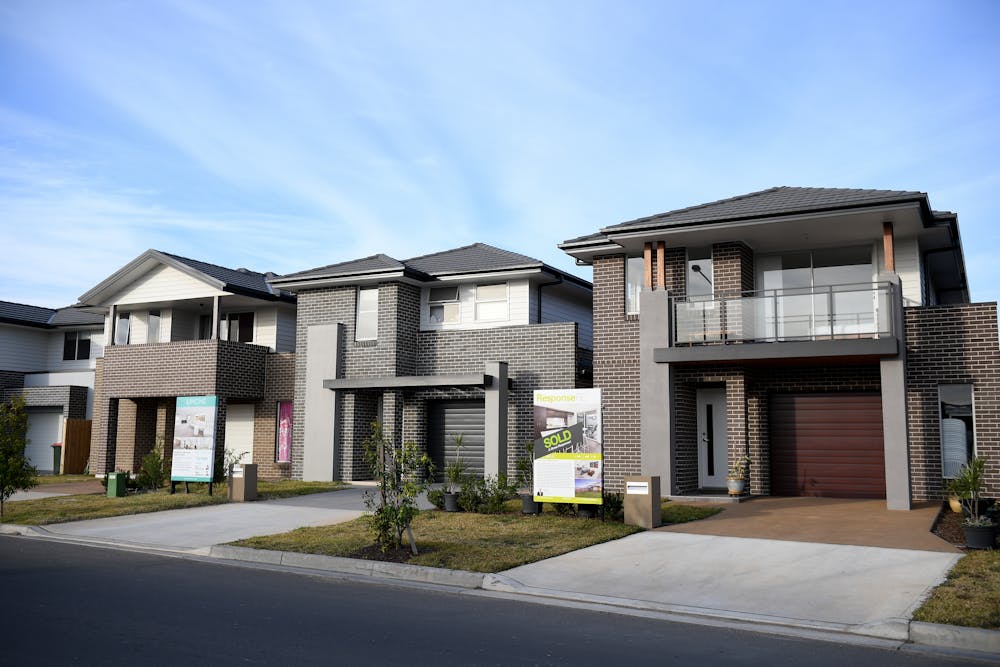
And the house price caps should be reduced to match those available for stamp duty concessions for first home buyers[13], which typically begin phasing out in most states for homes valued above $650,000.
Better targeting the scheme in this way would mean the annual cap on the numbers of places could gradually be raised. The current scheme risks becoming a lottery, because the income thresholds are set at such a level that many more people are eligible than the 10,000 places available each year.
The impact on house prices would be tiny
Shared equity schemes can add to house prices, by adding to housing demand. Which is why the main game remains making housing cheaper by building more of it[14].
But the impact on prices of this capped scheme is likely to be very small. With just 40,000 places on offer over four years, it’ll have close to zero impact on house prices in the context of Australia’s $10.3 trillion housing market.
We estimate that after four years, the 40,000 places on offer could result in overall house prices rising by about 0.016%. That would add $113 to the purchase price of a $700,000 home.
 The scheme helps older renters into home ownership and a more secure retirement. Russell Freeman/AAP[15]
Since participants are limited to buying cheaper homes, it could have a marginally bigger impact on the homes eligible for the scheme.
If the scheme were uncapped, but better targeted as we propose, it would still only have a small impact on house prices.
Our modelling shows that for every 100,000 homes the government helps finance through the scheme, house prices would rise by 0.04%, adding $283 to the purchase price of a $700,000 home.
Parliament should pass the government’s Help to Buy scheme, because it will help some Australians to own their own home. But better still would be a more targeted scheme, which wouldn’t need to be rationed, and which would help more Australians who are struggling to own their own home.
Read more: 'It was bloody amazing': how getting into social housing transforms people's lives[16]
References
- ^ here (theconversation.com)
- ^ are opposed to it (www.theguardian.com)
- ^ restricted to buying cheaper-than-average homes (www.housingaustralia.gov.au)
- ^ recommended (grattan.edu.au)
- ^ almost 12 years (grattan.edu.au)
- ^ Bank of Mum and Dad (percapita.org.au)
- ^ Urbanisation and tax have driven the housing crisis. It's hard to see a way back but COVID provides an important lesson (theconversation.com)
- ^ Less than half (grattan.edu.au)
- ^ nearly half of whom already live in poverty (www.thenewdaily.com.au)
- ^ much-needed reforms (grattan.edu.au)
- ^ above-average incomes (grattan.edu.au)
- ^ Dan Himbrechts/AAP (photos.aap.com.au)
- ^ stamp duty concessions for first home buyers (www.suncorp.com.au)
- ^ housing cheaper by building more of it (theconversation.com)
- ^ Russell Freeman/AAP (photos.aap.com.au)
- ^ 'It was bloody amazing': how getting into social housing transforms people's lives (theconversation.com)