Facebook won’t keep paying Australian media outlets for their content. Are we about to get another news ban?
- Written by: Rob Nicholls, Visiting Fellow, University of Technology Sydney
Facebook’s parent company, Meta, has announced[1] it will stop paying for news content in Australia when the current deals it has expire. Meta will also cease news aggregation on the site.
Three years ago, the company signed deals with Australian news outlets after the government introduced laws requiring tech companies to pay for the news on their platforms. The law only comes into effect if no commercial deal is struck.
Meta has now decided that the cost of providing news in Australia is too high. Its reason for the change is to “better align our investments to our products and services people value the most”. That is, it saves money.
So what does this mean for news on Facebook? What can users expect to find on the platform?
Read more: The news is fading from sight on big social media platforms – where does that leave journalism?[2]
An unsurprising manoeuvre
This decision was largely predictable, as it’s consistent with Meta’s actions in the UK, France, and Germany in December 2023. The same “deprecation” will occur simultaneously in the US.
Meta’s rationale is that news is “a small part of the Facebook experience for the vast majority of people” and is not a reason for the use of the platform as it “makes up less than 3% of what people around the world see in their Facebook feed”. It does not comment on the percentage in Australia.
Meta says “this does not impact our commitment to connecting people to reliable information on our platforms”. However, this “reliable information” is a reference to fact-checking in the context of misinformation.
Meta does not see a link between reliable information and Australian news. It has not addressed the issue of the sustainability of news journalism in Australia.
Read more: Facebook's news blockade in Australia shows how tech giants are swallowing the web[3]
So what will Facebook look like?
Facebook says that it will simply remove the dedicated tab[4] on the site for news content.
For many users, this will not have an effect. However, for those who use Facebook as a news aggregator, access to links to news publishers will disappear.
Facebook users will need to go to the Facebook page of their favourite news publishers in order to be able to keep up with events. This means having to “follow” all of the news publishers with which Facebook currently has a commercial agreement.
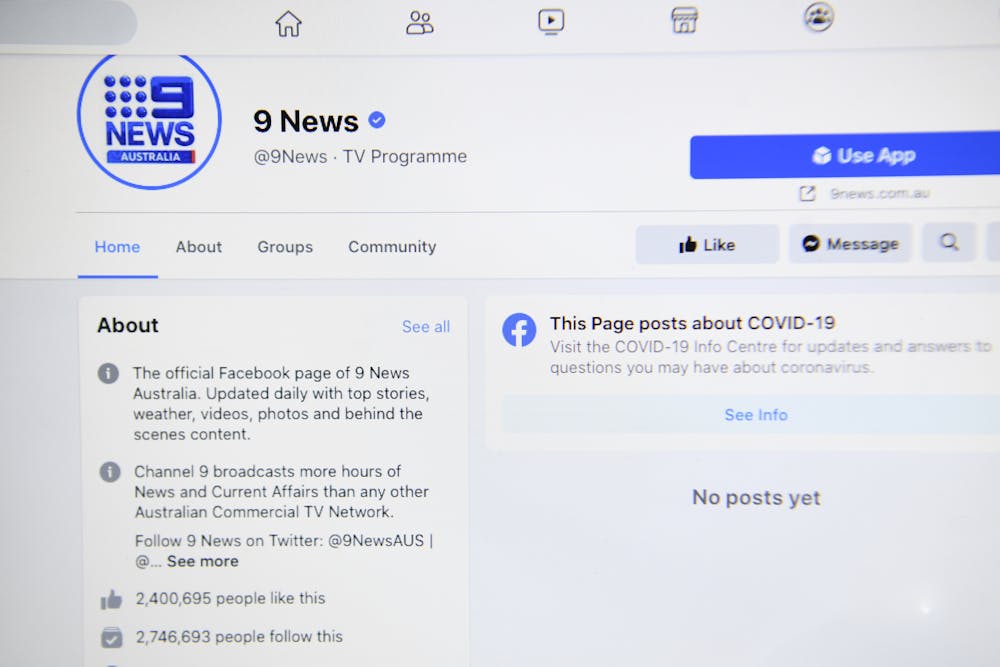
Unlike the approach in 2021, Facebook is not going to shut down[5] all of the pages that its systems thought were “media pages” (including emergency services and helplines such as 1-800-RESPECT).
Instead, Meta is encouraging news publishers to buy the tech giant’s services to increase their own traffic.
However, this means Meta expects that the flow of funds will be from news publishers to Meta, rather than the other way around.
What does this mean for news?
There is already a concern that social media is replacing legacy news sources.
Meta has consistently argues that news is not a driver of its business. In submissions to government[6], it has sought to differentiate Meta and Google. In fact, news publishers often report having their content buried[7] by algorithms over which they have no control.
Meta contends that news is so unimportant that it would rather not have news options than pay news publishers for content.
The Facebook news ban of 2021 was largely in response to the government’s News Media Bargaining Code[8] – an arrangement in which news organisations could negotiate with big tech companies over payment and inclusion of their content on digital platforms.
In contrast, Google has previously been willing to enter into commercial deals or to launch news aggregator services rather than having a code imposed on it.
It is not clear whether Google will change its view in Australia as a result of the Meta decision. The News Media Bargaining Code has the potential to apply to both businesses. However, Google relies more on news content than Meta.
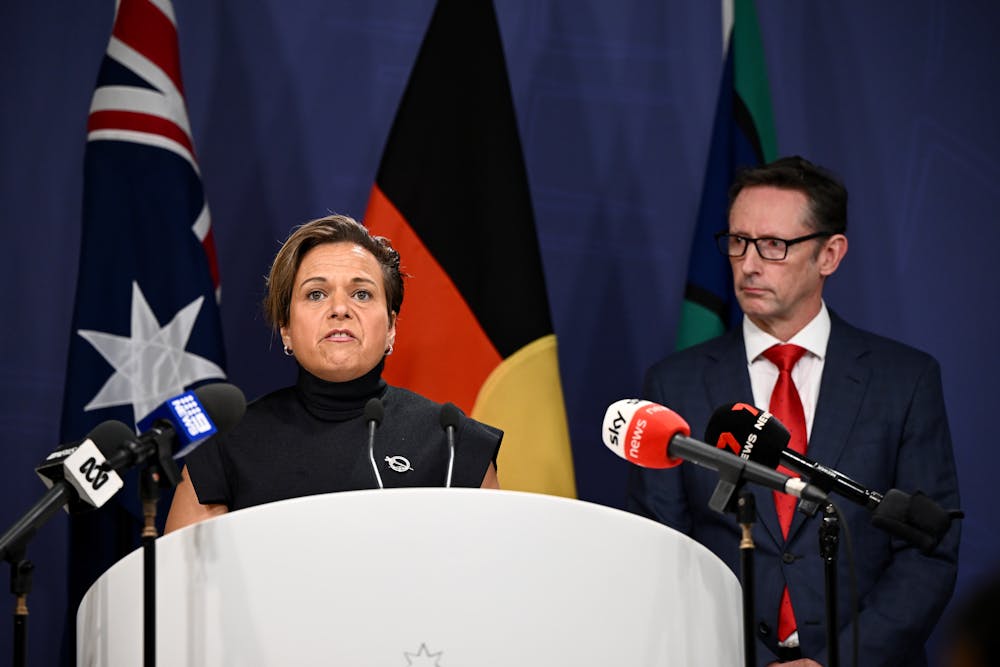 Communications Minister Michelle Rowland has criticised Meta’s decision.
Bianca De Marchi/AAP
Communications Minister Michelle Rowland has criticised Meta’s decision.
Bianca De Marchi/AAP
Can the government do anything?
The relevant ministers, Stephen Jones and Michelle Rowland, have already referred to[9] the decision as a “dereliction of its commitment to the sustainability of Australian news media.”
As a practical matter, the News Media Bargaining Code is only triggered if there is no commercial deal in play. The current commercial deals with news outlets are due to expire[10] in a few months.
Read more: This week's changes are a win for Facebook, Google and the government — but what was lost along the way?[11]
Meta has said that it “will not offer new Facebook products specifically for news publishers in the future”. It will let the existing commercial agreements lapse in in Australia, France, and Germany as they already have in the UK and the US.
The treasurer is now faced with a tough decision. He can “designate” Meta under the code and force it to the bargaining table, or he can agree that news is not a driver of Facebook use. This decision will need to take into account the issue of news journalism sustainability.
However, it also risks a repeat of the 2021 shut down in Australia and a similar one in Canada[12] last year.
References
- ^ has announced (about.fb.com)
- ^ The news is fading from sight on big social media platforms – where does that leave journalism? (theconversation.com)
- ^ Facebook's news blockade in Australia shows how tech giants are swallowing the web (theconversation.com)
- ^ dedicated tab (www.facebook.com)
- ^ shut down (www.abc.net.au)
- ^ submissions to government (about.fb.com)
- ^ content buried (theconversation.com)
- ^ News Media Bargaining Code (www.acma.gov.au)
- ^ referred to (minister.infrastructure.gov.au)
- ^ due to expire (www.abc.net.au)
- ^ This week's changes are a win for Facebook, Google and the government — but what was lost along the way? (theconversation.com)
- ^ Canada (www.bbc.com)