A major blackout left 500,000 Victorian homes without power – but it shows our energy system is resilient
- Written by: Roger Dargaville, Director Monash Energy Institute, Monash University
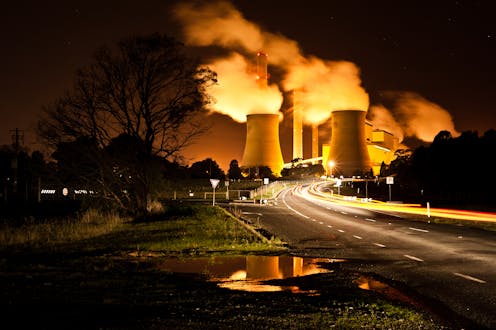
Half a million homes and businesses in Victoria were left without power[1] late on Tuesday following a major power outage. The disruption occurred when severe winds knocked over several high-voltage electricity transmission towers, causing all four units of the Loy Yang A coal-fired power station to trip and go offline.
Victorian Energy Minister Lily D'Ambrosio described[2] the blackout as “one of the largest outage events in the state’s history”.
The event has prompted questions about the reliability of the state’s electricity grid. But it’s important to note these extreme winds would have seriously disrupted any power system. It has little to do with the mix of renewable energy and conventional fossil fuels.
As climate change worsens, we have much work ahead to ensure our electricity grids cope with severe weather events. But in this case, the fact that a complete system blackout was avoided is testament to the resilience of the system.
A day of wild weather
An extreme storm, including strong winds and lightning, tore through Victoria on Tuesday afternoon. It caused two transmission lines near Geelong to collapse, prompting several generators to disconnect from the grid and cutting power to parts of the network.
Other customers lost power after the Australian Energy Market Operator (AEMO) ordered “load shedding”. This involves temporarily cutting off electricity supply to some customers to keep the network stable and prevent damage.
According to a statement from AEMO[3], the storm also damaged hundreds of powerlines and power poles and restoring electricity to all customers “may take days if not weeks”
Read more: Wholesale power prices are falling fast – but consumers will have to wait for relief. Here's why[4]
What happened at Loy Yang A?
The disruption to electricity transmission caused AGL’s Loy Yang A generator to go offline. This was an automatic response known as a “fault ride-through” mechanism. It’s much like a fuse blowing if you have a short-circuit at home.
When large electricity loads are rapidly and unexpectedly removed from the system, electricity supply and demand are no longer matched. It’s a dangerous situation and means electricity generators can be badly damaged or even destroyed if they don’t disconnect from the network.
It appears that Loy Yang A was the first generator to disconnect. The effect was to reduce supply and help bring the system back into balance, preventing a system-wide outage.
All generators have protection systems that stop them from being damaged in these kinds of events. Loy Yang A tripped up to protect itself from permanent damage and in doing so actually kept the system stable. It did what the system is designed to do.
Read more: Unsexy but vital: why warnings over grid reliability are really about building more transmission lines[5]
What part did renewables and coal play?
When transmission lines fail, the whole system is affected. This includes all types of generators – wind, solar, gas, hydro and coal. The power outages on Tuesday were unrelated to the proportion of renewables and fossil fuels in the energy mix.
It’s possible that old coal power generators are more sensitive to transmission disruptions than newer technologies. But it’s far too early to say whether this had anything to do with Tuesday’s event.
Battery storage may have helped steady the grid. Batteries have ultra-rapid responses to these kinds of disuptions and can add or subtract power from the grid within milliseconds to keep the grid stable.
And looking ahead, one benefit of renewable energy systems is that they tend to be much more widely “distributed” geographically than coal generators. So when power lines go out, having a more distributed network actually provides more resilience.
Lessons from South Australia
In September 2016, wind storms in South Australia also blew over transmission lines. Cascading disconnections by generators meant the entire grid went black in a matter of seconds, causing a statewide outage[6].
It will take months to analyse all the data from the Victorian blackout. But it may well show that the lessons learned from SA blackout saved the Victorian grid.
For example, AEMO was reportedly unaware[7] about the exact settings of “fault ride-through” mechanisms on wind farms before the SA blackouts. This has since changed, and may have helped minimise the impacts in Victoria.
A warmer future
We know more severe weather events are predicted under climate change. It will manifest in many different ways: strong wind events, heatwaves, bushfires and floods.
All infrastructure, but especially energy infrastructure, is vulnerable under these conditions. It means all of us – researchers, the market operators, and generator operators – must work hard to make energy systems more resilient as we move into an uncertain future.
Read more: What caused South Australia's state-wide blackout?[8]
References
- ^ left without power (www.abc.net.au)
- ^ described (www.9news.com.au)
- ^ a statement from AEMO (aemo.com.au)
- ^ Wholesale power prices are falling fast – but consumers will have to wait for relief. Here's why (theconversation.com)
- ^ Unsexy but vital: why warnings over grid reliability are really about building more transmission lines (theconversation.com)
- ^ statewide outage (www.energyfactsaustralia.org.au)
- ^ reportedly unaware (reneweconomy.com.au)
- ^ What caused South Australia's state-wide blackout? (theconversation.com)